

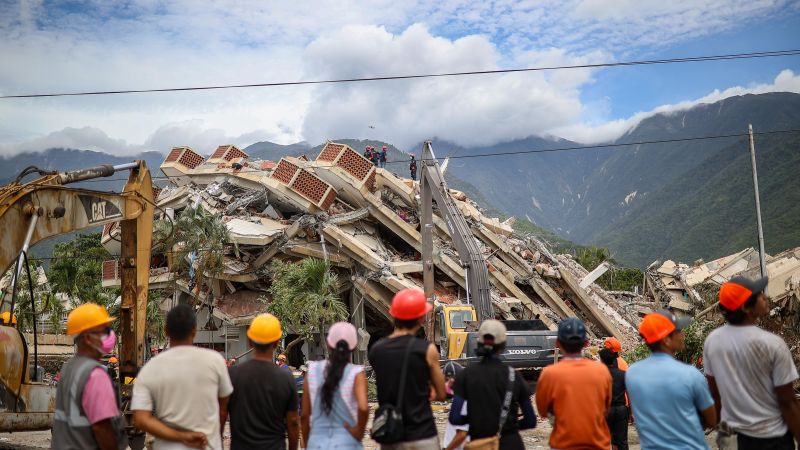

Venezuela welcomes international aid after deadly earthquake

Four hours after the earthquake, El Salvador’s President Nayib Boucle announced that he had offered aid to Venezuela to deal with the aftermath.
Ninety minutes later, Venezuela’s acting president Delcy Rodríguez retweeted a message from a Central American leader — someone the regime’s Chávez movement has long considered a political nemesis — instructing Venezuela’s foreign ministry to coordinate aid.
Aside from the sense of solidarity that such tragedies inspire and the political rhetoric that comes with it, Rodriguez has little room to veto governments trying to help with this crisis.

The earthquake exacerbated problems caused by years of economic and political conflict, especially the strained health system. The South American country’s economic situation is in crisis due to poor fiscal management and US economic sanctions against Venezuela’s central bank and state oil company Petroleos de Venezuela (PDVSA). Between 2013 and 2021, the country’s economy shrank by three-quarters.
Rescue teams flooded into the country from around the world, including the United States and several countries in Latin America, after Wednesday’s earthquake.
US President Donald Trump declared that the US was “ready, willing and able to help” even before Rodriguez publicly requested assistance, indicating the White House’s growing influence in the South American country.
Venezuelans have expressed frustration with the government’s slow response and lack of heavy equipment to rescue loved ones. Given the scale of the tragedy and the scale of its external debt, Venezuela needs far more aid than is currently arriving to assist those affected and rebuild its infrastructure.
Read the full analysis here.
