

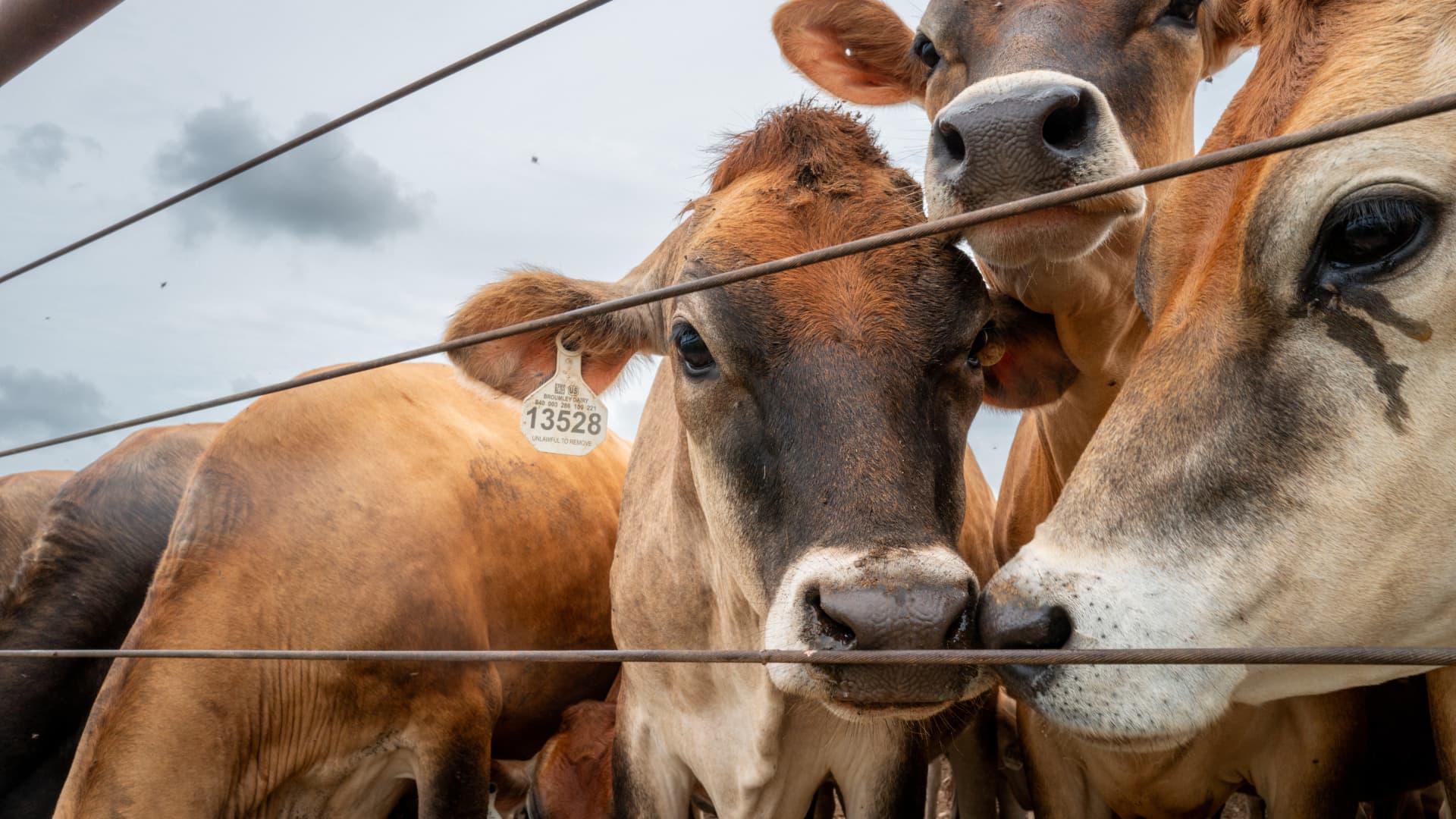
Cows herd in a stable on June 5, 2026 in Dublin, Texas.
Brandon Bell | Getty Images
The U.S. Department of Agriculture has confirmed a second case of the New World screwworm, a flesh-eating parasite, in Texas.
The latest detection was found in a 1-month-old calf in Zavala County, Texas, about 6 miles (9 km) from the first confirmed case announced earlier this month, the USDA’s Animal and Plant Health Inspection Service announced Friday. Additional samples taken from surrounding areas have so far tested negative.
New World screwworm larvae feed on the living tissues of warm-blooded animals and can cause serious injuries that can be fatal if untreated. This pest threatens livestock, wildlife, pets, and rarely humans.
The discovery triggered cross-border restrictions. The Canadian Food Inspection Agency announced Friday that it would temporarily restrict imports of livestock, including horses, from affected areas of the United States. Animals that originate from or have been in Texas within 21 days before crossing the border will not be permitted to enter Canada.
Federal and state authorities emphasized that the second case was detected within an existing movement control zone established after the first discovery and remains within an area where sterile insects are being released to control pest populations.
“The USDA wasted no time in this fight. We have defeated the New World screwworm before, and we will do it again,” Dudley Hoskins, the agency’s assistant secretary for marketing and regulatory programs, said in a statement.
The USDA said that despite the detection, the U.S. food supply remains safe. The agency says the New World screwworm does not infect meat, fruits, vegetables or other foods. The affected animals were identified during testing and the contaminated product was not allowed to be distributed.
“Livestock owners and all Texans should remain vigilant,” Texas Farm Bureau Secretary Russell Boening said in a statement. “Surveillance and reporting are paramount. The sooner we detect an infestation, the sooner we can eradicate the New World screwworm fly.”
This story is developing. Please check back for the latest information.
