

The biggest potential for voice AI startups was to handle corporate phone calls in areas such as sales, marketing, and customer support. Large organizations offload their calls to voice model developers like Celebrities and Deepgram. Infrastructure companies like Vapi, Retell, and LiveKit. There are also dedicated customer support shops such as Decagon and Sierra.
San Francisco-based Rime is trying to gain an edge in this crowded market with voice AI models trained on recorded conversation data, aimed at reducing the customization burden for clients.
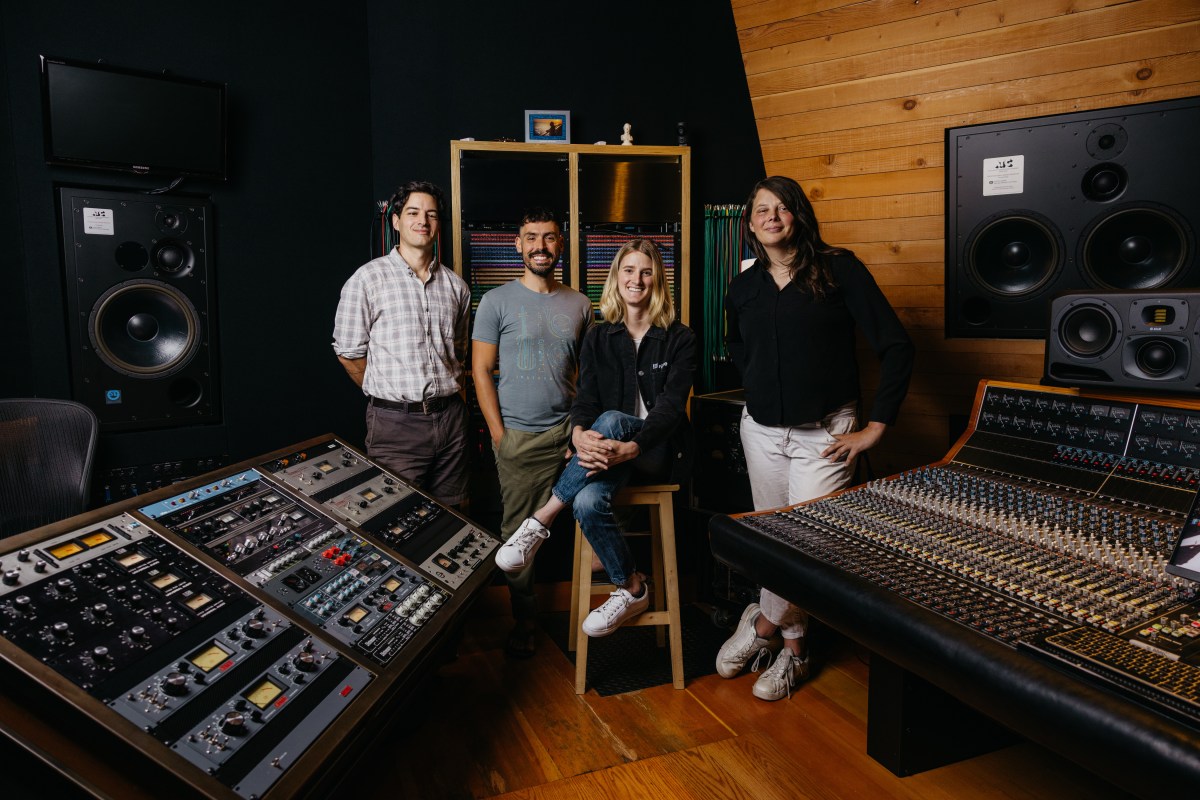
Founded in 2022 by former Stanford University PhD student Lily Clifford, former Amazon Alexa engineer Brooke Larson, and Stanford University engineer Ales Giovanos, Rime built a recording studio in San Francisco to collect its own conversation data, rather than relying on scraping audio from the web.
The company said it is focused on tuning its speech models to accurately pronounce various brand entities and industry-specific terms. It uses a phoneme-based architecture to adapt to different pronunciations, so customers don’t have to retrain models for specific industries.
Rime announced Wednesday that it has raised $24 million in a Series A funding round led by M13 Ventures. Twilio Ventures, Corazon Capital, Unusual Ventures and other existing investors also participated.
Clifford said that despite advances in the development of voice AI, companies still prefer traditional IVR (Interactive Voice Response) implementations because AI voice technology still cannot match the effectiveness of IVR.
“We don’t yet have voice technology that can automate the majority of enterprise calls. LLM has made it much easier to build voice applications that work, but the feel of the interaction hasn’t changed. Conversations with voice AI agents aren’t the most engaging experience for end users. It’s like a new IVR, but with improved voice,” she said.
The startup started with separate model pipelines for speech-to-text, text-to-speech, and large-scale language models. But now the focus has shifted to developing better text-to-speech models to reduce latency, improve turn-taking, and address issues such as background noise. The new approach also helps reduce reliance on orchestration, so businesses no longer have to manage large numbers of models.
Rime says it has customers in the food service, healthcare, airline and fintech sectors. The company claims that its training data and model positioning have resulted in longer call dwell times for its customers, which has helped it win enterprise contracts from customers such as Mayo Clinic, Dialpad, Upstart, and Asurion.
With the new funding, Rime plans to expand its team of 35 people to hire in model development, engineering and partnerships. We recently welcomed Rafael Valle, who worked on audio understanding at Meta Superintelligence Labs and Nvidia’s Applied Deep Learning Audio research team, as a lead scientist.
“Companies like Eleven Labs are moving into the orchestration and application layers and taking on the Sierras and Decagons of the world. I think there’s still a lot of work to do technically, but Lime’s approach to pushing the best models with low latency and high reliability in a regulated environment is outstanding,” M13’s Morgan Blumberg told TechCrunch.
The company had raised $5.5 million in a seed round last May. Blumberg will join the startup’s board of directors as part of the funding.
If you buy through links in our articles, we may earn a small commission. This does not affect editorial independence.
