

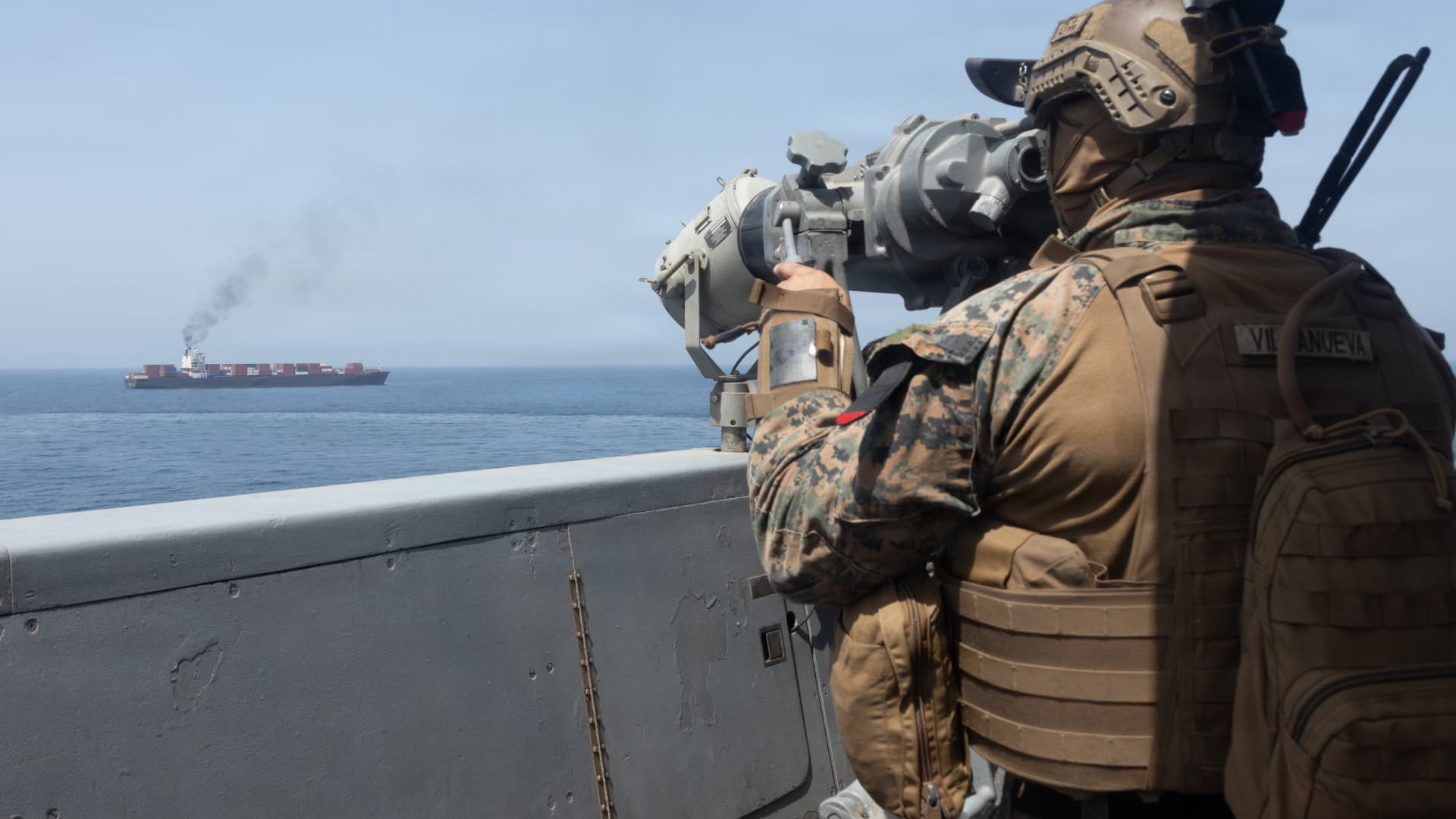
President Donald Trump is keeping an eye on Iran in negotiations to end the Middle East war after calling off peace talks over the weekend as Iran maintains a blockade of the Strait of Hormuz and the United States maintains a naval blockade of key sea lanes. But Wolf Research warns that the current stagnation could have unintended consequences. U.S. stocks fell in March due to concerns about the escalation of the conflict between the United States and Iran. Those concerns eased after the two countries agreed to a ceasefire and investors shifted their attention to strong corporate profits, rekindling confidence in artificial intelligence trade. But while the stalemate likely means the risk of escalation is low for now, Tobin Marcus, Wolf’s head of U.S. policy and politics, has warned that new risks loom. “Unless the blockade actually succeeds in forcing a swift surrender, the strait closure will be extended for weeks, if not months, while Iranian (oil) supplies will also be taken from the market,” he said in a report on Sunday. .SPX Mountain 2026-02-27 S&P 500 Stocks from February 27, 2026 While investors have not expressed much concern in recent weeks about whether the strait is usable, the oil market has, Marcus wrote. Brent crude oil futures rose above $107 again on Monday. The analyst said the longer the strait remains closed, the more oil prices could rise. “As the Channel remains closed, we remain concerned that the disruption could become severe enough to once again attract stock market attention,” he said. Marcus also warned that the blockade could lead to a resurgence of violence and that if the blockade lasts long enough and Iran’s oil storage capacity is depleted, the Islamic Republic could resort to violent retaliation. “While we do not expect the blockade to create true despair within days, if it does last for weeks or months, we must consider the possibility that Iran will attack violently rather than surrender,” Marcus wrote.
