

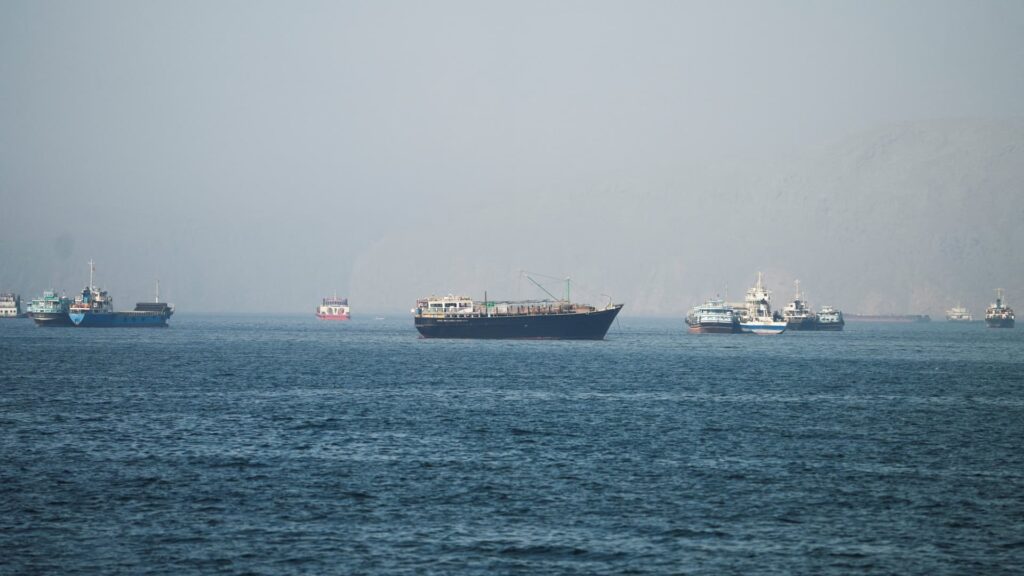

Nearly 40 ships previously stranded in the Persian Gulf have left the Strait of Hormuz in the past three weeks in quiet coordination with the U.S. Navy, according to Lloyd’s List Intelligence.
Lloyd’s List editor-in-chief Richard Mead said at a briefing on Thursday that some shipowners had submitted transit plans to Bahrain’s Naval Cooperation and Shipping Guidance Group.
The premise, Meade said, is that the U.S. Navy provides limited assurance that it will deter looming threats to commercial shipping.
“The decision to transit is made solely by the vessel operator,” Meade said. “Industry executives tell us there is no central coordination.”
A defense official told CNBC that the U.S. military is not escorting commercial ships passing through Hormuz. The official said they were communicating and coordinating with vessels seeking to pass freely and safely through the strait.
Ship traffic passing through Hormuz remains well below pre-war levels. Traffic through the sea lanes fell to its lowest level during the Iran war in May, according to Lloyd’s List.
In early May, President Donald Trump abruptly shut down a short-lived U.S. Navy mission called “Project Freedom” that sought to improve traffic flow by escorting ships stranded in the Gulf through Hormuz.
Ships stranded in the Gulf risk attack by Iranian forces unless they receive Iranian government approval to take designated routes through Hormuz. If these ships cooperate with Iran, there is a risk that they will be subject to sanctions from the United States.
Collisions over vessel navigation
Earlier this week, American and Iranian forces clashed in and around Hormuz, briefly sending oil prices soaring as investors feared the ceasefire could break and a full-scale war could resume.
U.S. Central Command said Tuesday that the firefight began when Iran fired three attack drones at “civilian sailors who were legitimately passing through nearby waters.” According to Centcom, the US military shot down these drones and conducted a self-defense strike against Iranian forces on Qeshm Island.
Subsequently, Iran launched ballistic missiles toward Kuwait and Bahrain, which either failed or were intercepted, Centcom said. Tehran attacked Kuwait’s international airport on Wednesday, killing one person and injuring others, according to Kuwait’s Foreign Ministry.
Secretary of State Marco Rubio said Wednesday that the United States needs to respond to Iranian attacks on commercial ships. Rubio said the drones are less accurate and can hit any part of the ship, risking an ecological disaster.
“If they don’t shoot these ships, we won’t shoot them, but we have to respond,” Rubio told the House Foreign Affairs Committee.
