

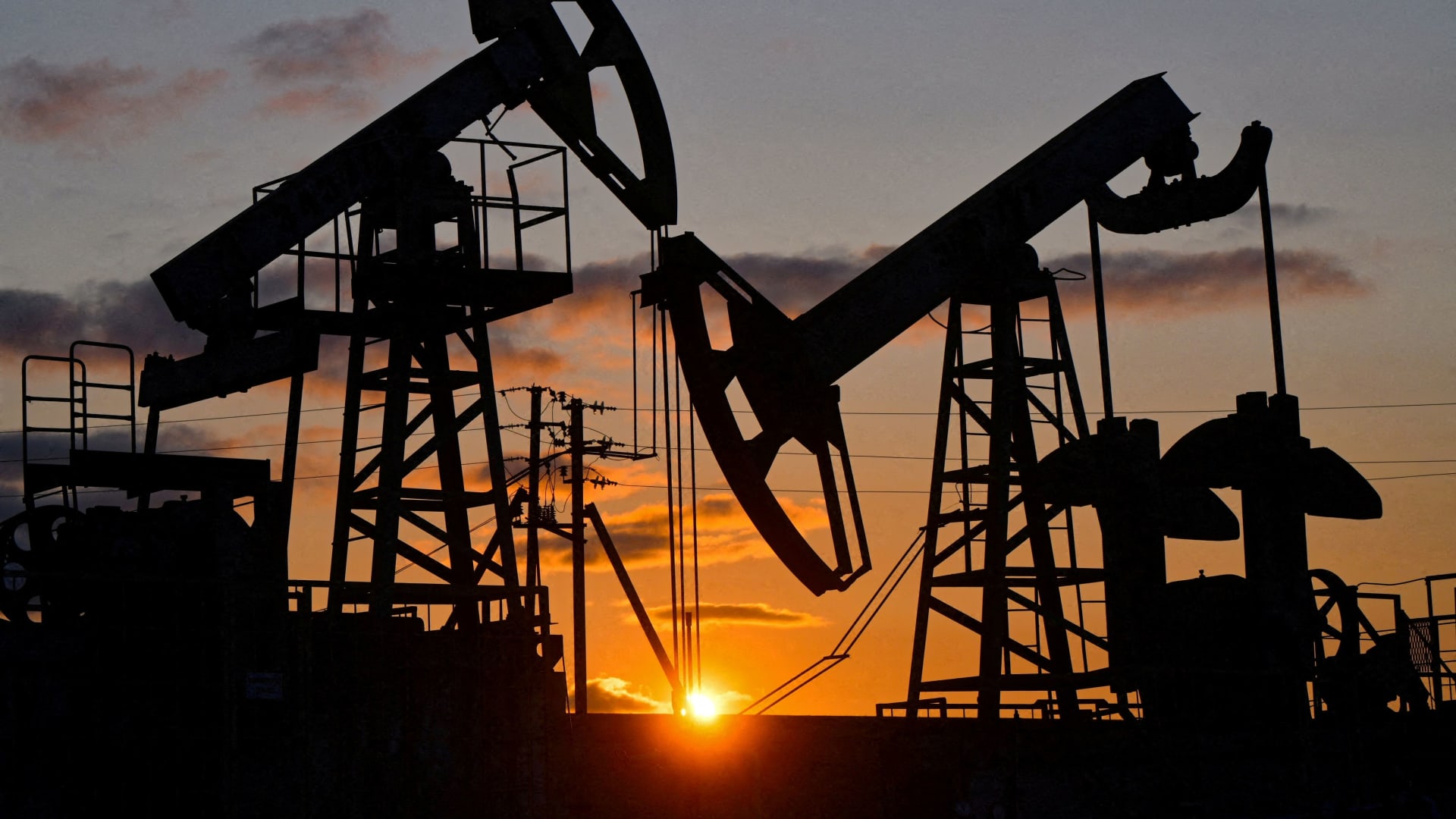
A view showing an oil pump jack on the outskirts of Almetyevsk, Republic of Tatarstan, Russia, June 4, 2023.
Alexander Manjuk | Reuters
Oil prices plunged on Friday after Iran’s foreign minister declared the Strait of Hormuz “fully open” during the ceasefire between Israel and Lebanon, raising hopes that major supply disruptions would ease.
Foreign Minister Seyed Abbas Araghchi’s comments on X followed remarks by US President Donald Trump late Thursday, who said the war with Iran, which began on February 28, “should be over pretty quickly.”
usa crude oil Futures prices for May delivery fell nearly 12% to close at $83.85 a barrel. international benchmark brent Oil for June delivery fell 9% to settle at $90.38 per barrel.
Araghchi said in a social media post that ships navigating the vital waterway must navigate “coordinated routes” set by Iran’s maritime authorities.
President Trump thanked Iran for opening the strait in a post on Truth Social on Friday. But in a second social media post, he said the U.S. blockade of Iranian ports would continue in “full force” until the U.S. reached a deal with Iran.
Israel and Lebanon agreed on Thursday to a 10-day ceasefire starting that evening at 5pm ET. Israel is attacking Lebanon in a military operation against Hezbollah, an extremist group allied with Iran. The conflict between the groups has hampered negotiations between the United States and Iran.
In a post on Truth Social, President Trump said that Israeli Prime Minister Benjamin Netanyahu and Lebanese President Joseph Aoun had been invited to the White House, marking the first meaningful meeting between the two countries since 1983.

The US State Department said both sides aim to create conditions for lasting peace, including mutual recognition of sovereignty. The ministry said the initiative includes improving border security and reaffirming Israel’s right to self-defense.
They also noted their shared concern that non-state armed groups undermine Lebanon’s sovereignty.
President Trump said he expected Lebanon to “look out for Hezbollah.” This development raised hopes for a broader solution to the Middle East conflict.
Oil prices began to fall on expectations that the United States and Iran could extend the ceasefire for another two weeks and resume talks to end the conflict, ING said.
“However, the physical market is getting tighter by the day as oil flows through the Strait of Hormuz have not resumed,” ING analysts said in a note.
Even taking into account pipeline rerouting and restrictions on tanker movement, ING estimates that around 13 million barrels per day of supply has been disrupted, a figure that could rise further under the U.S. lockdown.
“The key upside risk to the market is that the US-Iranian peace talks break down. This is not an unrealistic scenario given that US and Iranian demands remain far apart.”
