

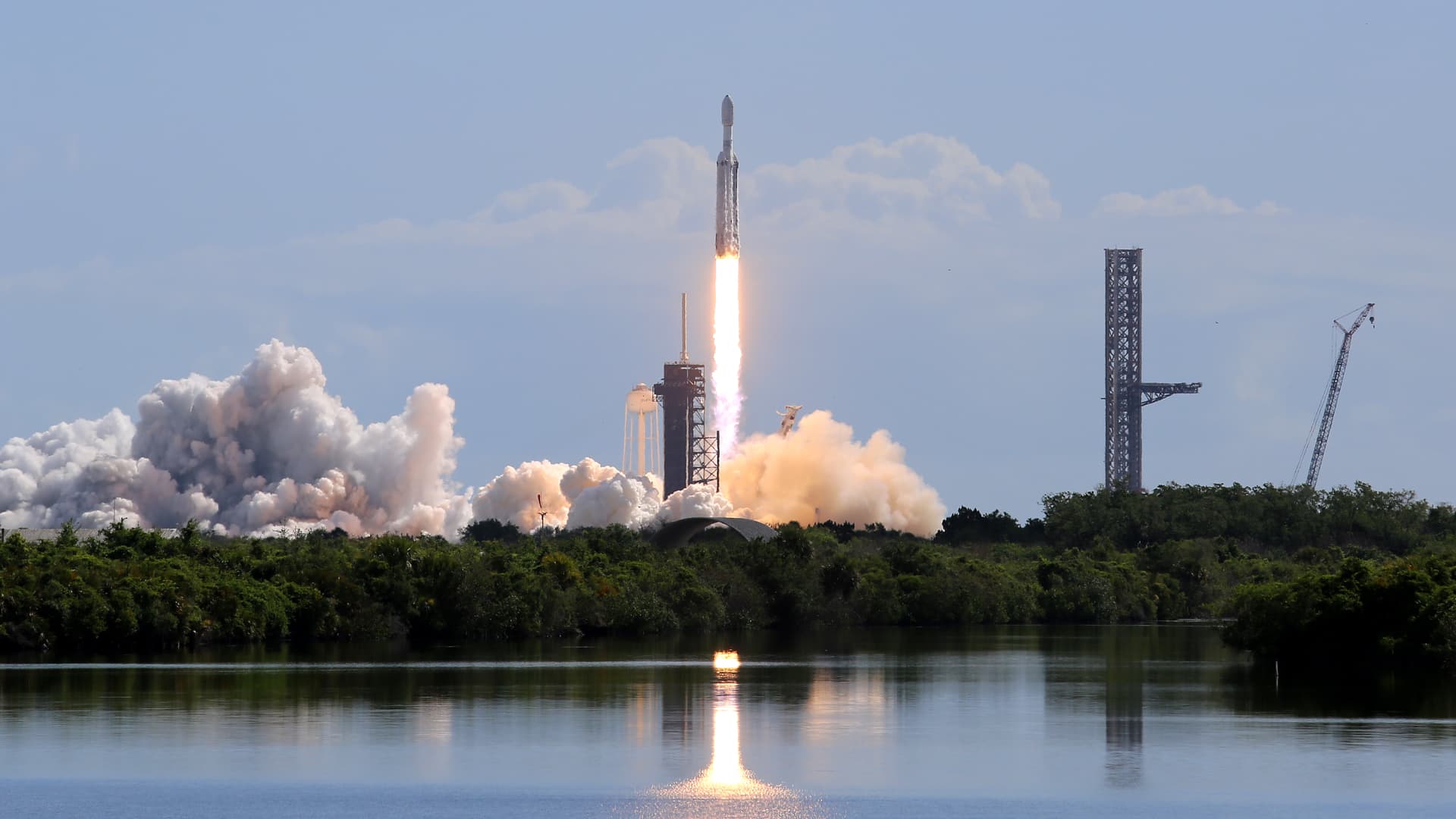
A SpaceX Falcon 9 rocket carrying the company’s Dragon spacecraft will launch from Cape Canaveral Space on February 13, 2026, on NASA’s SpaceX Crew 12 mission to the International Space Station, carrying NASA astronauts Jessica Meir, Jack Hathaway, ESA astronaut Sophie Adenot, and Roscosmos cosmonaut Andrei Fezyaev. Force Station, Florida.
Aubrey Gemignani | NASA | Getty Images
Strategists said a flurry of initial public offerings (IPOs) by mega-corporations could top the market this year, drawing parallels to the dot-com bubble of the late 1990s.
SpaceX’s long-awaited IPO, confirmed in a regulatory filing Thursday and expected on June 12, could be the largest initial public offering in history. Elon Musk’s company is aiming for a valuation of $1.75 trillion on the Nasdaq market.
Meanwhile, OpenAI and Anthropic also announced their intention to go public later this year.
All three companies have yet to report full-year profits, but Anthropic is expected to post its first-ever profitable quarter in its upcoming fiscal year.
However, analysts believe that the nature of each company’s business model makes it opaque, and some caution investors considering purchasing through an IPO.
“We see it as the high end of the market,” Zacks chief equity strategist John Blank told CNBC’s Squawk Box Europe on Thursday.
“We all know that the top is pretty close, and the top is usually promoted by these huge IPOs. Back in 1999, we saw a similar situation where people were rushing to get these IPOs.”
high expectations
SpaceX posted a net loss of $4.28 billion in its latest quarter, after posting a net loss of $4.94 billion in 2025.
The company’s Starlink division generated $3.26 billion in revenue in the latest quarter, accounting for 69% of the total. The company’s space business posted an operating loss of $619 million, and its AI division posted a $2.5 billion loss. So connectivity is the only profitable part of the company.
Importantly, SpaceX wrote in Thursday’s S-1 filing that it has “historically experienced net losses and may not be able to achieve profitability in the future.”
Much of its value will depend on the successful development of various “novel and untested” technologies, and SpaceX expects its AI products and services to “incur significant capital expenditures over many years” before they become profitable, the document said.
Dan Coatsworth, head of markets at AJ Bell, said “very little is known” about SpaceX’s financial position because it is a private company with 85% voting control controlled by Elon Musk. Coatsworth warned of potentially eye-popping valuations as a potential risk to the upside.
“At a $1.75 trillion valuation, SpaceX would be valued at 67 times sales and triple Nvidia’s valuation based on past fiscal years and the most recent stock price,” he added. “This suggests SpaceX could be valued at more than a plate of Dauphinoise potatoes.”
SpaceX sees OpenAI as a major rival in the race for artificial intelligence supremacy, and Sam Altman’s company is also vying to go public in late 2026.
However, OpenAI has not yet turned a profit, leading some investors to question the potential for further declines in the stock market if the company continues on this path.
“If OpenAI and Anthropic don’t make money, the whole thing will collapse,” William de Gere, a portfolio manager at Blue Box Asset Management, told CNBC on Wednesday.
“We may get information in the next few months that OpenAI itself decides to go for an IPO and realizes it will never make money, and that could be the end of it,” he added.
“I’m not saying that’s the case, but it’s another possibility that could reach this plateau in growth sooner.”
Deutsche Bank also warned about transparency in a memo released Thursday.
“It remains to be seen how the public markets will value OpenAI and its peers if they publish their financial statements for scrutiny and explain the economics of their business models, which are still poorly understood,” said Adrian Cox, a thematic research strategist in Germany.

—CNBC’s Lora Kolodny also contributed to this report.
