

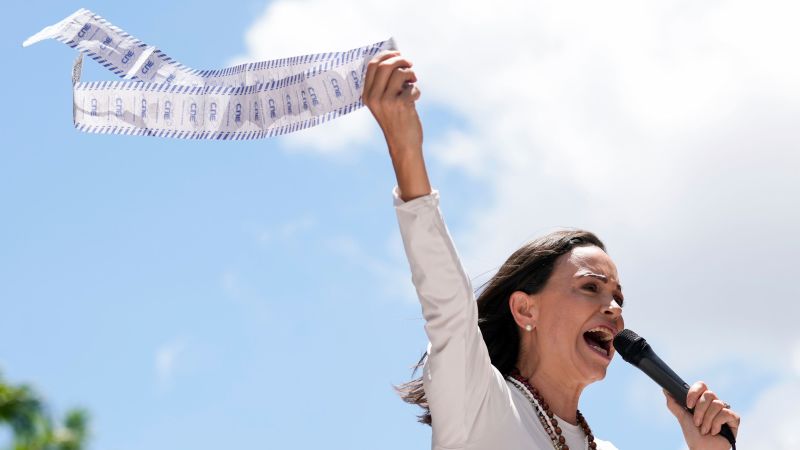
Last week, Venezuelan opposition leader Maria Colina Machado, winner of the 2025 Nobel Peace Prize, called for more U.S. aid to stop what she called a “war” against her country by President Nicolas Maduro.
In an interview with CNN’s Christiane Amanpour on Wednesday, Machado echoed the Trump administration, calling Maduro the leader of a “criminal narco-terrorist organization” and asking US President Donald Trump for more “assistance” to remove him from power.
He also cited President Trump’s efforts to broker peace in the Middle East and said the US leader “absolutely” deserves the Nobel Peace Prize, citing “the incredible events that are happening in the world right now.”
Machado’s comments, which upset some MAGA supporters who had expected Trump to win the award, come at a time of heightened tensions between the United States and Venezuela. They follow several attacks by the U.S. military on boats off the coast of Venezuela that the Trump administration has labeled as “drug-trafficking” vessels, the latest on Tuesday, killing six crew members.
Neither President Trump nor his administration has provided evidence that these are drug-trafficking vessels, but they have drafted a confidential legal opinion justifying deadly attacks on a vast list of suspected cartels and drug traffickers, people familiar with the matter said.
President Trump said Wednesday that he has authorized the CIA to operate in the country to crack down on the illegal flow of drugs, while suggesting that U.S. military operations may continue “by land.”
The Trump administration claims it is targeting drug traffickers, while Caracas accuses the United States of trying to overthrow President Maduro. Maduro has been accused by the United States of drug trafficking (a charge he vehemently denies) and has a $50 million bounty on his head.
Machado, who has been in hiding since last year’s election dispute, welcomed the U.S. move as an end to support for Maduro’s government. She also accused President Maduro of turning Venezuela into a “real threat to the national security of the United States.”
“In the case of President Maduro and his criminal narco-terrorist organization, (it) is supported through drug trafficking, gold trafficking, arms trafficking and even human trafficking, and we need to cut off those flows from coming in,” she told Amanpour.
She said regime change can only come by “applying (and) enforcing the law and cutting off the flow that comes from these criminal acts,” which will end President Maduro’s “war” against his country.
In response to a question about recent U.S. airstrikes, Machado said, “We need the president of the United States’ help to stop this war, because this war involves human lives.”
Asked later if he was directly calling for U.S. military intervention in his country, the opposition leader did not answer directly, but said he wanted to see the influence of Russia, China, Cuba and Iran curtailed, and argued that Venezuela was now a “safe haven” for terrorist groups.
Machado also refuted suggestions that Venezuela’s role in drug trafficking is being exaggerated to support the claims of those calling for regime change.
In the interview, Amanpour cited former US President Joe Biden’s Western Hemisphere national security director, Juan González, who previously told CNN that more than 95% of the cocaine that enters the US comes from Colombia, and that Venezuela itself has never had a need to develop its “indigenous drug production industry” given its large oil and gold reserves.
But Machado disputed his reasoning, citing a 2020 FBI report showing that 24% of the world’s cocaine trade transits through Venezuela.
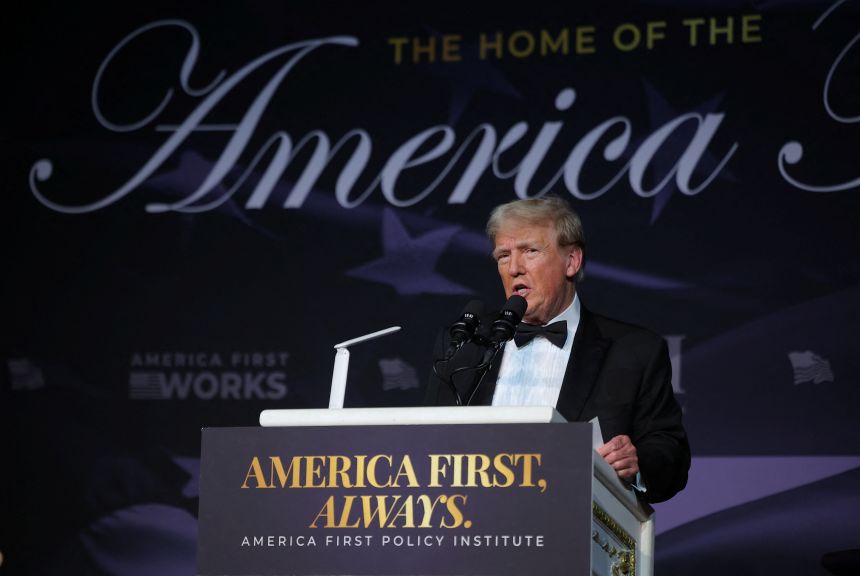
Machado was awarded the Nobel Peace Prize last week for “keeping the flame of democracy lit in the face of darkness,” according to the Norwegian Nobel Committee.
The committee praised the opposition leader as “one of the most extraordinary examples of civilian courage in recent Latin America,” particularly her efforts to achieve a peaceful transition “from dictatorship to democracy.”
Machado said his reason for dedicating his award to Trump was “absolutely fair and that is the sentiment of the Venezuelan people,” adding that the US leader was referring to the “tragic situation” in the country.
“I absolutely think he deserves the Nobel Peace Prize, given the incredible things that are happening in the world right now,” she said.
The US leader has repeatedly emphasized that he believes he deserves the award for ending “unresolvable” wars, including the conflict between Israel and Hamas, during his second term.
President Trump said he spoke with Machado after learning the news and that she was “very nice” to him over the phone. Machado also publicly thanked then-President Trump on social media for his “steadfast support of our cause.”
Machado was born in Caracas, the capital of Venezuela, in 1967 and trained as an industrial engineer before entering politics. In 2002, she founded Súmate, a volunteer group that promotes political rights and monitors elections.
Last year, she tried to run against President Maduro in the country’s presidential election, but her candidacy was invalidated by the regime.
She then switched support to fellow opposition figure Edmundo González Urrutia’s party and worked to mobilize the public and train election observers to ensure the vote was free and fair. After declaring victory, Maduro’s government moved to crack down on the opposition.
The watchdog group Human Rights Watch said earlier this year that the government was “killing, torturing, detaining, and forcibly disappearing people demanding democratic change.”
As a result, Machado has been living in hiding in Venezuela since last year, briefly emerging during protests in January.
Asked by Amanpour if he thought Maduro would dare to harm him, especially after winning the Nobel Peace Prize, Machado replied bluntly: “Oh, yes, I do.”
“They will do anything to stay in power, but at the end of the day, as we speak, he is more isolated than ever,” she said from an undisclosed location in the country.
CNN’s Christian Edwards, Char Lek, Kit Maher, Natasha Bertrand, Zachary Cohen, Kevin Liptak and Kit Maher contributed to this report.
