

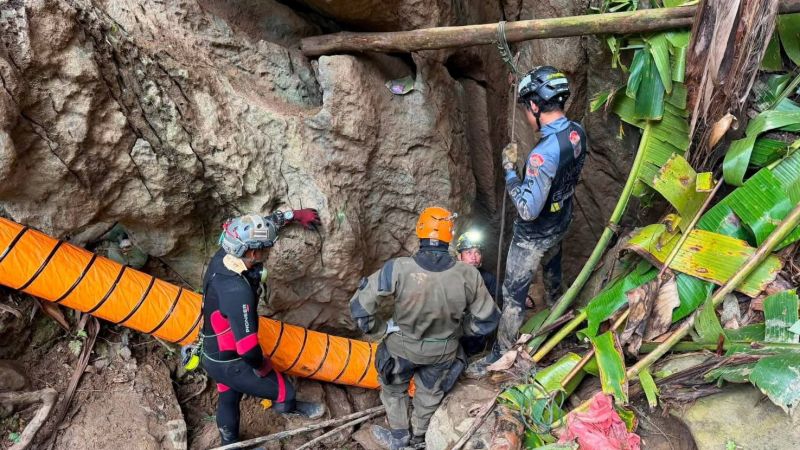

The village of Long Tien, near the site of the rescue attempt, is located in central Laos, about 130 miles northeast of the capital Vientiane. Today, it is a quiet village with several thousand people living primarily on the land.
Here lies a chapter in America’s Cold War history, once known as the “Most Secret Place on Earth.”
During the 1960s and early 1970s, Laos played a central role in the United States’ fight to stop the spread of communism in Southeast Asia. Long Tien was the secret headquarters of the U.S.-backed Hmong anti-communist army fighting the Pathet Laotian army, backed by the North Vietnamese army.
At its peak, tens of thousands of residents called the place home, including Hmong soldiers and their families, refugees from other parts of Laos, Thai soldiers, and a small force of American CIA operatives and classified U.S. Air Force pilots known as the Ravens.
It was the center of the largest paramilitary operation ever conducted by the CIA.
Today, the effects of the heavy US bombing campaign against Laos are still being felt. According to the Mines Advisory Group (MAG), an estimated 30% of the 270 million submunitions dropped in the country did not explode. According to MAG, these unexploded ordnance continue to kill, injure and hinder development across the country.
Around Long Tien Hill, villagers still rarely stray from well-maintained roads and trails to avoid unexploded ordnance.
Click here to learn more about Longtien’s history.
