

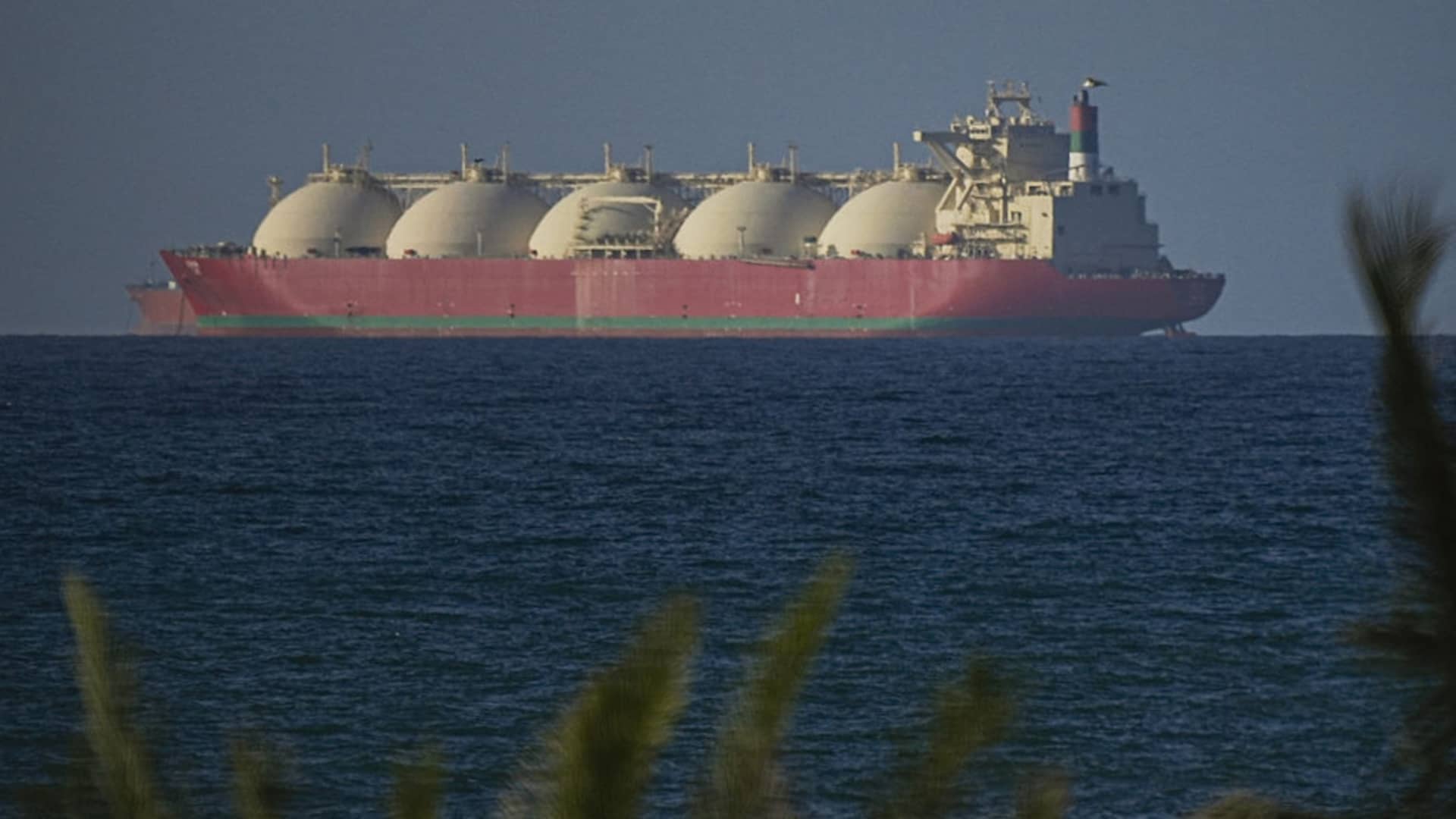

Iran declared on Friday that the Strait of Hormuz was open to commercial shipping during the ceasefire between Israel and Lebanon, but confusion quickly arose over whether the sea lanes would really be open unconditionally.
“Following the ceasefire in Lebanon, the navigation of all commercial vessels through the Strait of Hormuz is declared fully open for the remainder of the ceasefire period,” Foreign Minister Seyed Abbas Araghchi said on social media.
However, ships will have to follow a “coordinated route” announced by Iran’s maritime authorities, Araghchi said. It is unclear whether the Iranian government will force ships to pay tolls to transit the strait.
President Donald Trump expressed gratitude to Iran for opening the strait in a social media post on Friday. But President Trump said the U.S. naval blockade of Iranian ports would continue until an agreement is reached with the Iranian government.
President Trump said late Friday that Iran “just announced that the Strait of Hormuz is fully open and ready for business and full transit,” even though the U.S. blockade remains “completely in place.”
“Today is going to be a great and bright day for the world,” President Trump said in a speech at the Turning Point USA event in Phoenix.
Iranian Parliament Speaker Mohammad Bagher Ghalibaf quickly disputed President Trump’s claim that Tehran had allowed passage through the strait.
“If the blockade continues, the Strait of Hormuz will not remain open,” Ghalibaf wrote in a translated X post.
In fact, video footage from ship-tracking company Kpler shows that a number of tankers and cargo ships actually attempted to leave the waterway on Friday but turned back.
“It’s clearly not cleared for transit,” Matt Smith, Kpler’s director of commodity research, told CNBC.

Iranian media affiliated with the Revolutionary Guards reported a limited reopening of the strait. Sources close to Iran’s Supreme Council for National Security told Tasnim News that commercial ships need to coordinate with the Iranian military.
According to Tasnim’s report, vessels will not be allowed to pass if the vessel or its cargo has ties to a hostile country. According to the report, the strait will be closed if the US naval blockade continues.
Oil prices fell more than 10% on Friday, below $90 a barrel. Before the war, about one-fifth of the world’s crude oil supply passed through this strait. The closure of the sea lanes linking the Persian Gulf to global energy markets caused the largest oil supply disruption in history.
Israel and Lebanon agreed to a 10-day ceasefire on Thursday, starting at 5pm ET that evening. Israel’s military operation in Lebanon against Hezbollah, a militant group closely allied with Iran, has led to an impasse in negotiations between Washington and Tehran.
President Trump agreed to a two-week ceasefire on April 7 in exchange for Iran to fully open the Strait. But Ghalibaf accused the United States of violating the agreement by allowing Israel to continue operations in Lebanon.
The strait remains almost completely closed during the U.S.-Iran ceasefire as both countries contested the terms of the deal. Several commercial ships pass through this waterway every day.
Negotiations between Vice President J.D. Vance and Ghalibaf in Pakistan over the weekend fell short of producing a deal that would permanently end the war between the United States and Iran. President Trump said U.S. and Iranian negotiators could meet again this weekend in Pakistan for a second round of talks.
