

mexico city —
When millions of foreigners travel to Mexico for the World Cup this summer, they’ll find more than just colorful soccer murals, towering player statues and vibrant fan festivals.
Visitors to the country’s biggest tourist attraction will face stricter security measures and increased police presence to protect both fans and Mexico’s public image.
Nearly 100,000 security personnel will be deployed by the government to the three host cities of Mexico City, Guadalajara and Monterrey, as well as other locations hosting training centers and team base camps.


It’s part of an ambitious security strategy called Plan Kukulcan, named after the Mayan serpent god, and includes collaboration between dozens of federal, state and local agencies, as well as World Cup co-hosts Canada and the United States.
Mexican officials say the plan will keep the country safe despite the cartels’ history of violence, crime and impunity.
Experts agree that fans will be relatively well protected as Mexico has tightened security measures this summer, but warn that parts of the country remain vulnerable to threats that could affect tourists and residents to varying degrees.
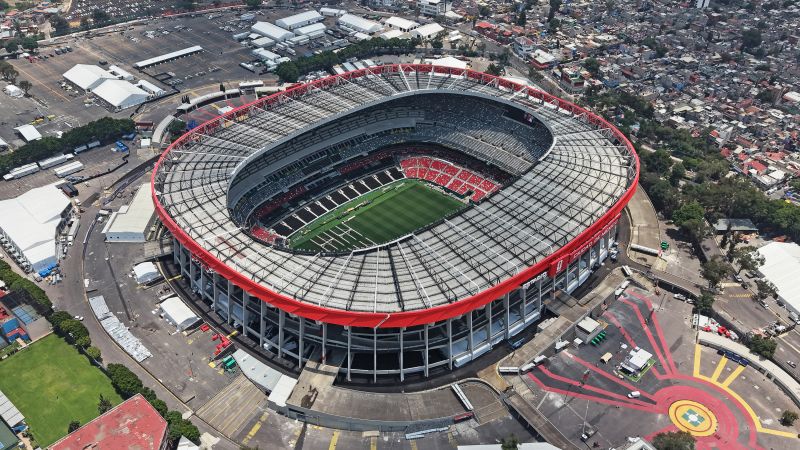
The capital, which will host five World Cup matches including the opening match on June 11, is considered one of the safest places in the country, but it is not without risks.
Víctor Manuel Sánchez Valdés, a researcher at the Autonomous University of Coahuila, said that although it is not dominated by major cartels like the other two host cities, criminal organizations are still active and involved in various illegal activities.

“There’s a very large network of piracy, human trafficking, prostitution, obviously drug trafficking, some extortion, but it’s also the region with the highest number of police per capita and the highest number of security cameras, which makes the crime different,” Sanchez told CNN.
As in other world cities, tourists in Mexico’s capital can encounter street crime such as pickpocketing, robbery, and fraud.


Teresa Martínez, a professor and researcher at the Faculty of Social Sciences at the Monterrey Institute of Technology, said transportation is also a security issue in the metropolis of about 22 million people.
“In a city like Mexico City, you have to make sure that the transportation system is up all night, and that requires a series of decisions beyond just having security guards. For example, other things are needed to ensure that the transportation system is safe, viable, and accessible to all fans, foreign or not,” Martínez said.
To reduce security risks, authorities have reportedly deployed around 56,000 police officers across the city, including traffic police, special forces, tourist police and aerial surveillance.
Dozens of security guards armed with shields and automatic rifles are currently guarding the city’s main square, El Zocalo, where the Fan Festival will be held from June 11.
Guadalajara, which will host four World Cup group stage matches, is beset by two of the country’s biggest crises: cartel violence and disappearances.
The city is the capital of the state of Jalisco, which is dominated by the Jalisco New Generation Cartel, one of the largest and most dangerous cartels in the country. Its grip on the Mexican government is so strong that after Mexican authorities arrested its leader Nemesio “El Mencho” Oseguerra Cervantes in February, the group retaliated with violence, torching vehicles and businesses while clashing with security forces.

The state is also known for having the highest number of missing people in the United States, with approximately 16,000 people reported missing, according to the state government of Jalisco. For years, private groups conducted near-daily searches across the state, uncovering hundreds of bodies of murdered loved ones buried in secret graves. Last year, a body was found not far from the city’s main stadium, where World Cup matches will be held.
“Of the three (host cities), Guadalajara seems particularly noteworthy,” Martinez said.
Experts say these serious crimes generally affect residents, but that doesn’t mean visitors aren’t at risk.
“What could happen is primarily petty theft, fraud, opportunistic crimes, etc., which have nothing to do with this crime control,” said Victoria Dittmar, a senior researcher at Insight Crime, a Mexican think tank.
Monterrey, like Guadalajara, is a city with a significant presence of organized crime, Dittmar said.
Sánchez said Monterrey is considered a major drug trafficking zone because it is located in the state of Nuevo Leon, which borders the United States.


In addition to fuel theft, which is a major problem in the country, it is also notorious for violence between rival cartels and money laundering.
Sanchez said criminal organizations also engage in drug trafficking and extortion of residents in urban areas.
As in Guadalajara, Monterrey’s high-level crime is not expected to significantly impact foreigners, who may still be targets of street crime and fraud.
Experts and authorities have warned that problems related to fraud and piracy, particularly the sale of counterfeit tickets, can occur in any region of the country.
“For example, if we’re talking about travel fraud, counterfeit tickets, fake tours, obviously the target of those scams is tourists, especially domestic and international tourists,” Martinez said.
Authorities are trying to reduce that risk by running an awareness campaign encouraging fans to buy products and services from trusted sources.
Human trafficking is also a major concern nationwide.
Authorities, NGOs and researchers fear that the influx of tourists will lead to increased demand for sex tourism, and that criminal gangs will coerce more vulnerable populations, such as children, poor communities and migrants, into prostitution.
“There’s no denying that some of the people who come to the host city to watch soccer are also there to consume, and that’s disgusting but true. They end up consuming bodies that they consider disposable,” Martinez said.
Organized crime-related violence is definitely a concern for fans considering traveling to Mexico. But Dittmar said criminal groups also profit from tourism and are likely to try to curb the deterioration of security.
In resort destinations where fans are expected to visit, such as Cancun and Puerto Vallarta, criminals are extorting restaurants, nightclubs and hotels, extorting a portion of the proceeds from tourists.
“Stability is therefore in the interest of organized crime groups…because these local businesses are very profitable, especially for regional organized crime groups,” Dittmar said.
Experts say Mexico’s largest city will be largely safe for foreigners during the World Cup. But once the tournament is over and tourists return home, Mexico’s problems will still remain, and its residents will have to face them without the added benefits of a World Cup security strategy.
This reignited common criticisms that Mexicans have had against their government. The government places too much priority on the safety of foreigners over its own citizens.
“This is a complaint that many people are crying out, especially regarding the missing persons crisis,” Dittmar said.

In the weeks before the World Cup, search groups staged a protest in Mexico City, criticizing authorities for funneling money to tournaments aimed at foreigners and not spending enough on searching for missing people at home.
Mexican President Claudia Sheinbaum had previously denied allegations of inaction.
Sanchez noted that more organizations are expected to voice their concerns throughout the tournament.
“I think they are also going to use the World Cup as a way to bring some of these issues to light. You can’t rule out protests outside stadiums, at subway entrances, in fan zones. Organizations and organizations will certainly use the World Cup to highlight issues that have been ignored or not adequately addressed,” he said.
