

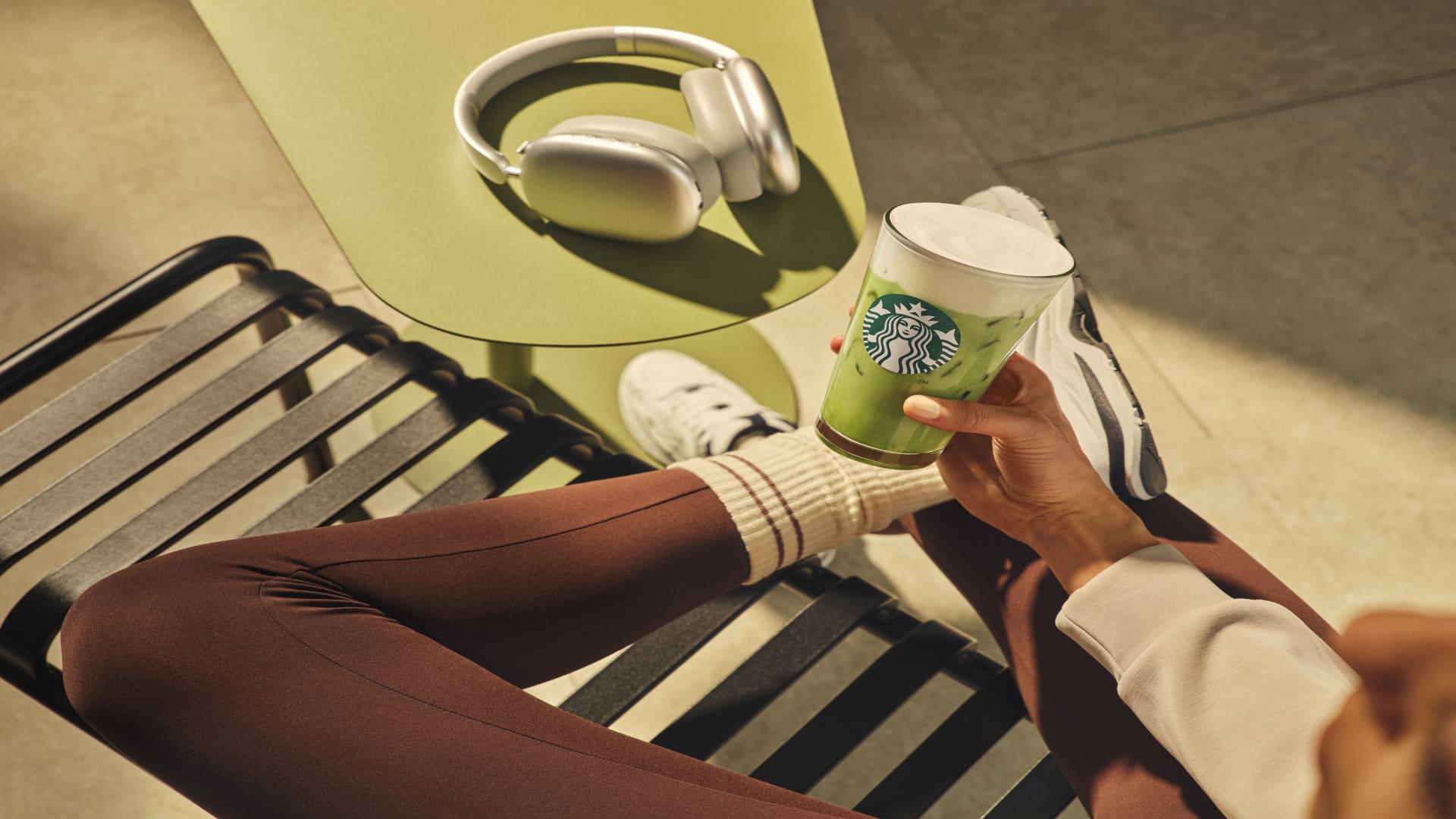
Starbucks Iced Vanilla Protein Matcha Latte.
starbucks
Beverage brands are tapping into the growing demand for functional drinks among younger, health-conscious consumers by introducing increasingly innovative products, such as protein-fortified coffee and CBD-infused soda.
As consumers look for convenient ways to achieve their health goals, the $160 billion global functional beverage market is an increasingly lucrative category that includes all-purpose beverages that claim to promise taste and enjoyment along with health benefits.
“Functional beverages are beverages that get results,” Sally Lyons Wyatt, global executive vice president and chief advisor for consumer goods and food services at consumer insights company Sarkana, told CNBC.
“Convenience is definitely one factor, but it’s also the quest to live longer and healthier. Do you want to just have the drink that’s there, or do you want that drink to work more powerfully for you?”
Approximately 75% of Millennials and 80% of Gen Z consume functional beverages, ranging from energy drinks, probiotic drinks, and vitamin-fortified drinks, according to EY’s latest Consumer Beverage Survey of more than 2,500 adults in the United States and Brazil.
According to EY research, more than half of respondents say they are willing to pay more for drinks that support their health and wellness goals.
Additionally, Circana’s 2026 Beverage Evolution Report found that while approximately 64% of consumers sometimes choose to have a drink as a snack, that percentage jumps to 70% for 25-34 year olds, indicating a growing desire for drinks to replace meals.
starbucks To capitalize on the all-purpose wellness drink craze, the company launched protein coffee in stores in the U.S., Canada and Europe last year, and began expanding its ready-to-drink protein coffee offerings in supermarkets in 2024.
Starbucks Iced Caramel Protein Americano.
starbucks
Sam Henderson, Starbucks’ EMEA group beverage development manager, told CNBC: “Functional beverages are really pervasive across all food and beverage categories right now, and protein is probably a prime candidate.”
“We sell (almost) the same amount of protein cold foam as flat whites. As you can imagine, flat whites are a phenomenally popular beverage, and proteins are performing similarly at this point,” he said.
A wider range of industries, including French food and drink companies, are also looking to enter the market. Danone It recently acquired Stephen Bartlett-backed protein drink maker Huel as part of a reportedly $1.15 billion deal. Huel offers nutritionally complete protein shakes as meal replacements.
Meanwhile, the soda giant pepsico and coca cola also followed the trend. Coca-Cola launched its prebiotic soda brand Simply Pop in the U.S. early last year, while Pepsi acquired prebiotic soda startup Poppi in a $2 billion deal.
“I think more than ever our consumers, all consumers, are looking for products that provide functional benefits. I think people are more educated than ever about nutrition and what they’re putting into their bodies,” Henderson said.
premium products
As coffee chains, soda brands and startups compete for a slice of the functional beverage market, many are charging a premium over traditional products.
In-store protein coffee at Starbucks costs about $5.75 to $6.75, while protein-enriched milk and protein cold foam can be added to any drink for an additional charge of $1 and $2, respectively. “These are definitely premium products,” Henderson said.
TRIP, a UK-based wellness drinks startup founded in 2019, sells adaptogen- and botanical-infused drinks with ingredients ranging from CBD to magnesium.
TRIP drinks can cost more than £2.00 ($2.60) a drink and are sold in supermarkets across the UK and some retailers in the US.
TRIP A cherry lemon mindful blend drink with magnesium and lion’s mane.
trip
“TRIP is a premium product and is not commercialized alongside traditional soda,” TRIP co-founder Olivia Feldy told CNBC. “We don’t make standard sodas. We create everyday health solutions that our customers appreciate.”
Ferdi explained that six years ago, functional drinks were an emerging concept, but now they have become a “basic consumer necessity” that people are willing to pay more for.
Additionally, sourcing key ingredients such as magnesium, lion’s mane, and ashwagandha, a medicinal herb believed to reduce stress, requires different standards than traditional soda manufacturing.
“Our consumers aren’t just paying to feel refreshed; they’re investing in functional benefits that support mental clarity and daily baselines.”
Does it actually work?
Experts and nutritionists previously told CNBC that they are skeptical about how effective supplements and vitamins like magnesium and collagen actually are. They cautioned that since supplements are not strictly regulated by the U.S. Food and Drug Administration, consumers should aim to get essential nutrients from food instead.
In fact, the UK’s Advertising Standards Authority (ASA) banned a TRIP advert for a cucumber mint mindful blend drink in 2025 because it made misleading claims about the drink’s health benefits. This included falsely suggesting that the drink could reduce stress and anxiety, as well as making unauthorized nutrition and health claims.
TRIP declined to comment on the ASA ruling, but Ferdi told CNBC last week that TRIP’s products are developed by a team that includes experts in nutrition, food science and culinary innovation.
“We also work closely with specialist formulation partners, regulatory experts and manufacturing partners throughout the development process to ensure our products meet the relevant standards in each market in which we operate,” she added.
A new “status symbol”
Both Starbucks and TRIP said Gen Z and Millennials are driving demand for their functional products, and social media is playing a role in increasing exposure.
TRIP, which became TikTok Shop UK’s No.1 drinks brand in January 2025, utilized a ‘social first’ strategy to tap into this younger consumer group.
“Social media has been a huge catalyst for this, turning functional drinks into a status symbol,” said Ferdi, co-founder of TRIP. “On platforms like TikTok and Instagram, choosing drinks that support your mental baseline has become a lifestyle statement.”
In fact, 72% of Gen Zers turn to social media for food and beverage-focused wellness trends, according to 2025 data shared with CNBC by food and beverage analytics company Datassentials.

“They (younger consumers) will be driving growth over the next five years because they are entering a period of higher incomes, which will give them more purchasing power,” explained Circana’s Lyons-Wyatt.
“If they’re going to pay for something, they want to get the most out of it, so coffee that has protein and other benefits will probably outperform something that’s just a good old traditional option,” she added.
