

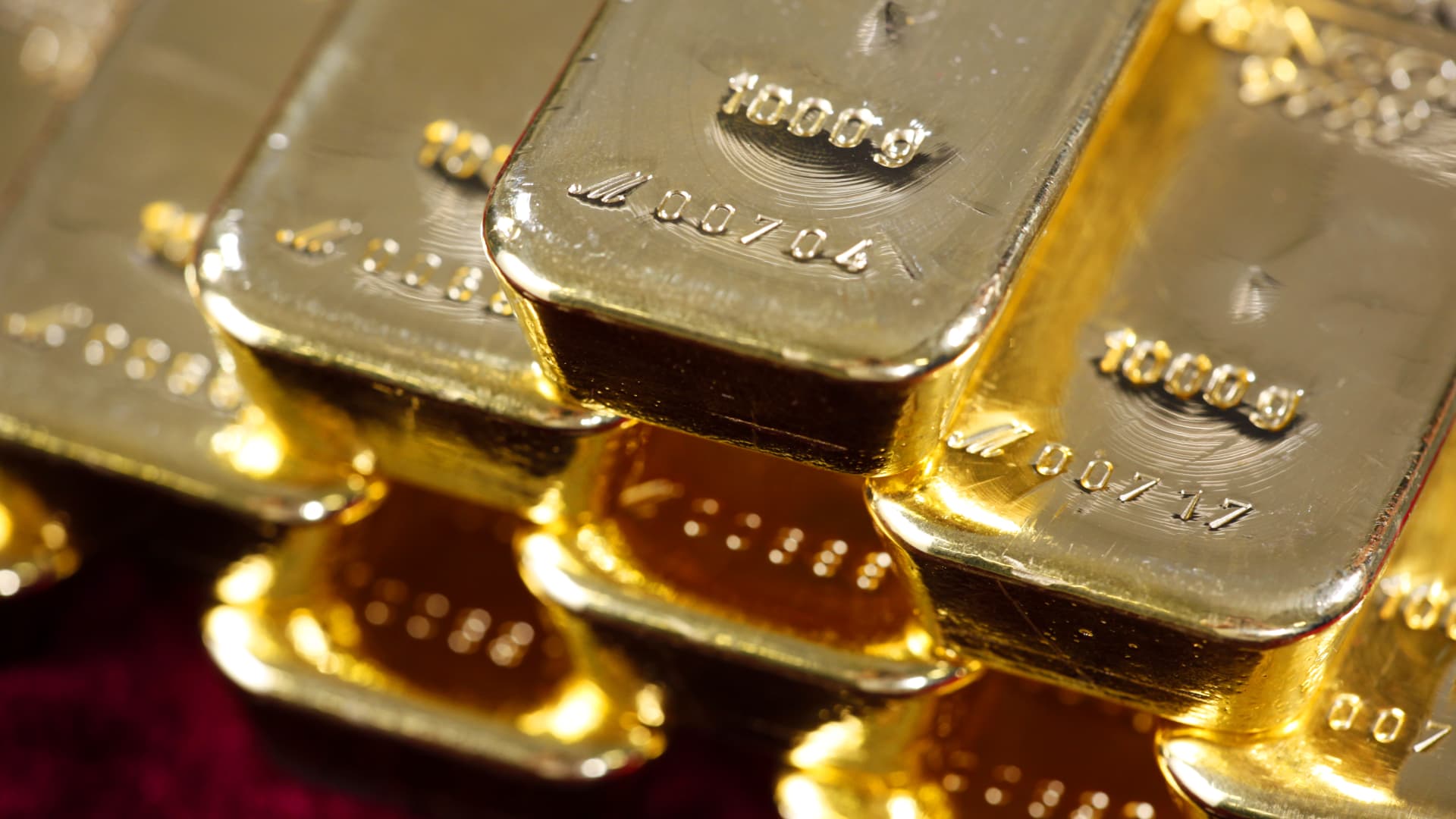
Deutsche Bank said the central bank’s increased preference for gold in its reserves means there is more room for the precious metal to appreciate. Gold’s share of central bank reserves has now tripled to 30% compared to the 1990s, as monetary policymakers seek a hedge against geopolitical turmoil, strategist Mallika Sachdeva said in a report published Monday. The share of US dollars in foreign central bank reserves fell from more than 60% to 40%. “The fact that the difference between the dollar and gold in foreign exchange reserves is currently only 10% is quite remarkable,” Sachdeva said. The London-based strategist said central banks appear to be reversing a trend seen in the 1990s, when they shifted exposure from gold to the US dollar. Sachdeva acknowledged that about 80% of the rise in gold’s share of central bank reserves was due to price increases rather than new purchases. Gold prices posted their biggest annual increase last year since 1979 (ironically, the year of the Iranian revolution), rising more than 40% in the past 12 months. @GC.1 1Y Mountain Gold Futures, 1 Year However, Sahadeva said central bank purchases still account for a significant portion of the increase in reserve holdings, and that often central bank purchases contribute to higher gold prices. “Volume and price are thus endogenously related, and both are a drag on gold’s share appreciation,” Sachdeva said. Gold has long been considered a safe-haven asset for investors seeking security in times of global conflict. Investors turned to gold after 2022, first as Russia invaded Ukraine and then as the US and Israel attacked Iran. The strategist said where gold goes next will be determined in part by how much gold and US dollars emerging market central banks end up holding. Emerging market central banks have accounted for all central bank gold purchases since the global financial crisis, according to a Deutsche Bank analysis of International Monetary Fund data. Even if the emerging market’s foreign exchange reserves fall to $5 trillion, with the aim of holding 40% of it in gold, bullion prices could reach $8,000 an ounce over the next five years, strategists said. This is about 70% above the level at which gold is currently trading.
