

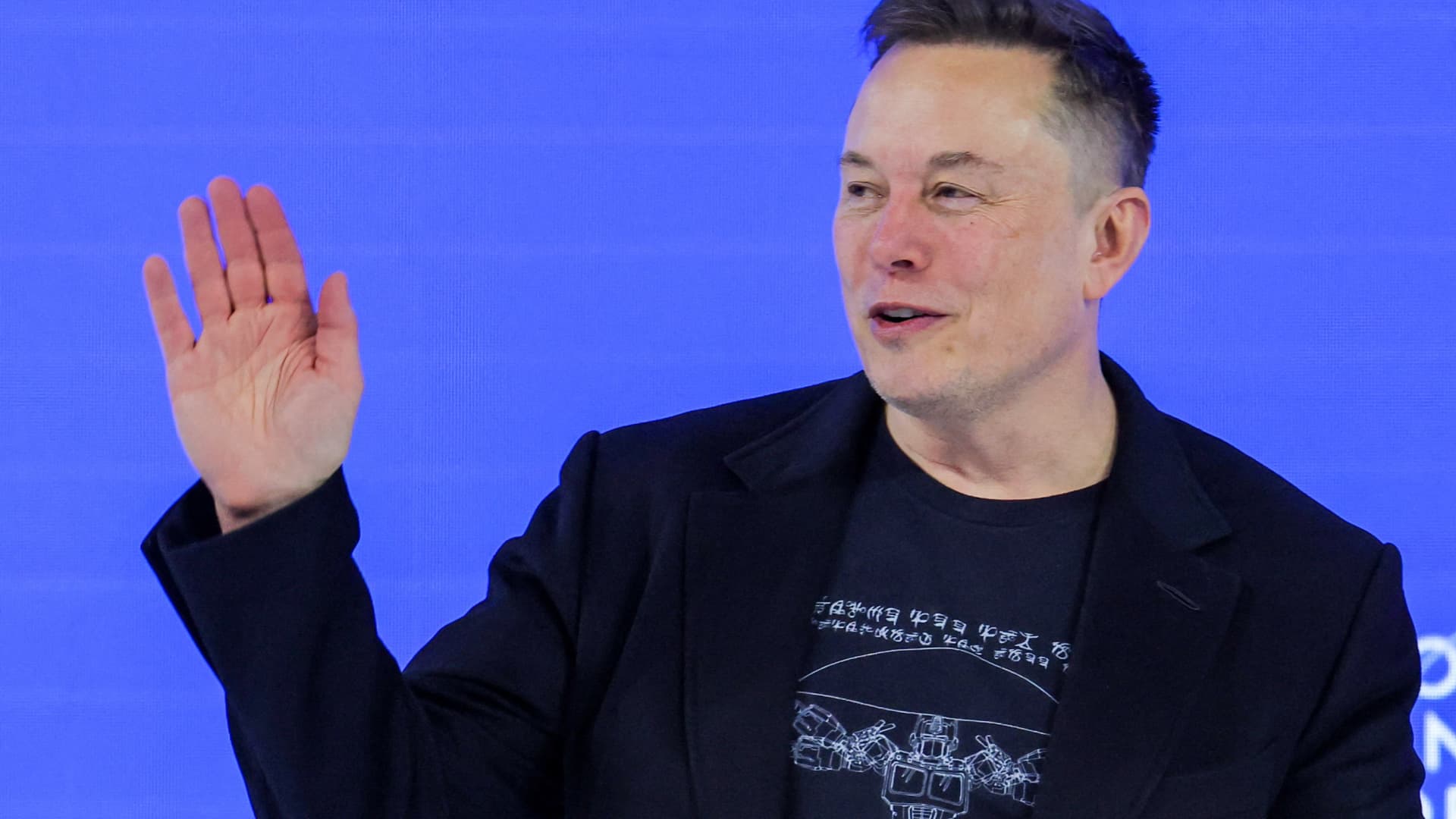
CNBC’s Jim Cramer called Tesla a buy Thursday after the company’s latest results and Elon Musk’s comments on the call. “As someone who pays attention to all the other technologies, I would be a Tesla buyer right now,” Cramer said on “Squawk on the Street.” He argued that investors focused on short-term concerns are missing Tesla’s long-term potential. The electric car maker reported mixed results Wednesday night, with first-quarter adjusted earnings of 41 cents per share compared to expectations of 37 cents. However, sales were $22.39 billion, slightly lower than the forecast of $22.64 billion. Shares fell about 4% on Thursday as investors reacted to increased capital spending and possible delays in the rollout of key initiatives such as robotaxis and fully autonomous driving. Cramer said the tone of Musk’s comments on the call reinforced his bullish view of Musk, noting the Tesla CEO’s continued emphasis on long-term innovation, particularly around artificial intelligence and robotics. Cramer highlighted Tesla’s humanoid robot Optimus, which Musk previously said could be the company’s most important product. “This is why you own it,” Cramer said, noting that Musk is “thinking much bigger than anyone else,” with the possible exception of Nvidia CEO Jensen Huang, and is focused on building innovative technology rather than optimizing short-term results. As speculation continues about a closer relationship between Tesla and SpaceX, which is expected to seek an initial public offering later this year, owning a stake in the EV maker increasingly represents a broader bet on Mr. Musk’s broader corporate ecosystem. Last month, SpaceX acquired Musk’s xAI startup, which also includes the Grok chatbot and X, formerly known as Twitter. Musk confirmed that Tesla will increase capital spending “significantly,” a move that is expected to worry investors concerned about profitability and free cash flow. But Mr. Kramer framed such spending as a strategic investment. The negative market reaction also reflects skepticism about the timeline for self-driving cars, with Musk suggesting that fully unsupervised capabilities may not arrive until later this year. Kramer said the focus is seeing the trees and missing the forest. “[Musk]is thinking so big that it’s tempting to think that maybe within the next 20 years, he’s going to get rich by buying this stock.”
