

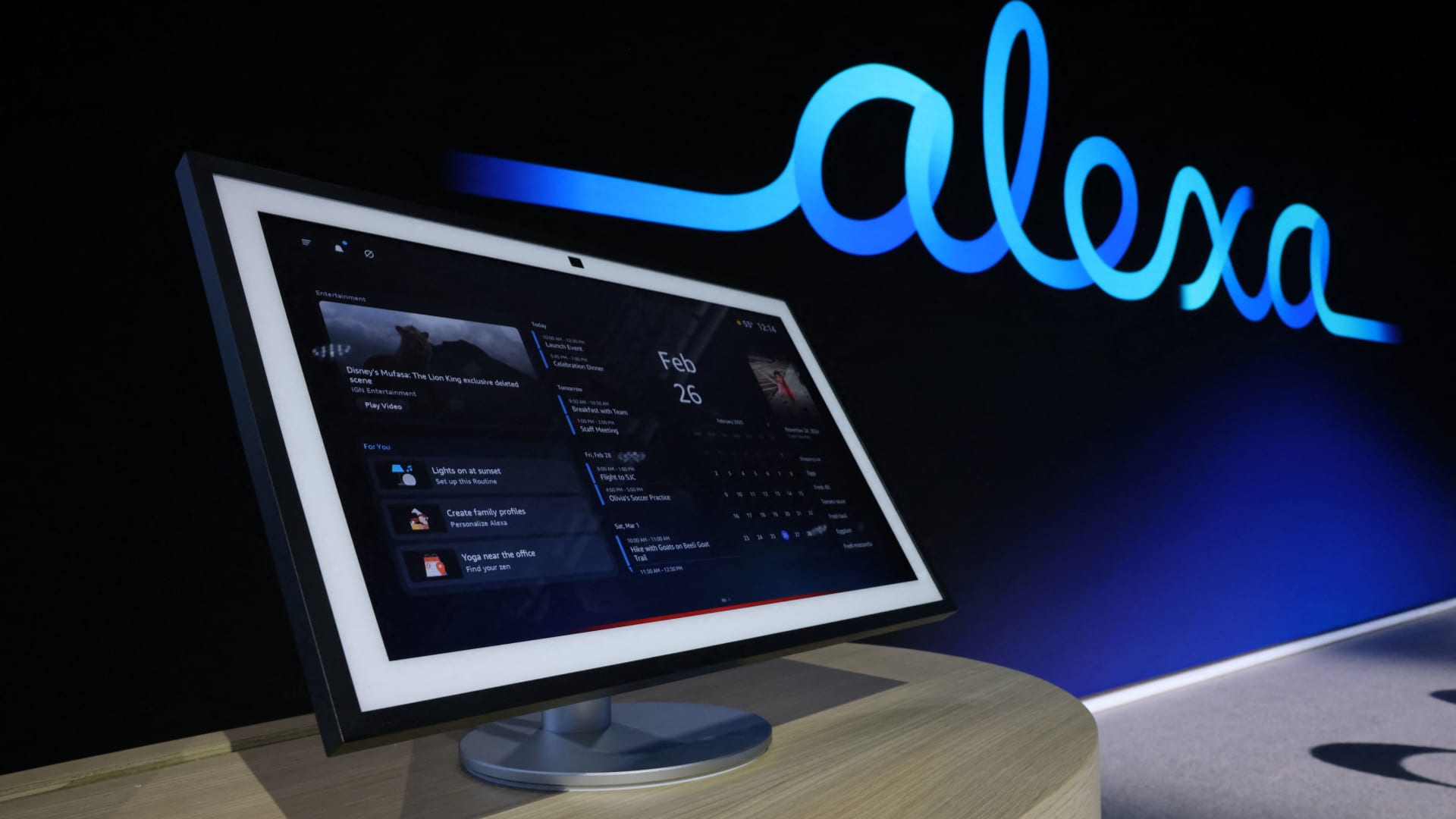
Amazon devices on display at the Amazon Devices Launch Event in New York City on February 26, 2025.
Brendan McDiarmid | Reuters
Amazon is ditching its Rufus chatbot and making Alexa assistant the centerpiece of its artificial intelligence shopping strategy.
The company on Wednesday announced Alexa for Shopping, an e-commerce bot that can answer queries and take actions on behalf of users. Amazon says the tool integrates Rufus and Alexa+ and uses your shopping history and other data to become “the world’s best, most personalized shopping AI assistant.”
As part of this move, Amazon is adding Alexa to the store’s search results, and when users browse a particular product, a chat window will display information and some product recommendations.
A little more than two years ago, Amazon announced Rufus as a key part of its website and apps to capitalize on the generative AI boom sweeping the tech industry and other sectors of the economy. At the time, Rufus was described as an “expert shopping assistant,” and Amazon continued to expand its capabilities, although it was still in beta.
While the standalone Rufus chatbot will be retired, Amazon said it will use Rufus’ recommendation features and shopping history for certain Alexa for Shopping queries. Users can summon Alexa for Shopping by clicking the cursive A icon on Amazon’s website or app, or through their Echo Show display.
Alexa for Shopping turns Amazon’s search bar into a Q&A engine, allowing users to compare products side-by-side and schedule purchases when products reach a certain price. You do not need to be a Prime member to use this tool.
As the e-commerce industry grapples with the rise of AI shopping bots, Amazon is evolving its strategy. open AI, google and Perplexity have been rolling out research tools and agents over the past year that threaten to disrupt the way people shop online. Some of these efforts have stumbled, and it’s unclear whether consumers are ready to hand over the task of completing purchases to bots.
Daniel Rausch, Amazon’s top Alexa executive, said the new service is better than other AI shopping tools because it has access to valuable data such as customer reviews and a vast product catalog. It can also ensure users know if a product is in stock or when it’s expected to be delivered, Rausch said.
“As I’ve been using this, I’ve started to understand why other AI efforts have struggled with shopping, because AI doesn’t just scrape results from the web and incorporate them into conversations,” Rausch said in an interview.
Earlier this year, OpenAI made significant changes to its AI Shopping plans. The company decided to discontinue Instant Checkout, a tool that allowed users to checkout directly from ChatGPT, and instead work with retailers to create dedicated apps within the chatbot. OpenAI said at the time that the shopping app would allow users to make purchases “more seamlessly.”
Rausch said he wasn’t surprised that “other companies basically had to put back a lot of functionality” that was incomplete or disjointed.
“It’s not worth it,” he said. “Shopping is not something you do as a side quest.”
Amazon has been reluctant to partner with rival AI platforms or open up its site to outside shopping agents. CEO Andy Jassy said the company is “in discussions” with third-party agencies and looks forward to working with them, but Amazon continues to block many bots from accessing its site.
At the same time, it launched “Buy for Me,” which uses AI to buy products on behalf of customers, including products sold on other retailers’ websites. The tool sparked backlash from some retailers who said they had never opted in to the program.
By inserting Alexa for Shopping into search results, Amazon is leveraging a valuable asset for promotion.
The move could be disruptive for Amazon’s millions of third-party sellers, who pay large sums of money to promote their products and rank high in traditional search results. Amazon calls these ads sponsored product listings, and they make up the bulk of the company’s ad revenue.
Alexa for Shopping will place ads in relevant places to “enhance” the shopping experience, Rausch said, adding that it is not designed to “narrow down” search results.
“Depending on where they are in their journey, in some cases they are there to introduce more products to customers,” he said.
Video: Cramer interviews Amazon CEO Andy Jassy

