

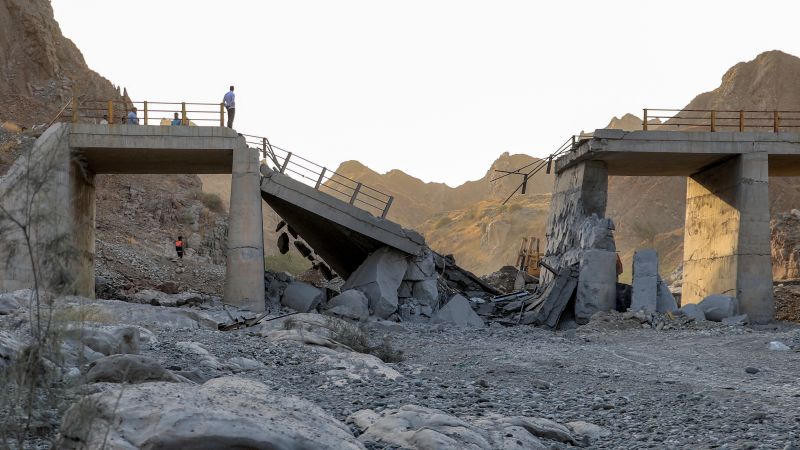
Kuwait’s Ministry of Electricity, Water and Renewable Energy announced on Sunday that Kuwait’s power generation and desalination facilities were attacked by Iran for the second consecutive day.
On Saturday, Iranian state officials said the country’s desalination facilities were also damaged by a U.S. missile attack. CNN called on the US military to respond.
This plant, which converts seawater into drinking water, is essential in the Middle East, providing a critical lifeline and supporting certain remote areas from drought. Some countries in the region rely on desalination for almost all of their drinking water.
In Kuwait and Oman, desalination accounts for approximately 90% of freshwater demand. In Bahrain, it is 85%, and in Saudi Arabia, it is about 70%. Major Gulf cities such as Abu Dhabi, Dubai, Doha, Kuwait City and Jeddah rely almost entirely on desalinated water.
Iran is less dependent on drinking water desalination than other Gulf countries. Still, this process is key to providing water to coastal and island communities and offsetting droughts.
Desalination plants were also targeted in March when the current conflict began. At the time, the World Water Council, a United Nations organization that advocates for global water security, condemned the attack and called on all parties to “fully respect their obligations under international law.”
In a statement, it pointed to a clause in the Geneva Conventions that prohibits combatants from attacking resources essential to civilian survival “such as drinking water facilities and supplies.”
CNN’s Katherine Nichols contributed to this report.
