

Lee este artículo en español
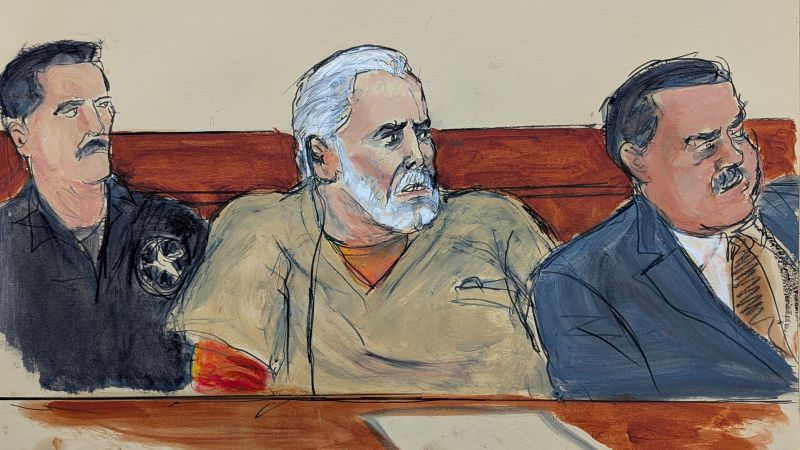
Mexican drug lord Ismael “El Mayo” Zambada was sentenced to life in prison in the United States on Monday, ending one of the most significant cartel prosecutions since the conviction of Joaquín “El Chapo” Guzmán.
The co-founder of the Sinaloa cartel pleaded guilty last year to leading a continuing criminal enterprise, admitting to trafficking millions of kilograms of cocaine over decades, avoiding the possibility of the death penalty.
As part of the plea agreement, the court also ordered him to forfeit $15 billion in drug trafficking profits, according to the U.S. Department of Justice.
“El Mayo’s conviction is historic and reflects the Department of Justice’s commitment to eliminating cartels and transnational criminal organizations that threaten American lives,” said A. Theisen Duva, Assistant Secretary of Justice.
Before learning his fate, Zambada addressed the court and accepted responsibility for his crimes. He apologized to the countless people and families harmed by his actions and said he did not plead guilty to cover up what he had done, but because he knew it was wrong.
He called on young people not to follow his path, saying: “Choose another path. There is no future in violence. It only leads to prison and death.” He added: “We must end the violence in Mexico and elsewhere. Too many lives are being lost. No one wins.”
Born in Sinaloa, Zambada worked as a farmer in his youth. In the 1980s, he began working with the Guadalajara Cartel and later with the Juarez Cartel. At the time, the Juárez Cartel was led by Armando Carrillo Fuentes, a well-known drug trafficker known as “El Señor de los Cielos” (“King of the Sky”) for his use of a large fleet of small planes for drug trafficking.
After Carrillo Fuentes’ death, El Mayo created his own criminal organization, the Sinaloa Cartel, which he co-led with El Chapo for many years. The Sinaloa Cartel, also known as the Pacific Cartel, expanded the production and shipment of drugs to the United States, including heroin, marijuana, methamphetamine, and now fentanyl, and controlled cocaine trafficking from the southern part of the continent.

The U.S. Treasury Department has implicated him in a money laundering scheme involving Mexican companies and government contracts, another factor that has led to the cartel being considered one of the world’s largest criminal organizations.
As El Mayo grew in power (a fact that put him in the crosshairs of the US, which offered a $15 million reward for his capture), many of his relatives were arrested and extradited to US territory.
One of them was his son, Vicente “El Vicentillo” Zambada Niebla, who was arrested in Mexico in 2009 and extradited to face charges in Illinois. He pleaded guilty to drug trafficking in 2013 and was sentenced to 15 years in prison in 2019.
Many of those indicted cooperated with U.S. authorities in exchange for reduced sentences and assisted in the trial against El Chapo, who was also sentenced to life in prison in 2019.
After a period of intense internal conflict that included attempts on his life, El Mayo remained the leader of the Sinaloa Cartel along with El Chapo Guzmán’s sons, known as “Los Chapitos.”
According to the think tank Insight Crime, the alliance between these factions was one of the main reasons the Sinaloa cartel solidified its position as one of the most powerful cartels in the region. However, this union deteriorated into constant internal struggles, which partially led to El Mayo’s arrest in the United States.
Questions about El Mayo’s capture and health issues
According to U.S. authorities, Joaquín Guzmán López, one of El Mayo and El Chapo’s sons, was arrested in El Paso, Texas, on July 25, 2024, after traveling from Mexico on a private plane. Prime Minister El Mayo later said he was lured onto the plane under false pretenses.
The manner in which he was arrested has become a point of friction between the Mexican and U.S. governments.
The government of Mexican President Claudia Sheinbaum has demanded that the United States clarify the circumstances of the arrest, saying it could be a violation of national sovereignty. Mexico’s attorney general’s office is investigating whether there was any irregularity in the transfer, and says it has opened 32 public investigations against El Mayo and has issued an arrest warrant.

Arrest of cartel kingpin spurs Mexican state violence to record levels
Videos on social media show record levels of violence as President Trump eyes military action in the region after the capture of the Sinaloa Cartel boss in El Paso, Texas.

Zambada has already indicated that he would accept the sentence imposed by the US justice system, but asked that he avoid being sent to a maximum security prison and that his health issues be taken into account.
A judge on Monday revealed sealed medical records showing Zambada is experiencing cognitive decline and other potentially progressive medical conditions. Prosecutors argued that he would have access to medical care in federal prison, but the judge said the Bureau of Prisons should carefully consider his health when deciding where to serve his sentence.
Experts told CNN that when a drug-trafficking leader is ousted, there are always plenty of others to replace him, so criminal organizations continue to operate — at least for now.
Insight Crime alleges that Mayo’s other son, Ismael “El Maito Flaco” Zambada Sicaros, who has not yet been arrested, could be his successor.
Meanwhile, a struggle for control has caused havoc in Sinaloa, with violent clashes continuing between the two main rival factions, Los Chapitos and Los Mayos.

According to official statistics, 2,829 intentional homicides were recorded in Sinaloa from September 2024 to May of this year. Organizations specializing in organized crime estimate that a high proportion of that total is attributable to conflict between the two groups, with thousands more missing.
Two chapitos, Iván Archivaldo and Jesús Alfredo Guzmán Salazar, remain at large. The US government is offering a multi-million dollar reward for information leading to their capture.
In addition to Los Chapitos and Los Mayos, the cartel has two other blocs, one led by El Chapo’s brother Aureliano “El Guano” Guzmán, and the other “El Chapo Isidro” led by Fausto Isidro Mesa Flores, according to the International Crisis Group report.
“The crime landscape in Sinaloa is highly fragmented,” David Mora, an analyst at the International Crisis Group and author of the report, told CNN. He pointed out that these four factions are allied with about 20 cells to control various illegal markets such as drug trafficking, control of slot machines, smuggling of alcoholic beverages and tobacco, and corporate extortion.
In this regard, Mr. Mora explained that Mr. Mayo’s decision is unlikely to result in any changes in the crime dynamics observed in Sinaloa.
“If he pleads guilty and is sentenced to life in prison, will that affect the production and trafficking of fentanyl? Absolutely,” he said.
