

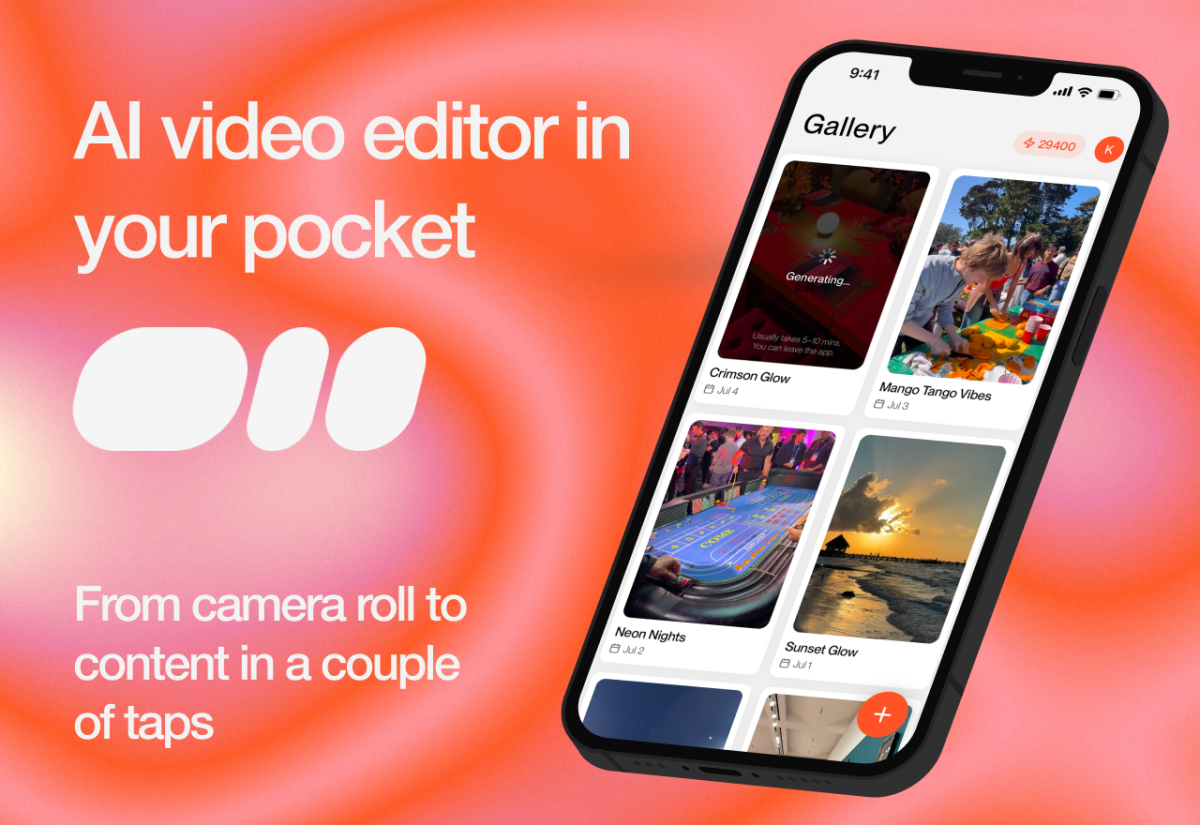
A new iOS app called Reelful uses AI to automatically transform photos and video clips from your camera roll into polished TikTok and Instagram Reels-style videos for social media. Reelful is designed for people who want to create social content but find traditional video editing tools too complicated or time-consuming.
The release of this app reflects a broader shift in video creation, as AI enables users to move beyond traditional creative tools to AI agents that can automate content creation. Reelful joins a growing wave of AI startups that are reimagining how content like Opus Clips and captions are created.
Reelful, currently part of a16z’s Speedrun program, was founded by Kate Deyneka, a former machine learning engineer at Snapchat who helped develop the video and image model.
Deyneka left the social media giant to build Agent Video Editor, which helps create short-form videos automatically, eliminating the need to spend time selecting clips, adding effects, recording voiceovers, and tweaking edits.
“I’d like to post more on Instagram, TikTok and YouTube Shorts, but video editing takes a lot of time. I don’t want to spend too much time on it because I have a lot going on in my life, especially now that I’m an early-stage founder,” Deyneka said in an interview with TechCrunch. “I’ve held a lot of events and met a lot of interesting people. This is something I see with all of my founder friends. Especially now that AI is booming, they have very active lives but don’t have time to edit. I see Reelful as a tool that helps people build their online presence and personal brand.”
Reelful works by having users enter prompts that describe the story they want to tell, whether it’s a trip summary, product demo, or event highlight. Users then record a 30-second sample to create an audio clone and select photos and videos from their camera roll. Reelful then plans the video, writes the script, adds AI narration, and assembles the final edit with captions, music, and sound effects.

Reelful turns still images into AI-generated video clips. For example, if a user includes a photo of a person cutting a mango, Reelful can animate that image to create a short video of the person slicing the fruit. AI-generated videos display a watermark that lets users know they were created with AI.
After Reelful generates a complete video, users can continue with further editing by chatting with the app to do things like swap the soundtrack, revise the script, or adjust other aspects of the video.
Deyneka said Reelful’s target audience, at least for now, is founders and business owners who need to continually create content to build their online presence, personal brand, and corporate brand. For example, a Bay Area salon may have a lot of content on hand about services and client transformation, but they don’t have the time or resources to turn that content into polished social media videos. That’s where Reelful comes in, says Deyneka.
“The use case I’m targeting is going to an event or meeting some nice people, recording a short interview with them, just uploading everything to the app on the drive home, and the video is ready by the time you get home,” Deineka said. “So I want to make it super easy for people to share their lives, their content, their expertise, without having to actively edit or set it up on their laptop.”
Reelful offers both one-time purchases and subscription plans. Users can purchase video credits that bundle 5 videos for $15, 15 videos for $43, or 33 videos for $90. The “Creator” subscription costs $25 per month for 10 videos, while the “Pro” plan offers 25 videos per month for $50. The Studio plan includes 60 videos per month for $100.
Reelful is currently only available on iOS, but Deyneka plans to release Android and web versions in the future.
If you buy through links in our articles, we may earn a small commission. This does not affect editorial independence.
