

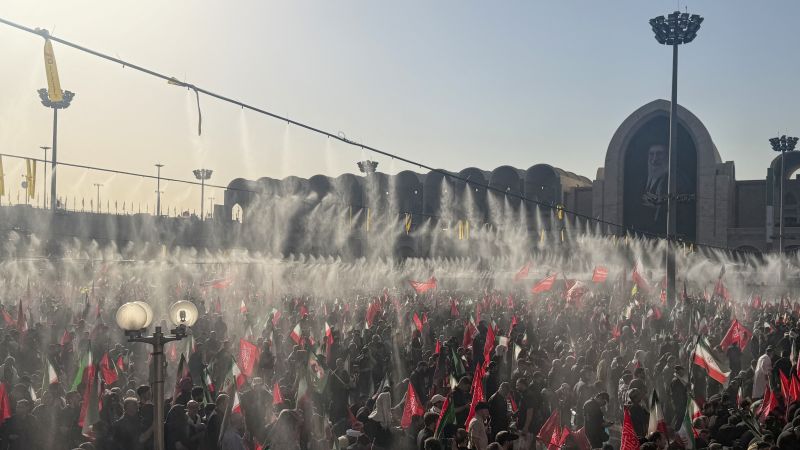
Iran is entering the second day of the multi-day funeral for slain Supreme Leader Ayatollah Khamenei on Sunday morning.
Thousands of mourners gathered at Tehran’s Imam Khomeini Grand Mosala, where the coffins of Khamenei and several of his family members are on display, but his son and successor Mojtaba has not been seen yet.
Here’s what we know:
Leader’s whereabouts: Mojtaba Khamenei has not been seen since the war began in February. He also did not attend a private ceremony for his late wife earlier this week. He has only communicated with his supporters through written statements shared by Iranian media.
Funeral: On the second day, Khamenei’s funeral prayers will be offered. The public farewell ceremony that began Saturday will continue afterwards. According to Iran’s Ministry of Health, about 15 million people are expected to take part in the ceremony over the next few days. Iranian authorities also expressed their gratitude to the foreign dignitaries who attended the funeral.
Anger among mourners: CNN reporters in Tehran spoke to some of the people who attended Khamenei’s funeral. They expressed anger and sadness at the loss of their leader, and some vowed revenge.
Lebanon: The Israeli military said on Saturday it had killed an “armed extremist” in southern Lebanon. The attack came more than a week after Israel and the Lebanese government signed a U.S.-brokered agreement outlining Israel’s withdrawal from two areas in southern Lebanon.
Netanyahu-Trump meeting: Israeli Prime Minister Benjamin Netanyahu spoke by phone with US President Donald Trump and agreed to meet in Washington soon, according to Israeli media reports. Trump confirmed the meeting in a phone interview with Axios’ Barak Rabid, adding that Netanyahu “knows who’s the boss.”
Strait of Hormuz: Several ships attempting to pass through the waterway that hugged Oman’s coast suddenly turned back Saturday, tracking data appeared to show, underscoring the strait’s difficulties despite early signs of recovery. At least three more ships initially turned back around the same time as the others, but later crossed the strait and approached the Iranian side of the waterway.
