

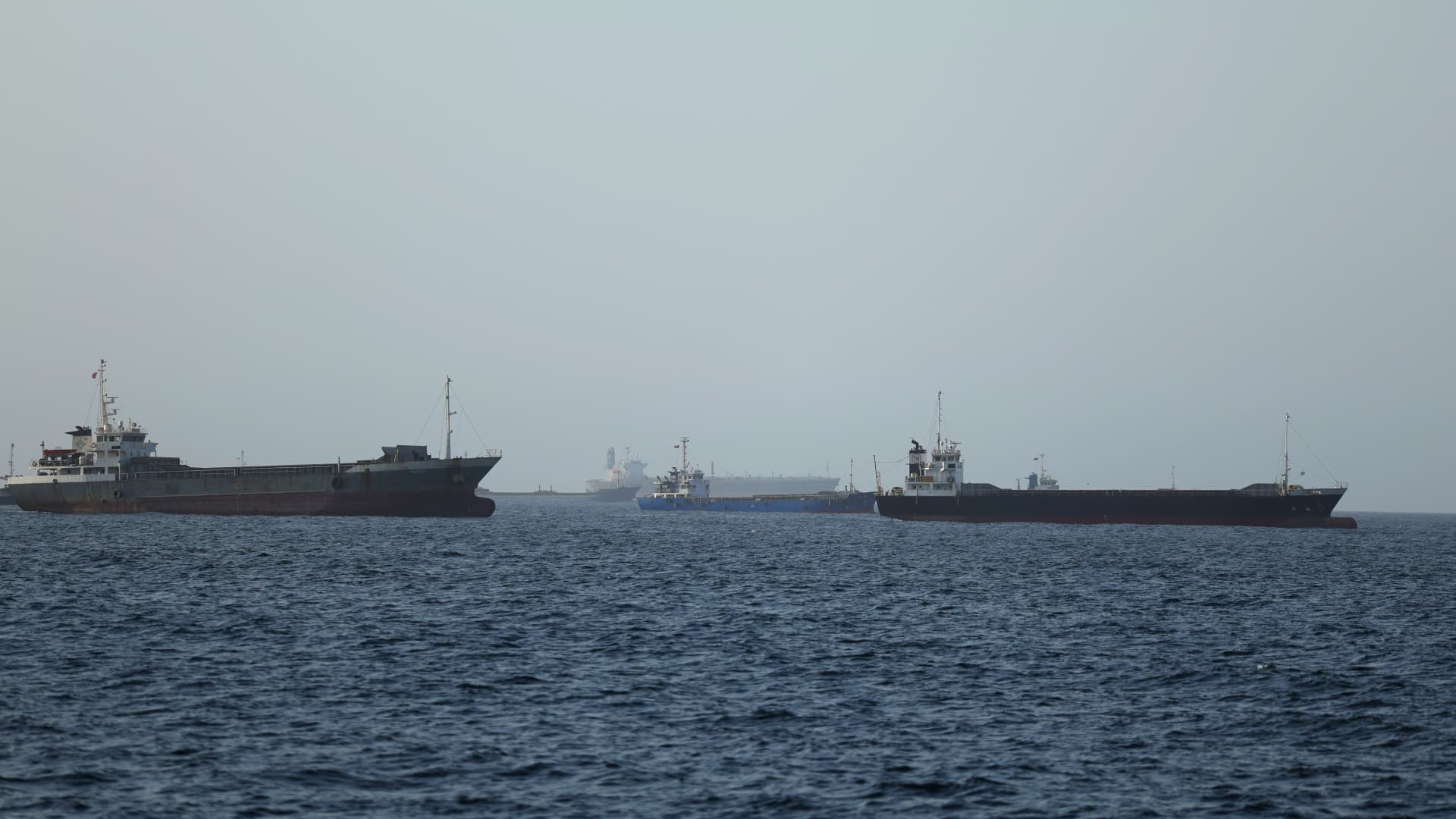

Oil prices fell on Tuesday as investors monitored tanker traffic through the Strait of Hormuz.
brent crude oil Futures prices, an international benchmark, fell 45 cents to $77.45 a barrel. West Texas Intermediate Futures It fell 34 cents to $73.52.
President Donald Trump said 19 million barrels of oil passed through Hormuz on Monday, calling the amount a record. CNBC could not immediately confirm the numbers. Before the Iran war, approximately 20 million barrels of crude oil and refined products were exported through the strait.
Iran declared the closure of Hormuz over the weekend, but U.S. Central Command said the strait remained open to shipping, sparking confusion over the status of the sea lanes.

brent crude oil
Meanwhile, the US Treasury issued a 60-day license allowing the production, delivery and sale of oil from Iran. This will make it possible to import Iranian crude oil into the United States and pay for the crude oil in dollars. The license expires on August 21st.
However, there were also concerns that Iran would use profits from oil sales to rebuild its military. President Trump was asked Monday if he could prevent such a scenario from happening.
“They’re not going to do that, so let’s wait and see,” Trump said during an executive order signing event at the White House. “They should be spending money to buy food for the people, because right now the people are very hungry and they are only buying corn and soybeans from us,” he added.
Despite Iran declaring a closure of the Strait of Hormuz over the weekend, Vice President Vance said “significant progress” had been made in talks in Switzerland. U.S. Central Command said Hormuz is not closed.
Recent developments appear to be increasing investor optimism that there may be a lasting solution.
“If you follow the trading patterns in oil prices over the last few weeks, you can see that the market is becoming increasingly confident that we are nearing an end to the conflict,” Scott Kronert, managing director of U.S. equity strategy at Citi Research, said on CNBC’s “Squawk Box Asia.”
“This energy price overshoot with its inflationary implications should subside in the coming weeks and months,” he added.
Indeed, in a joint statement on Tuesday, Oman and Iran emphasized their “sovereign rights in the territorial waters” of the Strait of Hormuz.
