

“Mr. Money is a powerful gentleman,” said the 17th century Spanish poet Francisco de Quevedo.
Spain is certainly not immune to corruption, which has ruined the careers of many politicians in recent decades.
The crisis is most acute for current Prime Minister Pedro Sánchez, who has led the country for nearly eight years and has become one of the few European leaders to persistently and publicly criticize the Trump administration over Gaza, the Iran war and tariffs.
During Sánchez’s tenure, Spain became one of Europe’s most dynamic economies, despite the weakness of his ruling coalition, which includes separatist parties in Catalonia and the Basque Country.
Sanchez and his leftist Spanish Socialist Workers’ Party (PSOE) came to power in 2018 when a major corruption scandal engulfed the center-right Popular Party and forced a no-confidence motion to fail.
A similar cloud is now gathering around Sanchez, an astute politician known for outmaneuvering his opponents.
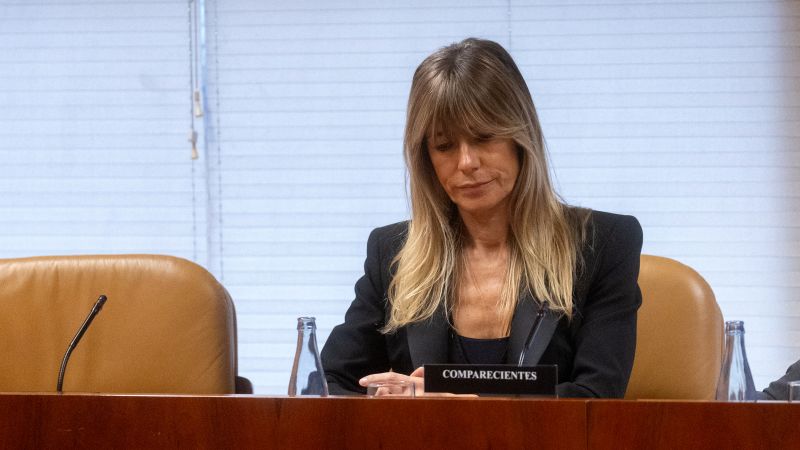
On Saturday, a Spanish judge ordered his wife, Begoña Gómez, to stand trial on corruption charges, handed over her passport and barred her from leaving the country. Gomez must appear in court twice a month.
Judge Juan Carlos Peinado had previously indicted Gomez on charges of embezzlement, misappropriation of influence, corruption in business transactions and misappropriation of funds, alleging that he used the marriage to advance his career at a Madrid university.
Both Gomez and Sanchez deny wrongdoing. Sanchez has frequently complained that the incident was politically motivated and a “sneaky farce.”
The investigation began in 2024 after far-right-linked anti-corruption group Manos Limpias (meaning “Clean Hands”) accused Gomez of spreading influence. At the time, Sanchez had been away from official duties for nearly a week while questioning whether he should continue in the role.
“Today is a frightening day for those who believe in justice,” Justice Minister Felix Bolaños wrote in X after the judge’s ruling on Saturday, adding: “In the end, the truth will prevail.”
Other commentators said the judge’s request went too far given that Gomez has police protection that prevents him from leaving the country. The judge even suggested that her police information might help her escape.

Spain’s leading daily El Pais wrote in an editorial on Sunday that the entire investigation was “characterized by disproportionate measures that seek maximum media attention and lack the impartiality and restraint that the public expects from the judicial system.”
The lawsuit against Gomez is just the latest incident involving Sanchez’s inner circle.
The headquarters of his ruling Socialist Party have been raided by police, and several of his close allies are under investigation, including former Socialist Prime Minister José Luis Rodríguez Zapatero and his former right-hand man José Luis Ábalos.

Zapatero is a suspect in cases involving organized crime, influence trafficking, and forging documents related to financing small airlines. He denied any wrongdoing. Sanchez vowed that the government would “fully cooperate with the justice system, fully respect Zapatero’s presumption of innocence and fully support (him).”
Avalos, who spent seven months in prison before going on trial in April, is accused of receiving kickbacks for purchasing $60 million worth of masks during the coronavirus pandemic.
Sánchez’s musician brother David is currently on trial in the city of Badajoz, near the Portuguese border, on charges of spreading influence over Sánchez’s appointment to the position nine years ago.
Mr. Sanchez is not named in any of the lawsuits, but they weaken his already fragile minority coalition, and the PSOE has suffered setbacks in several local elections.
Last week’s raid on the PSOE headquarters in Madrid, which focused on allegations of misappropriation of party funds, increased further pressure on him.
Spain’s High Court announced that a judge had ordered a raid on the party’s headquarters as part of an investigation into “a network allegedly aimed at undermining judicial procedures that influence (the party) or the government.”
The investigation focuses on whether the funds were used to pay journalists who criticized legal charges against party officials and allies.

Alberto Nuñez Feijó, the leader of the main conservative opposition party, last week called for Sánchez’s resignation, saying the government was on “the brink of death.”
Spain’s next election is due by August next year, and many commentators expect the coalition government to collapse by then.
Smaller Basque parties in the coalition government are already questioning whether their party can survive, despite Mr. Sánchez’s insistence that he will serve a full term. The far-left Schmal party also warned that it would not tolerate evidence of illegal use of party funds.
Opinion polls suggest that if elections are held now, Feijo’s People’s Party (PP) could win and form a majority with the far-right Vox party.
The political survival of Sanchez, the second-longest serving member of the European Union’s 27 nations, looks more precarious than ever. But Spain’s constitution favors the prime minister, who can only be removed if parliament supports an alternative plan.
Several parties in Spain’s divided parliament, especially the separatist factions with deep rivalry with the PP, will not support Feiju.
Few people supported Sanchez in his bid for re-election in 2023, but he won through careful coalition building. His greatest hope now may be to weather the storm. And I hope that the verdicts in the mounting lawsuits go his way.
