

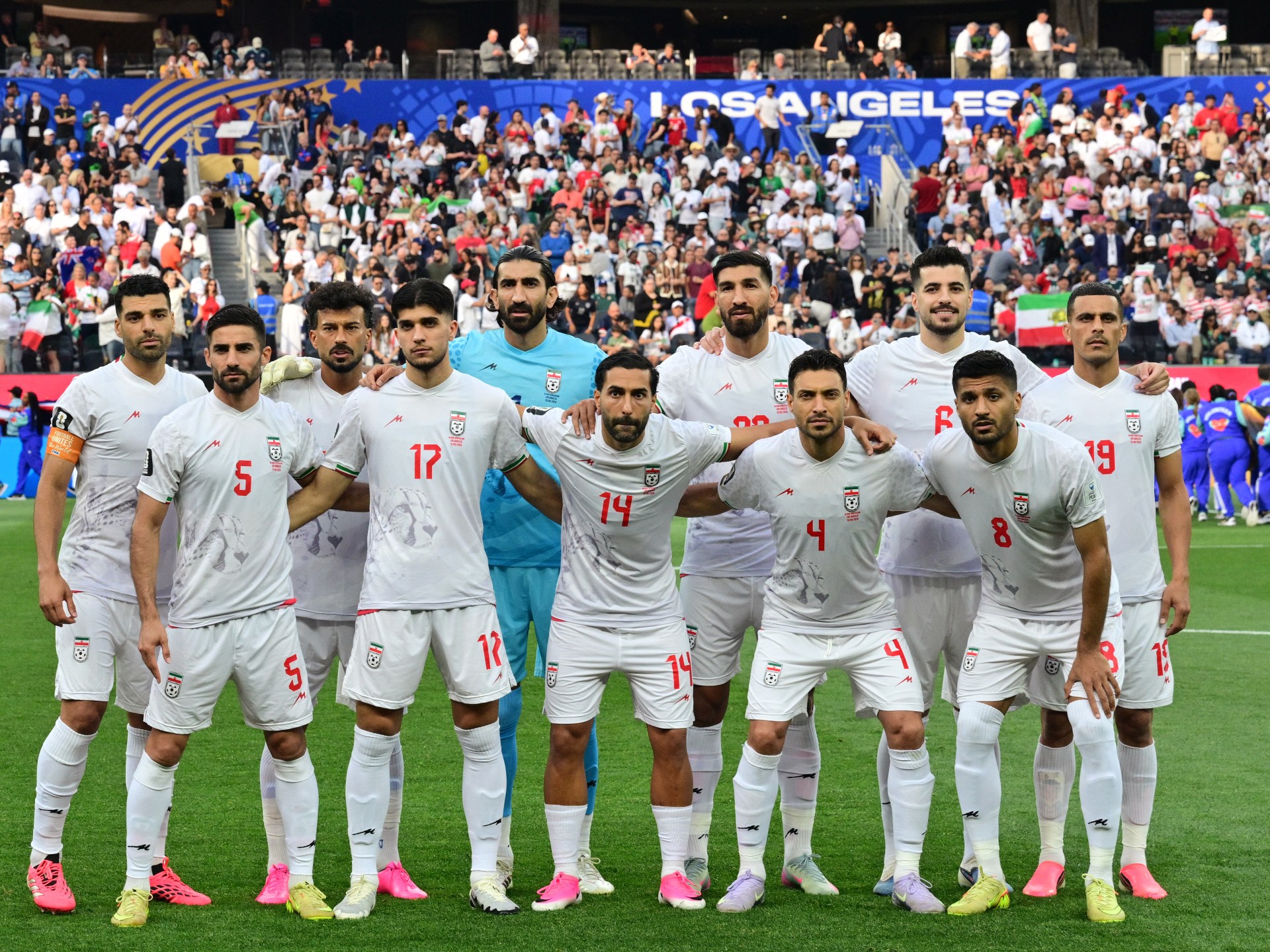
Iran’s soccer team began its World Cup campaign under the shadow of war with the United States. They soon became collateral damage in the conflict due to strict visa requirements and other hardships to the United States. Now, with the peace deal between the US and Iran in place, experts are asking what this means for Team Melli (known as Iran’s representative) in the tournament.
The host country of the World Cup has been at war with other countries at the time of the tournament, and Argentina was in the middle of a dirty war during the 1978 tournament, but there has never been a case where the host was involved in a conflict with another participating country like the United States or Iran.
Recommended stories
list of 4 itemsend of list
The United States and Israel began war against Iran on February 28th. Although a temporary ceasefire halted much of the heaviest fighting on April 8 and a peace deal was signed this week, tensions between the two countries remain high and spill over into the supposedly apolitical World Cup.
That bubble burst in March when US President Donald Trump said on Truth Social that while he welcomed Iranian representatives to the US, he “didn’t think it was appropriate for them to be there for their own lives and safety.”
The Iranian soccer team remained hostage to the whims of U.S. immigration control until just before the start of the tournament. The players were granted visas to the United States to play all group stage matches just 10 days before their first game against New Zealand in Los Angeles, but had to leave for their base camp in Mexico after the games. Negar Mortazavi, an Iranian-American political analyst and journalist, described this as “extra hostility” towards Team Melli.
FIFA president Gianni Infantino appeared to have received no assurance from President Trump regarding the Iranian team’s visa situation, and it remained unclear whether the team would even be allowed into the country.
Out of an abundance of caution, coach Amir Galenoei’s team changed their base camp from Arizona, USA, to Tijuana, Mexico, at the last minute. The United States insisted on Tuesday that its team must depart within hours of the first whistle. They arrived just one day before kickoff.
A memorandum of understanding between the United States and Iran began to be signed on Wednesday night, raising questions about its impact on Team Meri.

Neither side has announced a physical copy of the memorandum of understanding, and no World Cup-specific arrangements are expected to be written into it, but experts hope the agreement will lead to friendlier treatment of the Iranian soccer team in the United States.
“The situation could change if there is a peace agreement,” Mortazavi said in an interview with Al Jazeera.
“In recent days, we’ve seen a dramatic change in President Trump’s rhetoric on Iran. He’s suddenly talking about improving relations with Iran from a political and economic standpoint, and that could definitely extend to sports,” she continued.
The shift from threats to diplomacy began last week when President Trump wrote on his Truth Social platform that “our relationship with Iran is very different and better than previous administrations.” “We hope this whole process is quick, easy and smooth.”
Mortazavi said that despite the World Cup’s stance of distancing itself from politics, the US treatment of the Iranian team proves how politics can influence sports.
“We hope that the U.S. peace agreement will open the door to improved relations, and if the United States can show some goodwill to the team, we hope that it will have a positive impact on the team’s situation and remove some of the obstacles,” she said.
Ahead of the announcement of the peace deal, relations slightly thawed on Tuesday when the United States quickly reissued a multi-entry visa to Iranian winger Mehdi Torabi, whose visa had expired after the match against New Zealand.
But political scientist Niki Akhawan warned that President Trump could abandon the deal as he faces immense pressure from anti-Iranian hardliners, pro-Israel groups and Democrats who accuse him of giving Iran “too much” in the peace deal.
“But in the best-case scenario, the issuance of a multiple entry visa to Torabi may actually be a good sign of some flexibility on the part of the US to comply with its responsibilities as a host country,” Akhaban told Al Jazeera.
“The comments that President Trump made today toward Iran are friendly comments that may lead to better treatment of the Iranian team that has been treated the most unfairly. This is a sign that they are softening their unfair stance toward Iran.”
After Toravi’s lone act of kindness in renewing his visa, Akhavan’s caution was justified as tensions at the World Cup reignited.

Iran announced on Thursday it would lodge a complaint with FIFA after its soccer federation claimed its request to enter the United States was denied two days before Sunday’s game against Belgium.
“Despite submitting the preparation schedule for the tournament long in advance, the Iranian national football team once again faced restrictions imposed by the organizers, which affected the implementation of the technical staff’s plans,” the federation’s spokesperson said.
Part of the host country’s responsibility is the safety of each team, and Akhaban argues that U.S. decisions regarding Iran’s logistics at the World Cup were discriminatory and intentionally sought to harm the teams.
The logistical hurdles were further exacerbated by the withdrawal of World Cup ticket quotas for Iranian fans just before the start of the tournament. Additionally, although all soccer players were allowed to enter the United States, several members of the team’s technical staff were denied entry.
“It’s actively putting teams at a disadvantage. The whole idea is that everyone is equal on the playing field, and the U.S. actions to date run counter to that,” Akhaban said.
“One of the implications of this agreement is that they (the United States) will honor their responsibilities (as host country) and we can only hope that we see some changes.
“Because this is unfair to young people. This is their dream and they represent the people.”
Akhavan also emphasized that FIFA was able to urge the United States to fulfill its responsibility as host nation and rise above war and politics.
“Now that the deal is in place, I hope (Infantino) can use it as an incentive to make peace part of the World Cup agenda. Infantino and FIFA often show empty gestures toward peace, such as armbands and the FIFA Peace Prize,” Akhavan said, referring to Trump receiving FIFA’s inaugural Honor Award in December.
“Let’s see if we can actually translate some of that into physical reality in terms of the Iranian team.”
