

Reuters —
Swiss voters are expected to reject a proposal to limit the population to 10 million people in a referendum on Sunday, according to preliminary forecasts from state broadcaster SRF.
According to projections released by the SRF, approximately 45% of voters were in favor of the proposal and 55% were against it.
The likely rejection showed that a majority of voters prioritize economic stability and relations with the European Union over concerns that immigration is straining public services, driving up rents and increasing crime.
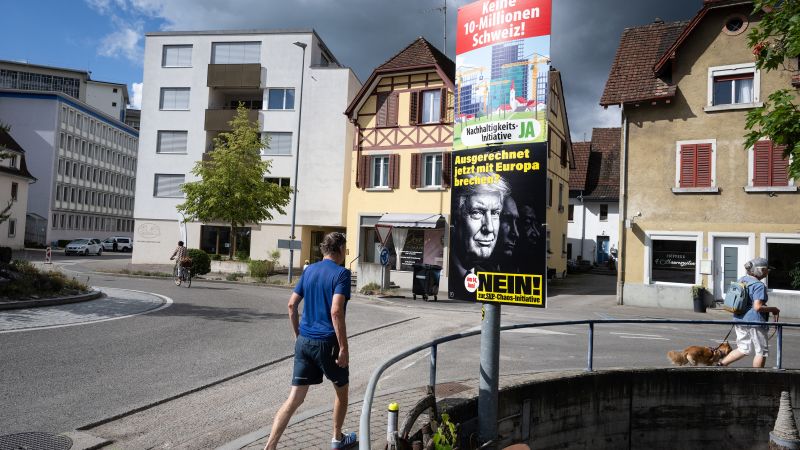
The referendum, which has been likened to Britain’s 2016 vote to leave the European Union, has spooked businesses over fears it could lead to the end of free movement of labor between Switzerland and its main trading partner, the EU.
The proposal, backed by the right-wing Swiss People’s Party, stipulated that the population could not exceed 10 million by 2050, and that if it did so for two years, Switzerland would have to abandon its free movement agreement with the EU.
Urs Bieri, from pollster GFS Bern, said the vote failed because many people were concerned about population growth but were not convinced by the plan and worried about possible side effects.
“From the beginning, this plan was presented as a disruptive initiative. Voters were concerned about the negative impact on Switzerland’s relations with the EU and on the labor market,” he said.
“People are also worried about things like adequate care and availability of health workers. There’s also a sense that it’s not wise for small countries to do this in the current international environment,” Bieri added.
Switzerland’s population has already reached 9.1 million and is growing much faster than neighboring EU countries. Foreigners make up around 28% of Switzerland’s population, with official estimates predicting that number will reach 10 million by the early 2040s.
Opinion polls predicted a close result, consistent with a final poll by pollster GFS Bern, which predicted the proposal would be defeated by a narrow margin.
Still, the considerable support for the measure comes alongside growing support for policies aimed at curbing immigration across Europe. Campaign posters touted that only 10% of earners were skilled workers and that asylum seekers were more likely to be rapists.
Opponents called the plan a recipe for chaos as it would wreak havoc on Swiss businesses, workers and the city of Bern’s relationship with the EU.
They also questioned whether it was wise to clash with Brussels after the painful 2025, when President Donald Trump imposed the highest US tariffs in Europe on Swiss goods.
Patrick Reischbach, an immigration expert at think tank Avenir Suisse, said economic arguments were playing a role, with people wary of how a “yes” vote would affect their daily lives.
“They’re wondering, ‘Who’s going to serve me at the restaurant?’ And, ‘Who’s going to take care of me when I get old?’ People rejected this initiative because they were more concerned with personal welfare,” Reischbach said.
