

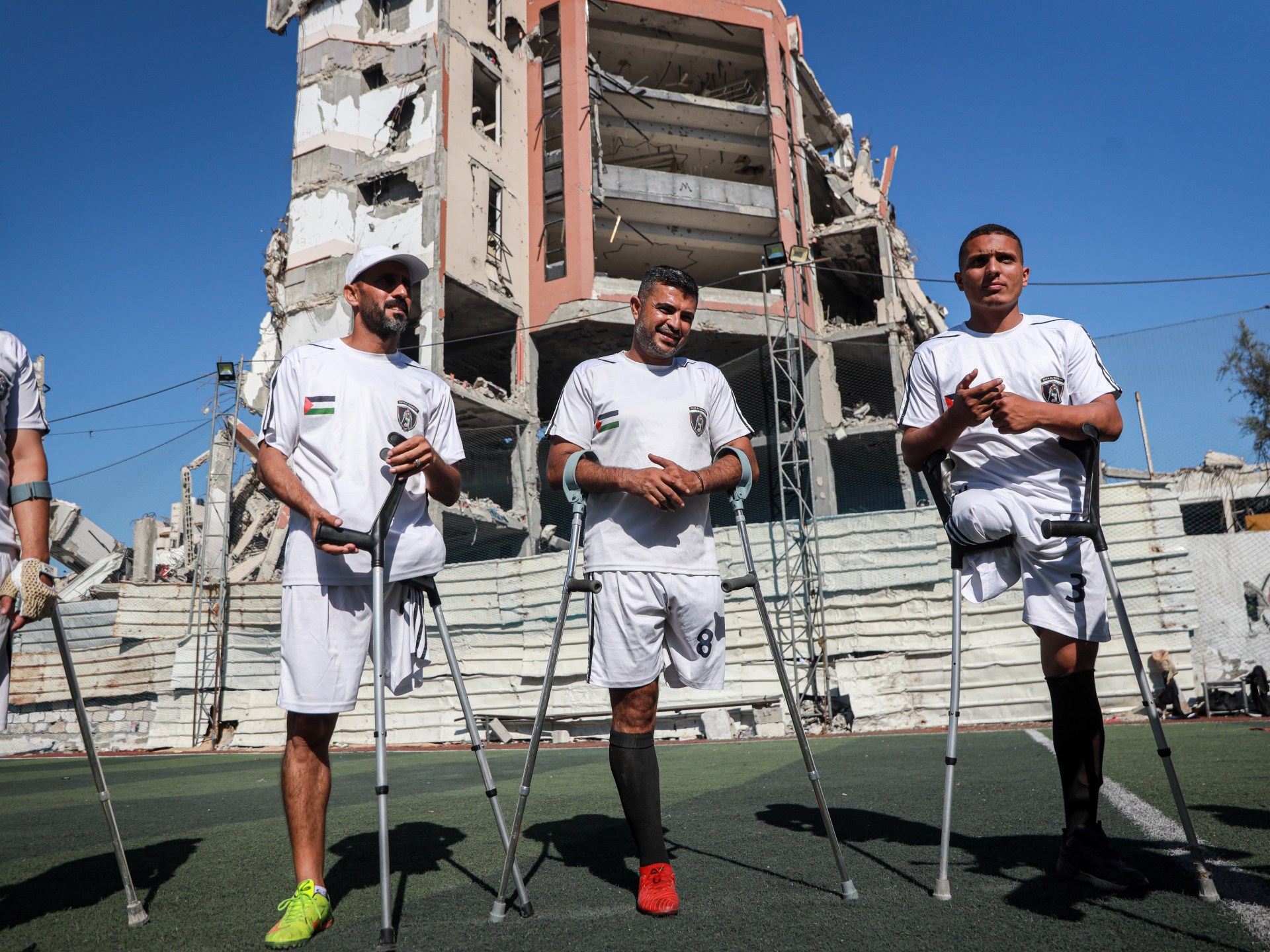
GAZA CITY, Gaza Strip – In the remains of the Palestine Stadium in Gaza City, Ali Tafesh leans on crutches as he chases the ball and exchanges passes with teammates from Gaza Al-Irada, a soccer club made up of amputees who are Gaza’s will.
The stadium is far from the grand arena that will host the 2026 World Cup in North America, which begins Thursday. But for Ali and his teammates, it’s one of the last sports spaces available in Gaza in the wake of Israel’s genocidal war, which has killed nearly 73,000 Palestinians.
The players see soccer more as a means of survival than a sport. They are trying to put back the pieces of their former lives despite months of loss, injury, and widespread destruction.
Exactly four years ago, Ali, 24, was watching the Qatar World Cup with friends in a cafe in Gaza, surrounded by scenes of festivities he still vividly remembers.
But today, as the world prepares for a new edition of the tournament, he finds himself among the thousands of war survivors who have lost limbs, including hundreds of athletes.
“(In 2022) everyone was rooting for the team and the atmosphere was beautiful,” Ali told Al Jazeera. “The situation in Gaza today is very difficult. We are exposed to shelling and death at any time.”

In February 2024, a few months after the start of the Israeli war, his family home in the Zeitoun district, east of Gaza City, was attacked, killing his mother and younger brother and forcing doctors to amputate one of his legs.
After months of painful treatment and adjusting to his disability, Ali learned about Gaza Al Irada through a friend who had previously undergone amputation. The law graduate, who previously participated in local championships as a sprinter, was looking for another sporting path.
“After my leg was amputated, I lost the will to live. I was a champion, I had medals…My friends who were playing in Gaza al-Irada came to visit me. I asked if I could join them and they welcomed me,” says Ali, who started playing about six months ago.
While the rest of the world’s attention now shifts to watching the world’s best soccer players compete in Canada, Mexico and the United States, Ali feels Gaza exists in a parallel world cut off not only by war but also by a lack of basic sporting needs and infrastructure.
“We don’t have transportation. We have to walk for more than two hours on crutches to get to the field. We don’t have crutches, we don’t have sports shoes, and we don’t have access to many important safety items,” he added.
“We are playing with most of what is available and trying to rebuild football with simple means.”
