

The US government has faced harsh criticism from immigration and human rights experts over continued visa complications and entry denials for players and officials participating in the FIFA World Cup.
Somalia’s top soccer referee Omar Altan, who was scheduled to officiate at a World Cup match, was refused entry into the country this week, sparking criticism of US President Donald Trump’s administration.
Recommended stories
list of 4 itemsend of list
“Human rights and advocacy groups have repeatedly raised concerns about immigration enforcement practices and the treatment of immigrant communities in the United States,” international sports lawyer Kairan Noor told Al Jazeera last month.
Nour said such discussions were “independent” of football, but were inevitably relevant when a country hosted one of the world’s largest international gatherings.
“The challenge is that major sporting events depend not only on logistics and security, but also on atmosphere and perception.”
UN High Commissioner for Human Rights Volker Turk called for a “massive rethink” of US immigration policy and said: “We hope that issues around racial profiling, surveillance and immigration control will not impact this World Cup as they have in the past.”
Artan returned home Wednesday to a hero’s welcome and a positive attitude, but the incident has reignited debate over geopolitics and racism overshadowed by the U.S. visa denial ahead of the 39-day 48-nation tournament that begins Thursday.
Fans from several countries, including Morocco and Scotland, who spent thousands of dollars on flights, hotels and tickets for the most expensive World Cup in history, also reported having their travel documents refused or canceled days before they were due to travel.
Below are the players, officials and fans affected by U.S. visa issues.
Omar Altan: Somalia
Artan, 34, was set to make history as the first Somali referee to officiate at a World Cup, but his dream debut ended at Miami airport, where he was refused entry and flown back to Istanbul despite having a valid U.S. visa and all necessary documents.
The U.S. Department of Homeland Security (DHS) confirmed to Al Jazeera on Monday that Artan was “determined ineligible” to enter the country “due to vetting concerns” even though he was one of 52 FIFA World Cup referees.
President Trump has targeted both Somalia and the Somali-American community with inflammatory rhetoric, at one point calling the community “trash” and adding Somalia to the U.S. travel ban list.
Iran World Cup teams and officials
Until last week, there was uncertainty whether Iran’s soccer team would be granted visas by the United States, as the United States and Israel continue their war against Iran, creating geopolitical tensions in the sports world.
The United States issued visas to all players on Friday, just 10 days before the first game, but several members of the support team, including “key coaches and management members,” were denied visas, according to the Iranian Football Federation.
The Iranian team was originally scheduled to have a base camp in Arizona, but despite playing the entire group stage on the West Coast of the United States, they ended up being based in neighboring Tijuana, Mexico, for the duration of the tournament.
DHS announced Tuesday that teams will be able to enter the United States the day before each of their three World Cup games.
Media reports over the weekend quoted Iran’s ambassador to Mexico, Abolfazl Pasandideh, as saying that the Iranian team would have to travel to and from the United States on the day of the game, raising questions about whether it would affect logistics or the team’s performance.
Aymen Hussein: Iraq
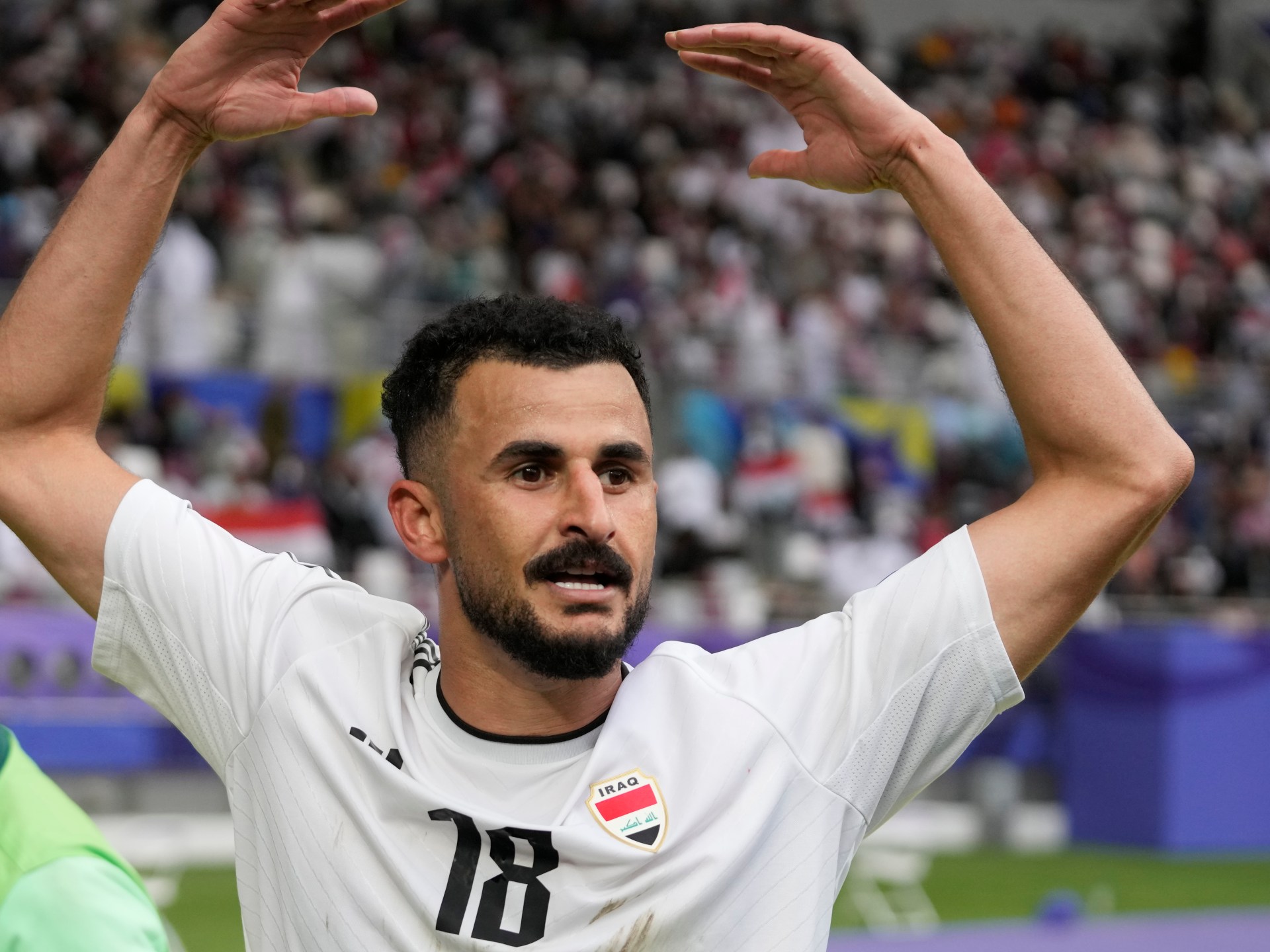
Iraqi striker Aymen Hussein was held for nearly seven hours at Chicago’s O’Hare Airport and had his cell phone searched before he was finally allowed to enter the country.
“Why would America, which is so hostile to foreigners, host the World Cup?” a 30-year-old man said after the incident.
Meanwhile, national team photographer Talal Salah was detained for more than 10 hours, subjected to a similar phone test, and ultimately denied entry to the United States.
Woodensky Pierre: Haiti
Woodensky-Pierre, the only Haitian national soccer team player living in the Caribbean country, was late granted a visa by the U.S. government to compete in the World Cup.
While waiting for his visa to be issued, Pierre was training with local players in an upscale residential area of the Haitian capital Port-au-Prince, calling it a “great moment for him and a moment of happiness,” a Haitian Football Federation official said.
The Cite Soleil midfielder missed the friendly against New Zealand because his visa was not approved by US authorities until it was too late. He landed at the Miami airport around halftime with Haitian soccer officials, hoping to watch the final portion of the game.
Bril Embolo: Switzerland
Swiss forward Bril Embolo was unable to travel with the team due to visa issues, but was allowed to enter the United States and eventually caught up with the team.
The miscommunication was linked to a previous conviction over an altercation in Basel in 2018. Although Embolo was found guilty of blackmail five years later and did not appeal, his fate was decided at a meeting at the US embassy in Bern, where he made his case and was allowed to travel.
Is FIFA obligated to secure a visa?
FIFA’s 2017 bid rules for countries wishing to host the World Cup state that visa procedures “must be applied in a non-discriminatory manner” with the caveat that “immigration and security standards of each country must not be adversely affected”.
Sports lawyer Noor explained that while it is natural for countries to have sovereign responsibilities regarding border control and national security, global sporting events often require exceptional frameworks.
“This does not require states to waive their immigration laws or surrender their sovereignty.
“Rather, the question is whether hosting the world’s biggest sporting event also comes with meaningful inclusivity and access responsibilities,” Noor said.
FIFA president Gianni Infantino has fended off concerns and criticism, saying the international football federation’s executives are not the “kings of the world” and cannot overturn government decisions.
Infantino responded to media questions on Wednesday, on the eve of the World Cup, saying FIFA is focused on being a “sporting organization” and would not interfere in U.S. immigration decisions.
“We are always trying to find solutions. Always,” Infantino said at a news conference in Mexico City. “But we have to respect that we are not the kings of the world who can rule the government and the police, but we don’t know what that is. We are a sporting organization and we are trying to do the best we can with the means we have.”
