

Published June 11, 2026
Escalating protests and social tensions in Mexico’s capital threatened to disrupt FIFA World Cup celebrations on the eve of the opening ceremony, with protesters effectively blocking access to the square where the country’s main fan celebrations were scheduled to take place.
Mexico, which jointly hosts the world tournament with the United States and Canada, will begin celebrations on Thursday with a star-studded event, with the home team taking on South Africa in the opening game in Mexico City.
Recommended stories
list of 4 itemsend of list
Mexican President Claudia Sheinbaum has faced criticism over government spending on the World Cup, as well as political scandals and security concerns after riots broke out in the World Cup host city in February.
As guests flock to Mexico City, the pressure on her is mounting. Residents claim authorities are prioritizing competition over pressing social needs.
Sheinbaum said Wednesday it was unclear whether Mexico City would be able to hold a free fan festival on opening night because a teacher union protest camp was blocking access to the square.
“Everything is under control”
The FIFA logo, orange Mexican marigold flowers, giant soccer balls and other decorations line the streets of Mexico’s capital and two other host cities, Guadalajara and Monterrey. Fans roared with excitement as they strolled through the streets of Mexico City.
The tournament is expected to generate $3 billion in revenue for hotels, restaurants and sports venues, according to the Mexican Football Federation.
Thursday’s fan festival and opening game will feature performances by Colombian superstar Shakira and others, and is expected to draw a larger audience than other tournaments.
Social tensions are the biggest obstacle, especially in Mexico City.
The country’s teachers unions have been toppling World Cup statues and blocking roads for more than a week in an annual effort to demand better working conditions.
Families of more than 130,000 missing people in Mexico have put up flyers about their loved ones, saying authorities should focus on addressing the country’s humanitarian crisis.
“We are not against the ball game,” said protest organizer Luis Antonio Rosales Narváez. But “they should be investing in education, not remodeling cities.”
Scheinbaum had denied there was any social unrest before the tournament, but on Wednesday he acknowledged, referring to Mexico City’s main square, that “if for some reason the Zocalo cannot be used for the opening game, there are still 18 venues where people can watch for free.”
“Everything is under control,” she added.

Security strengthened ahead of opening match
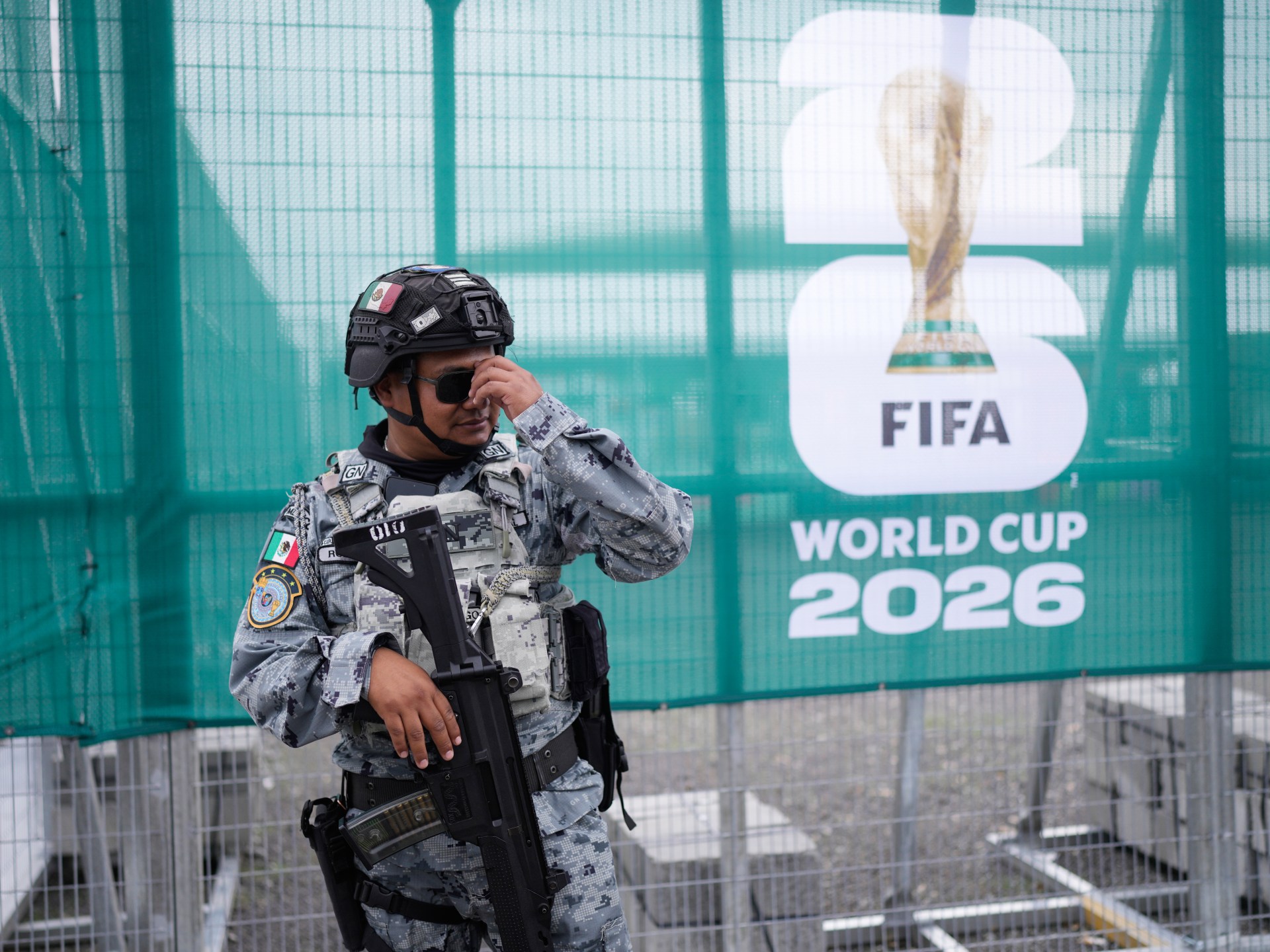
More than 100,000 soldiers, marines, National Guard and police were expected to be deployed to Mexico’s three host cities (Mexico City, Guadalajara and Monterrey) and major tourist destinations during the World Cup.
Anti-drone teams, surveillance camera networks, special crowd control units, military and police patrols will work in coordination with FIFA at stadiums, fan fests, airports, national team camps and other strategic facilities in Mexico during the tournament.
Heavily armed police and National Guard troops patrol the streets of Guadalajara as authorities seek to reassure visitors and residents that security is OK in a city rocked by cartel violence earlier this year.
Guadalajara, the capital of Jalisco state, will host four World Cup matches, including the opening day match between South Korea and the Czech Republic.
Local officials said visitors had nothing to worry about, despite violence erupting in February following the killing of the country’s most powerful cartel boss by Mexican troops.
“It is important to remember that less than 48 hours after the events of February, the state returned to normalcy,” Jalisco state security coordinator Alfonso Briceno told The Associated Press ahead of the convention.
“We invite all tourists, nationals of other countries, especially those who play here in Guadalajara… They are welcome. The Mexican government and the state of Jalisco guarantee their safety.”
Briseno stressed that Jalisco has not faced any recent security problems and that a recurrence is not expected. He said local authorities are ready to respond quickly if something happens again.
Nearly 15,000 security personnel are stationed in the region, including National Guard troops armed with assault rifles and vehicle-mounted machine guns, near the stadium where the game will be played.
“We feel very safe. We are not worried about the same problems we had a few months ago,” said Rodolfo Valencia, 22, a resident of Guadalajara.
“There are more police on the streets and there is a feeling around here that there will be no problems. Having the World Cup here helped, because the authorities had to take action and make sure everything went well.”
Security in Guadalajara is of particular concern for Spain’s match against Uruguay on June 26, when Spain’s King Felipe VI is expected to attend.

