

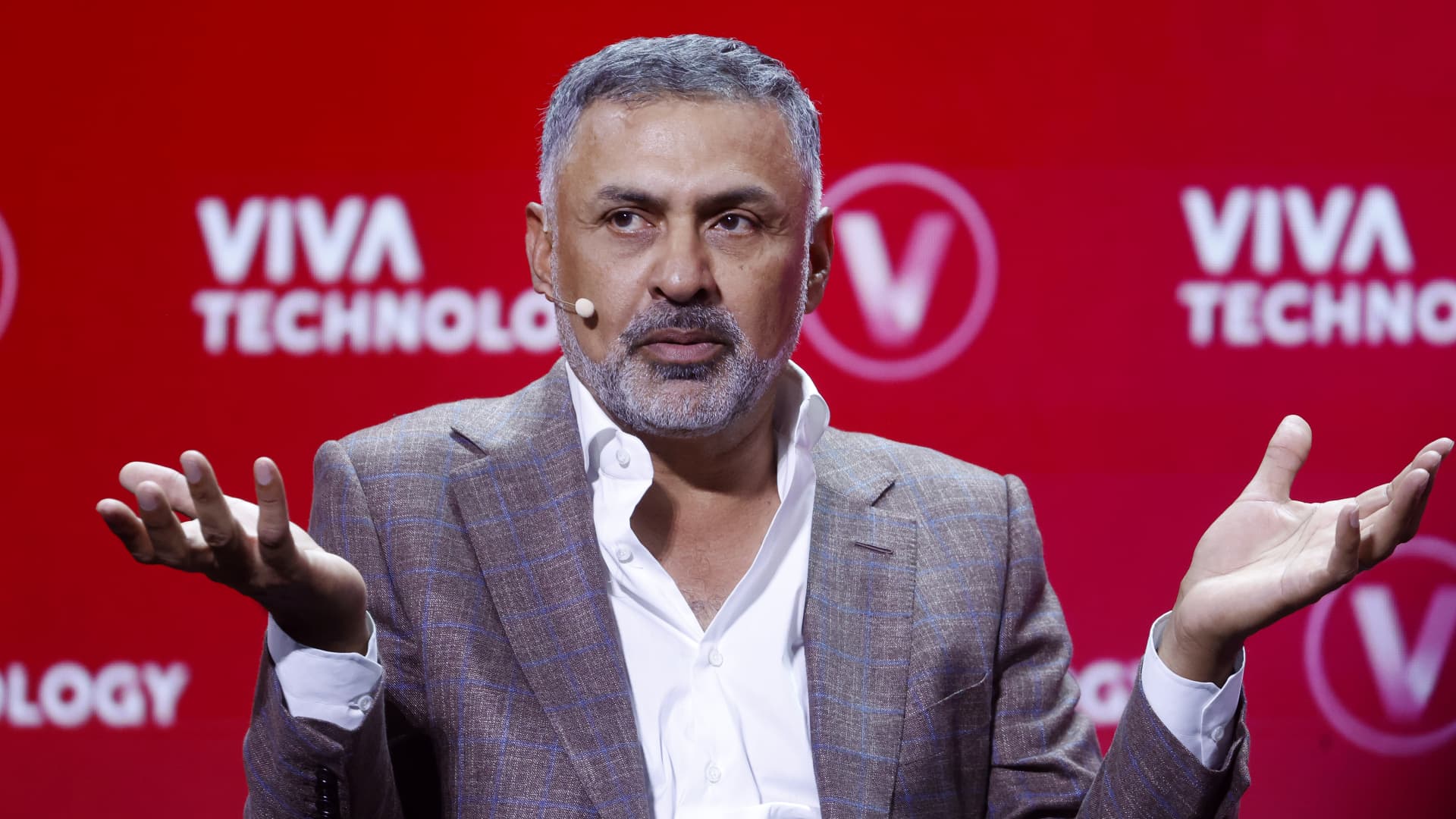
Nikesh Arora, CEO of Palo Alto Networks, attends the 9th VivaTech trade show at Exposition Porte de Versailles on June 11, 2025 in Paris.
Chesnot | Getty Images
Anthropic’s Mythos model has provided cybersecurity companies with a much-needed lifeline in the age of artificial intelligence.
But this week’s cybersecurity earnings were a cruel reminder that even with tailwinds, good is never good enough as stocks rise. cloud strike and palo alto networks They lost 8% and 3% respectively.
“People probably re-skied a little bit,” said Joseph Gallo, a software analyst at Jefferies. “Both have provided guidance for acceleration, but at the end of the day, many of these AI benefits take time, and this is a multi-year process.”
Cybersecurity stocks sold off at the beginning of the year on fears that new AI tools that can build apps at lightning speed will upend the company’s business model, and by extension all software companies.
The introduction of Mythos, a model that was considered too powerful to release because it could be easily used to exploit software vulnerabilities, renewed enthusiasm for the space and drove the stock prices of CrowdStrike and Palo Alto Networks each up more than 70% between April and the end of May.
The companies are early partners in Anthropic’s exclusive Project Glasswing testing program, which the AI Lab expanded to 150 additional partners this week. rubric and Tenable.
This quarter’s results were the first big test for the Mythos-led rally, but upbeat earnings and aggressively optimistic AI commentary from both cyber giants weren’t enough for investors looking for immediate signs of an AI windfall.

Year-to-date stock price chart for Palo Alto Networks and CrowdStrike.
The concept of not being good enough is not a new phenomenon on Wall Street. Even AI darling Nvidia failed to meet its high estimates and succumbed to this phenomenon.
Investors headed into earnings with similar sentiments and hopes that AI tailwinds will help cyber companies explode their profits.
Wall Street found a lot of cheer in these articles, but investors may have overlooked the idea that it could take months for these tailwinds to pay off, Gallo said.
The typical enterprise sales cycle is 9-12 months, so most signs of AI adoption will likely not appear until the 2027 calendar year. Gallo added that the fourth quarter of the calendar year is typically the strongest buying season for customers as businesses reset their budgets for the new year.
I don’t think it’s fair for companies to expect such a large increase already if they’ve just introduced an AI product in the past quarter or two.
CEOs of the world’s largest cyber companies have made this clear.
Palo Alto CEO Nikesh Arora told analysts this week that demand is off the charts in the Mythos era and that more than 1,200 companies have reached out to the cybersecurity firm to discuss their AI strategies. So far, the company has held 800 meetings in the past six weeks, with Arora conducting nearly 100 of them, he said.
He said while there are encouraging signs in demand patterns, analysts shouldn’t expect an immediate “windfall” in the next quarter as companies move into cyber, but he does expect “solid growth.”
“I wouldn’t get ahead of myself and throw the kitchen sink and numbers at cybersecurity companies because there are still processes and mechanisms and cycles that people buy into and execution and deployment,” he said.
CrowdStrike CEO George Kurtz echoed similar sentiments.
The company boosted net new annual recurring revenue growth in FY2027 with tailwinds from AI.
Kurtz told analysts on the earnings call that AI detection and response (AIDR) is a huge new field that could dwarf the endpoint security market, but it’s still in the “early stages.” The company’s second-quarter pipeline already exceeds $50 million, he added.
“I think there will be even more opportunities as it becomes really mainstream and enterprises across the board adopt it for all employees and workloads,” he said.

