

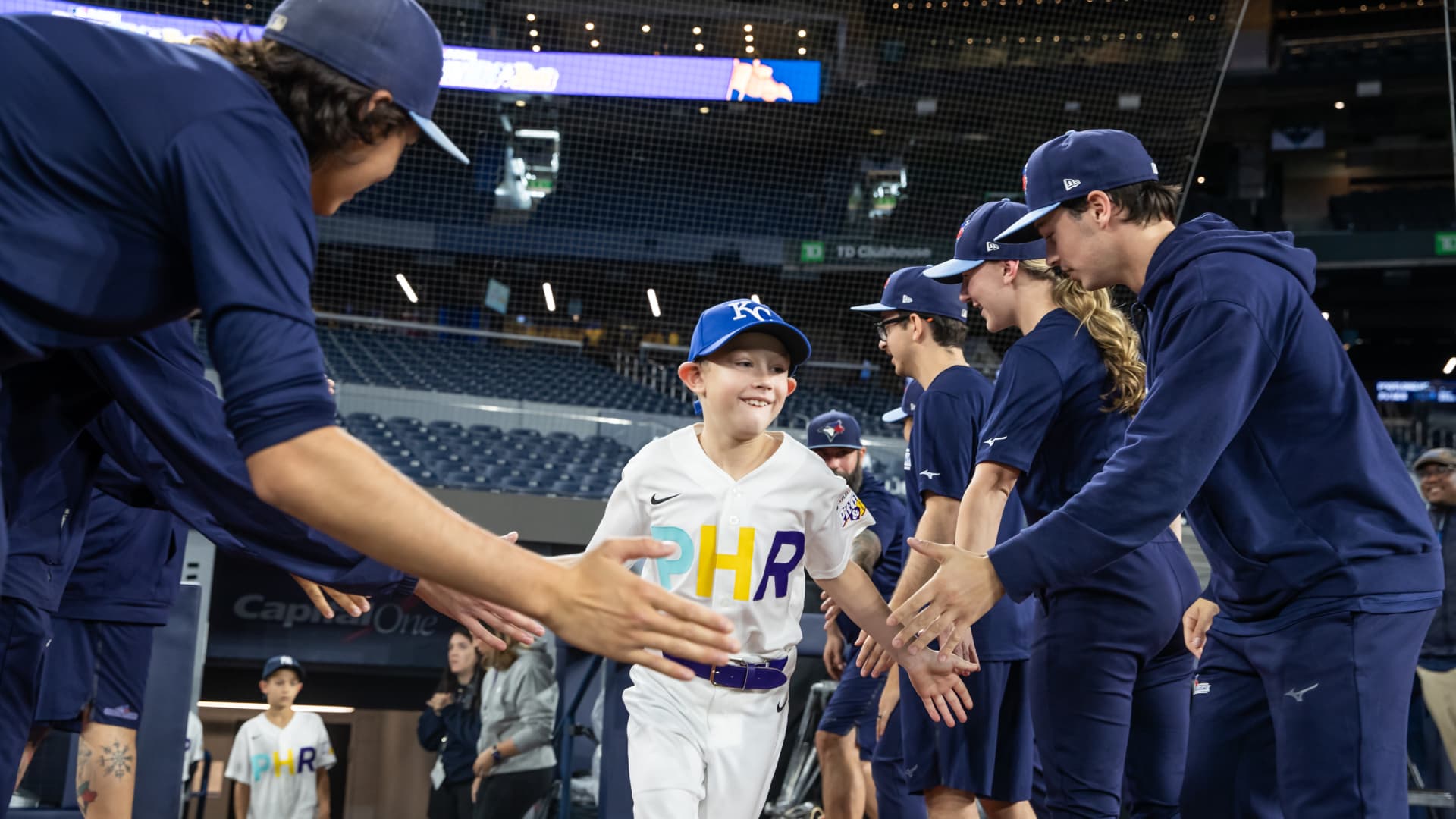
MLB Pitch Hit and Run youth players stand on the field.
Provided by RCX
A version of this article appeared in the CNBC Sports newsletter with Alex Sherman, bringing you the biggest news and exclusive interviews from the world of sports business and media. Sign up to receive future editions directly to your inbox.
Former New York Giants quarterback Eli Manning’s private equity firm Brand Velocity Group is acquiring RCX Sports, the company that manages licenses for the official youth sports programs of the NFL, NBA, WNBA, MLS, NHL and MLB.
RCX has approximately 150 employees and generates revenue by selling sports products such as uniforms and equipment and by providing services to local parks and recreation centers. Financial terms of the deal were not disclosed. The deal is supported by a broad group of investors including other former and current athlete partners Emmitt Smith, Larry Fitzgerald and Jameis Winston.
Parents of children who participate in youth sports are likely familiar with programs such as: Junior NBA. Junior WNBA. MLS Go; NHL Street and MLB Pitch Hit and Run. NFL Flag is the largest youth sports league in the world, with approximately 1 million children participating, according to RCX CEO Eisele Reese.
The youth sports business is perfect for private equity. It is supported by loyal customers, stable and reliable cash flow, and is decentralized with new fees accruing each sports season.
This lack of unity has given rise to a myriad of mobile apps and websites used to record games, pay league fees, order equipment, and chat with coaches.
The standard private equity strategy is to roll up various smaller leagues and apps, reducing costs by eliminating backend duplication and increasing scale through a series of acquisitions. This is starting to happen in youth sports as well. Josh Harris and David Blitzer, two of the world’s most prominent private equity partners, founded Unrivaled Sports two years ago as a roll-up investment vehicle for youth sports.
Still, there is distrust among some in power that the industry will put consumer desires ahead of its own mission to benefit stakeholders.
This led a group of Democratic lawmakers to introduce a bill that would specifically block private equity from investing in youth sports.
The Let Our Kids Play Act would prohibit private equity firms from investing in youth sports. Rep. Chris Deluzio of Pennsylvania and Sen. Chris Murphy of Connecticut introduced a bicameral bill last month.
Congressional leaders said in a statement that youth sports is a $40 billion industry that is currently “dominated by private equity with the sole goal of extracting as much profit as possible from families.”
“As a hockey dad, I’ve seen how viciously private equity firms rob families,” Murphy said in a statement.

Manning said his private equity firm is different. He said BVG’s interest in RCX is to increase the scale of the program and make it more inclusive.
“This will greatly improve access, keep prices low, and only grow,” Manning said. “The fact that we’re working with the professional leagues, they don’t want this to be a big burden on the kids. They want more kids playing sports, being active, getting out and being active. So our goal is to attract capital so they can expand that.”
Mr. Manning’s reputation may help his point that not all private equity firms are the same. He is also a major flag football champion, serving as an assistant coach for his daughter’s team. His goal is to establish flag football as a high school varsity sport for girls and boys, he said.
“That’s what we want, and we don’t think flag football just needs to be a stepping stone to tackle,” Manning said.
New York Giants No. 10 Eli Manning warms up before a game against the Philadelphia Eagles at MetLife Stadium on December 29, 2019 in East Rutherford, New Jersey.
Sarah Steer | Getty Images
Last month, New Jersey became the 18th state to approve girls’ flag football as a high school sport. But getting flag football approved as a youth sport may be more difficult.
Coaches may not be happy if a star tackle football player chooses to play on the flag instead.
Still, this problem could be alleviated by flying the flag in a different season than fall tackle, such as in the spring.
“Tackles aren’t all year round, but flags are all year round,” said RCX’s Reese. Reese is a former NFL safety who played a total of seven seasons with the Dallas Cowboys, Buffalo Bills and Denver Broncos.
Reese said flag football’s multiple seasons give kids who also want to play tackle a way to “hone their football skills,” while giving other kids an opportunity to just play with flags.
