

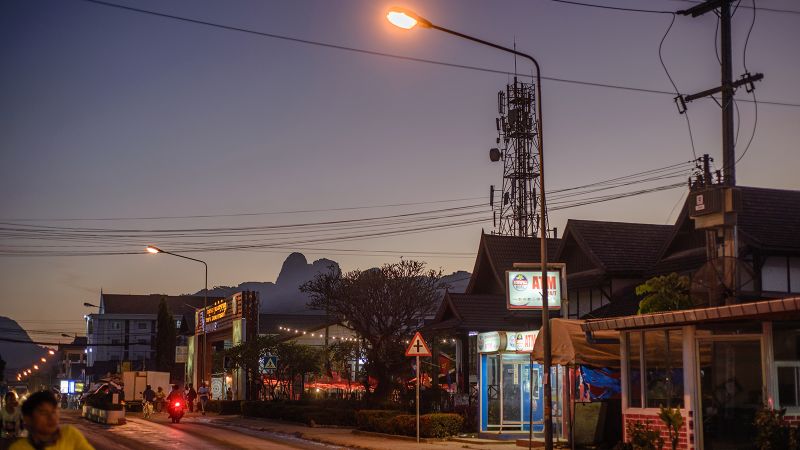
An Australian teenager has become the sixth foreign tourist to die in a suspected mass methanol poisoning in Laos, as a growing list of countries warn that consuming contaminated alcohol in the Southeast Asian country can have deadly consequences.
A British woman, another Australian teenager, an American and two Danish nationals have also been killed in recent days in a spate of suspected poisonings in the popular backpacker destination of Vang Vieng, authorities said.
Holly Bowles, 19, remained on life support in critical condition for several days in neighboring Thailand after evacuating from Laos after a night out, CNN affiliate Seven News reported. Her friend Bianca Jones, 19, also died Thursday.
“We are saddened and heartbroken to say that our beautiful daughter Holly is now at peace,” Bowles’ family said in a statement late Friday, Seven News reported.
“We find solace and comfort in knowing that Holly brought so much joy and happiness to so many people.”
“Holly was living her best life, traveling throughout Southeast Asia, meeting new friends and enjoying amazing experiences,” her family said.

The British Foreign Office told CNN on Thursday that a British woman had died in Laos. She was then appointed by lawyer Simone White, 28. Her law firm, Squire Patton Boggs, paid tribute to Ms White on Friday, saying she had a “bright future” ahead of her.
“We are devastated by the loss of our beautiful, kind and loving daughter,” White’s parents said in a statement, according to Britain’s PA media news agency. They added that their “heart breaks” for the other families “affected by this terrible tragedy.”
The U.S. State Department confirmed to CNN on Thursday that one American was killed in Vang Vieng. It did not give a reason for his death, but said the United States was “closely monitoring the situation and providing consular assistance.” Denmark’s Foreign Ministry previously announced that two Danish nationals had died in Laos, but did not provide further details.
The deaths of at least three of the foreign tourists are believed to be related to tainted alcohol, the country’s state media announced Friday in its first report on the mass poisoning incident.
The Lao government announced on Saturday that an investigation was underway to determine the cause of death and vowed to “bring the perpetrators to justice.”
“We are deeply saddened by the loss of a foreign tourist’s life in Vang Vieng District, and extend our heartfelt condolences and deep condolences to the family of the deceased,” the government said in a short statement, adding that it attaches great importance to the safety of tourists.
Laos, an opaque communist state, has remained silent in recent days about the death toll, despite multiple foreign governments warning against tainted alcohol and increasing reports of deaths and poisonings.
On Friday, the state-run Lao News Agency (KPL) confirmed that two Danish nationals, both women, and an American were killed in Vang Vieng on November 13.
“The cause of death appears to be ingestion of contaminated alcoholic beverages,” KPL said in a statement. “Authorities are gathering detailed information, evidence and witness statements and will issue an official statement soon.”
The statement did not say whether any other foreign nationals were sick.
On Friday, police also detained the manager and owner of the hostel where the backpackers were staying, the Associated Press reported, citing a police officer at Vang Vieng Tourist Police Station and hostel staff. No charges have been filed, according to the Associated Press.

The Australian teenagers from Melbourne had been enjoying a backpacking trip but fell ill after a night out in Vang Vieng.
The picturesque countryside in northern Laos has long been a popular backpacking spot. For years, it was known as a destination for large parties, excessive drinking, easy access to drugs, and river piping that led to a series of fatal accidents.
In 2012, the government closed some bars and activities and reshaped the city as an eco-paradise and adventure tourism hub, but its party reputation still lingers.
The women were staying in a hostel and had been drinking at the hostel and a nearby bar on November 11, Nine News reported. According to the Associated Press, the women had been drinking free shots of alcohol provided by the hostel with other guests before going out for the night.
According to Nine News, the two friends did not leave their room for 24 hours after falling ill and did not check out as scheduled. They were taken to a hospital in Laos before being transferred to Thailand, where they were treated at two separate hospitals, according to the Associated Press.

Before his death, Jones’ family released a statement saying they wanted to “ensure that no other family is forced to endure the pain we are experiencing,” according to Nine News. “We hope authorities can find out what happened as soon as possible.”
It is believed the women drank alcohol laced with methanol, but the source of the drink is unknown.
Methanol can make people feel intoxicated and is being used to make counterfeit versions of well-known alcohol brands and illegal local spirits such as vodka, Britain’s Foreign Office has warned.
According to the Centers for Disease Control and Prevention, methanol poisoning can cause nausea, vomiting, and heart and respiratory failure. This clear liquid is typically used in cleaning solutions, but is also sometimes illegally added to alcoholic beverages as a cheap way to bulk up.
Laos, one of Southeast Asia’s poorest countries, has been hit hard by rapid inflation in recent years. Tourism is an important source of income for the country’s struggling economy.
Neil Farmillow, a New Zealand national who runs Kiwi Kitchen restaurant in Vang Vieng, told The Associated Press that many of his customers were very concerned about the incident.
“I don’t think anything like this has ever happened before, so I hope it’s a one-off,” said Farmillow, who has lived in the town for 20 years. “It’s very sad for everyone around. I don’t think anyone intended for anyone to get hurt, but it happened.”
Several other foreign tourists are also believed to have been affected by the contaminated drinks.
New Zealand’s Department of Foreign Affairs and Trade said it was providing consular assistance to a citizen of New Zealand who was feeling unwell and “may have been the victim of methanol poisoning in Laos.”
“Travelers are advised to be careful about consuming alcoholic beverages, especially cocktails and drinks made with distilled spirits that may be contaminated with harmful substances.”
On Thursday, the United States joined New Zealand, Australia, the United Kingdom and Canada in warning people to be careful when drinking alcohol in the Southeast Asian country.
“The U.S. Embassy is aware of a number of suspected cases of methanol poisoning in Vang Vieng, possibly due to consumption of alcoholic beverages containing methanol,” the U.S. Embassy in Laos said in a health alert.
The warning advises Americans to “purchase alcoholic beverages and beverages from licensed liquor stores, bars, and hotels” and to “avoid homemade alcoholic beverages.”
“Check liquor bottles for signs of tampering or counterfeiting, such as poor printing quality or misspelled labels,” it added.
What is methanol and why is it deadly?
Methanol is a type of alcohol commonly used in cleaning and industrial products such as paint thinners, antifreeze, fuels, dyes, and inks.
Like the alcoholic beverage ethanol, methanol is a clear, colorless substance, but it is toxic to humans and drinking just 30 milliliters (1 ounce) can be fatal.
According to the medical charity Médecins Sans Frontières, which tracks cases of methanol poisoning around the world, the fatality rate without treatment is between 20 and 40 percent, depending on the concentration of methanol and the amount ingested.
Symptoms can take up to 24 hours to appear and can range from dizziness, nausea, and vomiting to blindness, organ failure, and brain damage. Prompt treatment can reduce some of the effects of methanol poisoning.
Methanol poisoning outbreaks occur when chemicals are added to alcoholic beverages, either inadvertently through traditional brewing methods or intentionally, usually in the pursuit of profit.
Thousands of people suffer from methanol poisoning each year, with most cases of people drinking moonshine or homemade alcohol being reported in Asia. Many countries in Southeast Asia have low safety standards, irregular regulatory enforcement, and high levels of police corruption.
In 2019, more than 150 people died and 200 were hospitalized in northeastern India after drinking unregulated moonshine, known locally as “country liquor.”
Later that year, at least 11 people died in the Philippines after drinking locally produced coconut wine, and hundreds more were treated for suspected methanol poisoning.
An awareness campaign is also continuing to warn travelers to the Indonesian tourist hotspots of Bali, Lombok and Gili Islands to be on the lookout for signs of methanol poisoning, following reports of deaths and illnesses linked to bars in recent years.
This story has been updated with additional information.
