

london —
British Prime Minister Keir Starmer has called for a “reset” following last week’s disastrous local election results, but is fighting to keep his job after being called on by many members of the ruling Labor Party to resign.
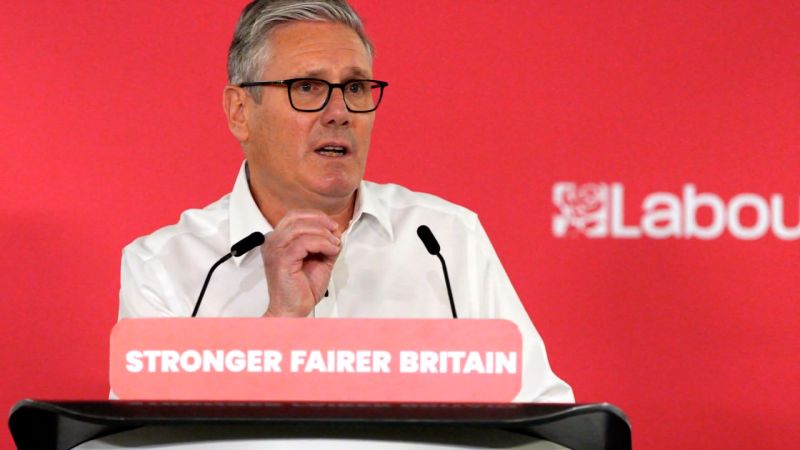
In a speech to Labor Party faithful in London, Mr Starmer said he was responsible for the country’s crushing defeats in parliamentary elections across England and in Wales and Scotland. But he said it would plunge Britain into the “chaos” that flourished under the Conservative Party, which ousted two leaders in the two years before Starmer became prime minister, and vowed that Britain would remain in office if the leader was replaced.
“What we witnessed in the last government was a turmoil of constantly changing leadership, and that cost this country a lot,” Starmer said on Monday morning. “A Labor government will never be allowed to impose something like this on our country again.”
But by Monday evening, Labor appeared to be on the brink of doing just that. More than 70 Labor MPs have publicly called on Starmer to resign as prime minister or set a date for his departure, and several have resigned as cabinet ministers. If Starmer resigns or is sacked, his successor will be the seventh British prime minister in a decade.
Despite his landslide victory in the 2024 election, the British public quickly became dissatisfied with Starmer after he took office. Starmer’s position had been deteriorating for months, attacked by the right over his perceived failure to control illegal immigration, attacked by the left over his unpopular economic policies, and attacked by many in the political establishment over his charisma and lack of political vision.
The results of last week’s local elections – in which Labor lost more than 1,400 seats across the UK Parliament and control of the Welsh Assembly, the largest party for decades – appeared to have convinced dozens of Labor MPs that Starmer was incapable of winning the next general election, due by summer 2029.
Mr Starmer has repeatedly vowed to keep fighting, but his party has a way of letting him walk. His opponents need 81 signatures, representing a fifth of Labour’s parliamentary seats, to support a challenger in order to hold a leadership election among party members.
But unlike the Conservatives, Labor has no history of regicide. The party has never formally challenged the incumbent prime minister. When Tony Blair resigned as prime minister in 2007 due to divisions within the party over the Iraq war, his long-anointed successor Gordon Brown was elected unopposed as prime minister and party leader.
This time it will probably be trickier. It is unclear whether any of Starmer’s rivals have the signatures needed to mount a challenge, with many potential candidates either untested or embroiled in scandals.

Former deputy prime minister Angela Reiner, who resigned last year for failing to pay the correct amount of property tax, has not formally announced that she will challenge Starmer for party leadership, despite being seen as a strong candidate. In a statement on Sunday, she called on Starmer to “seize this moment and set out the changes our country needs”.
In his speech on Monday morning, Mr Starmer attempted to do just that. “Like any prime minister, I’ve learned a lot in my first two years in this job about the policy changes our country faces. Gradual changes alone won’t work.”
Starmer would not be the first leader to suffer disastrous local election results after two years in office before winning a second term at the next general election. Conservative Prime Minister Margaret Thatcher lost more than 1,000 parliamentary seats across England in local elections in 1981 before winning a landslide in the 1983 general election. Prime Minister Blair lost more than 1,000 seats in 1999, but won a second landslide in the general election two years later.
But if Starmer was hoping history would repeat itself by promising more fundamental changes, the changes he promised were far from fundamental. He has vowed to bring Britain closer to Europe after years of rivalry over Brexit, a policy championed by Nigel Farage, leader of the far-right Reform Britain Party, which made a strong showing in last week’s local elections.
Asked about his concrete vision for Britain’s relationship with Europe, Starmer said only that he wanted to make “big progress” at this year’s European Union summit.
To many Labor MPs, this response seemed typical of Mr Starmer’s timid nature. Dozens of MPs released a letter calling on Mr Starmer to resign, with many pointing to his lack of ambition and clear political vision.
By late Monday night, those pressuring Mr Starmer to resign reportedly included backbenchers as well as ministers. The BBC reported that Home Secretary Shabana Mahmoud was among the ministers who urged Mr Starmer to schedule his resignation. Ministers will meet in Downing Street early Tuesday morning.
