

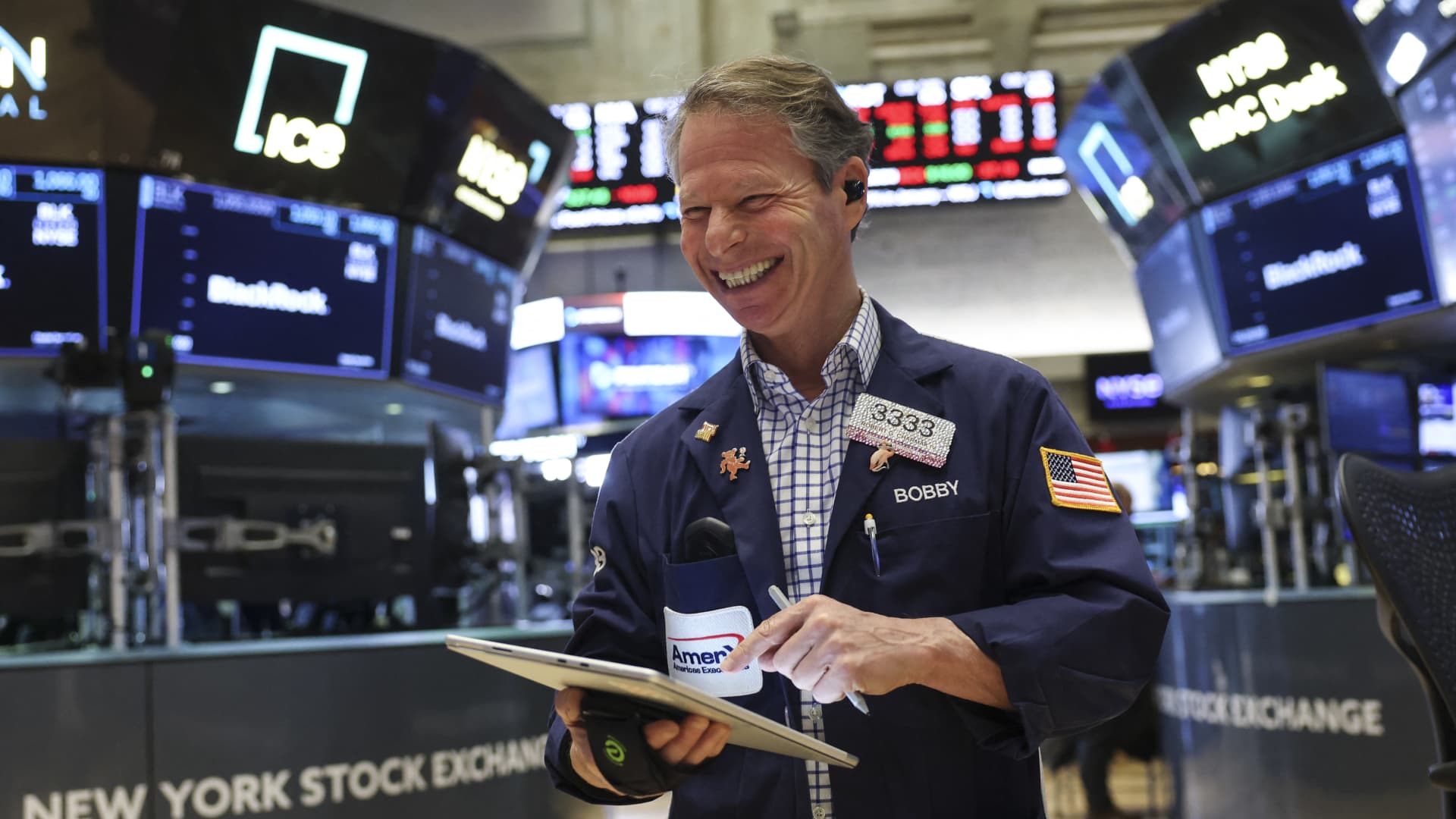
It’s shaping up to be another great week for stocks. The S&P 500 and Nasdaq rallied to end the week at record highs on Friday, as Wall Street celebrated another solid earnings report and a strong but not strong jobs report while holding out hope for an end to hostilities in the Middle East. Week after week since late February, the Iran war remained a major focus for investors. But the dizzying array of headlines made it impossible to know where the conflict would actually go next. Media reports on Wednesday said the United States and Iran were close to signing a 14-point memorandum of understanding to end the war. The next day, both countries reported a gunfight in the Strait of Hormuz, a globally important chokepoint for oil shipments. On Friday morning, Secretary of State Marco Rubio said “we should hear something today” from Iran about the latest peace plan. There was no word back as of Saturday afternoon. Treasury Secretary Scott Bessent has already said Iran will be on the agenda at next week’s Beijing summit between President Donald Trump and China’s Xi Jinping. For the week, the S&P 500 rose 2.3% and the Nasdaq rose 4.5%. Both indexes have risen for six consecutive weeks, the longest winning streak since 2024. Lower oil prices and lower bond yields are certainly contributing factors, which have been a bullish combination for stocks lately. It is unclear whether the stock market will be able to continue its growth into next week. In the meantime, here are three things that drove last week’s trading action. What will the Fed do next? Friday’s mixed economic report didn’t stop markets from rising. April’s employment report was strong, but consumer sentiment remains extremely low. But with Jerome Powell’s term as central bank chairman ending on May 15 and President Trump’s nominee to replace him, Kevin Warsh, eyeing Senate confirmation, the question of the Federal Reserve’s next interest rate decision has become more complicated. The Labor Department said Friday that nonfarm payrolls rose by 115,000 last month, far exceeding economists’ conservative expectations of 55,000, but far short of the 185,000 jobs created in an unusually strong March. The unemployment rate remained flat at 4.3% in April. The print weakened the case for short-term interest rate cuts, citing the resilience of the labor market. But Mr. Warsh, who has been a vocal advocate of lower interest rates, could not close the door completely. Jim Cramer argued that sectors of the economy related to housing and consumer spending still need rate cuts. “I still believe Mr. Warsh’s focus is on the Whirlpool economy,” Jim said at a Friday morning meeting, referring to slowing demand across lower-end consumer and housing categories. Whirlpool shares fell 20% this week after the company lowered its outlook and suspended its dividend for a long time. The latest University of Michigan research on how consumers feel about the economy supports Jim’s view. Consumer sentiment in early May hit an all-time low due to soaring gasoline prices due to the Iran war. Cyber stocks soar Quarterly earnings reports from cybersecurity competitors boosted shares of Club Holdings Inc.’s CrowdStrike and Palo Alto Networks Inc., which rose about 16% and 15%, respectively, this week. The cause was firewall provider Fortinet, which raised its pricing guidance for the year. Investors viewed the company’s report as a reference for learning about the health of their favorite cybername companies. Overall, it’s been a wild year for cyber stocks. The group has been unfairly caught up in the collapse of software names such as Salesforce. Wall Street has dragged stocks in the sector lower on concerns about AI disruption. We’ve long believed that deploying more generative AI could actually benefit cybersecurity companies, and we’re pleased to see investors buying into this idea. Optical Partnerships Last week’s top performer was Corning, which soared 18%. After the company released upbeat financial forecasts and announced a major supply deal with Nvidia on Wednesday, the stock really took off and continued its strong week, rising 8.4%. In its Investor Day presentation, Corning projected annual sales of $20 billion by 2026, resulting in a compound annual growth rate (CAGR) of 15% from Q4 2023 to Q4 2026. Corning’s most optimistic forecast by the end of the decade is for annual sales of $40 billion by 2030. On the same day, Corning announced the opening of three new manufacturing plants in the United States. Develop fiber optic technology with Nvidia. As part of the multi-year agreement, Corning will grow its U.S. optical connectivity manufacturing tenfold and increase its fiber production capacity by 50%. This is all in an effort to meet the huge demand for AI infrastructure. The day after the news broke, NVIDIA CEO Jensen Huang said on “Mad Money” that “we are experiencing the largest infrastructure overhaul in human history.” On Thursday night, Jim also interviewed Corning CEO Wendell Weeks, who also discussed the partnership. Weeks also said the deals with two previously unnamed hyperscalers are “bigger” than the $6 billion pact with Metaplatform. (See here for a complete list of Jim Cramer Charitable Trust stocks, including CRWD, PANW, CRM, GLW, NVDA, and META.) As a subscriber to Jim Cramer’s CNBC Investment Club, you will receive trade alerts before Jim makes a trade. After Jim sends a trade alert, he waits 45 minutes before buying or selling stocks in his charitable trust’s portfolio. If Jim talks about a stock on CNBC TV, he will issue a trade alert and then wait 72 hours before executing the trade. The above investment club information is subject to our Terms of Use and Privacy Policy, along with our disclaimer. No fiduciary duties or obligations exist or arise from your receipt of information provided in connection with the Investment Club. No specific results or benefits are guaranteed.
