

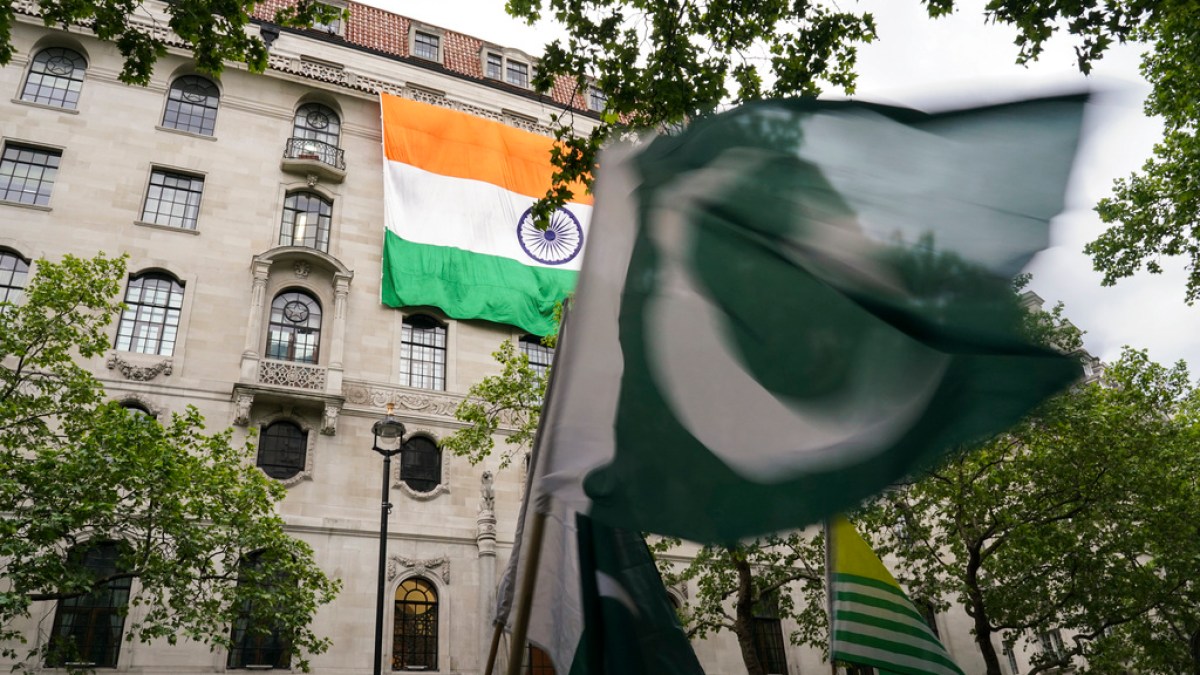
The Pakistani government has banned its soccer team from participating in the SAFF Women’s Championship in Goa, India.
A Pakistani soccer official told Al Jazeera that the Pakistan team will not participate in the South Asian women’s soccer tournament hosted by India because it was not granted travel permission due to ongoing geopolitical tensions between the two countries.
A Pakistan Football Federation (PFF) spokesperson told Al Jazeera on Wednesday: “No No Objection Certificate (NOC) has been issued by the relevant authorities.”
Recommended stories
list of 3 itemsend of list
The South Asian Football Federation (SAFF) Women’s Championship will be held in India’s Goa state from May 25 to June 7, and although Pakistan is a member of SAFF, its teams will not participate in the regional tournament.
Sports teams and individual athletes must obtain government permission before traveling to another country to compete, and cross-border travel for athletes from both countries has been suspended due to tensions between the South Asian neighbors.
When SAFF announced the schedule early Wednesday, Pakistan was not named from the six-team tournament.
Group A will feature Nepal, Bhutan and Sri Lanka, while hosts India will face Maldives and defending champion Bangladesh in Group B.
The tournament will be held at Goa’s Pandit Jawaharlal Nehru Stadium, which has previously hosted the men’s version of the tournament.
Hostilities taint sporting events
India and Pakistan share a decades-long history of war and hostility.
In May 2025, the nuclear-armed neighbors engaged in a four-day cross-border conflict that brought the rival nations to the brink of all-out war.
Their 78-year history has fueled conflicts in the sports world, at times leading to boycotts of tournaments, canceled games and infiltration of grounds.
In August, India’s sports ministry announced new policies banning Indian athletes from traveling to Pakistan for sports competitions and banning Pakistani athletes from coming to India for bilateral sporting events. However, both countries have competed against each other in multinational sporting events, albeit at neutral venues when competitions are held in either country.
The announcement of the tournament schedule by SAFF coincides with the anniversary of the Pahalgam attack in Indian-administered Kashmir, for which India has blamed Pakistan, a claim that Pakistan strongly denies.
The tournament has been held approximately every two years since the first edition in 2010, but the last time it was held in Nepal in 2024, they lost to Bangladesh 2-1 in the final.
Pakistan lost to India 5-2 in the group stage and drew with Bangladesh, missing out on a place in the final tournament.
The 2014 tournament was hosted by Pakistan and India won the trophy by defeating Nepal 6-0. This will be the second time that India will host the regional championship after it was held in West Bengal in 2016.
Cricket, the most popular sport in both countries, is at the center of these travel bans and venue moves.
In December 2024, the International Cricket Council (ICC) brokered an agreement between the two countries to accommodate the strict policies of both governments. This gave both cricket teams the option of playing at a neutral venue if either country were to host an ICC event.
The latest example was in February when Pakistan played all the matches of the Men’s T20 World Cup in Sri Lanka, which was co-hosted with India.
In early 2025, when Pakistan hosted the ICC Champions Trophy, all of India’s matches, including the semi-finals and final, were allocated to Dubai, United Arab Emirates.
However, unlike the ICC, field hockey’s world body does not implement neutral venue arrangements for tournaments. This means Pakistan will withdraw from November’s Men’s Junior World Cup, which will be held in two cities in India’s Tamil Nadu state. The Pakistani government said its decision was centered around the safety of the players.
Last August, Pakistan withdrew from the Asia Cup hockey tournament for the first time in its history due to safety concerns at the tournament, which was held in Rajgir, a city in northeastern India’s Bihar state.
