

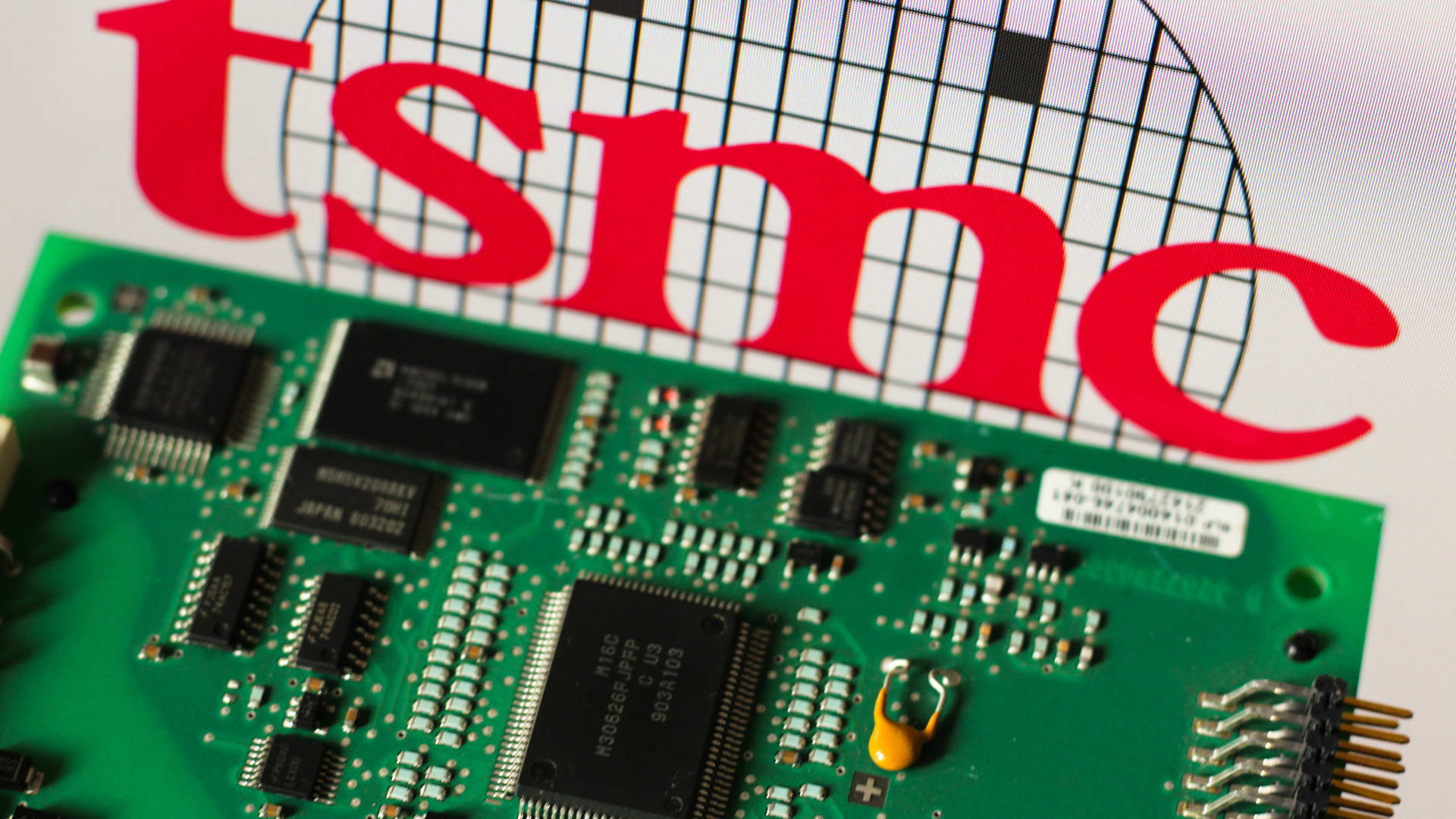
The Taiwan Semiconductor Manufacturing Company logo is visible in the background next to the printed circuit board.
Sopa Images | Light Rocket | Getty Images
Taiwan Semiconductor Manufacturing Company on Thursday reported a 58% increase in first-quarter profit, beating expectations and setting a new record as demand for artificial intelligence chips remained strong.
Below is a comparison of the company’s results with LSEG SmartEstimates, which emphasizes more consistently accurate analyst forecasts.
Revenue: NT$1,134 billion ($35 billion) vs. NT$1,127 billion expected Net profit: NT$572.48 billion (NT$543.32 billion)
TSMC’s net profit for the three months ended March was NT$572.48 billion, marking the fourth consecutive quarter of record profits.
Meanwhile, the company’s revenue exceeded expectations, increasing to NT$1.134 trillion. The company first reported last week that first-quarter sales rose 35% year over year.
TSMC, Asia’s largest technology company by market capitalization, maintains sustained demand for advanced semiconductors from major customers such as Apple, even as concerns persist over supply chain disruptions and the potential impact on demand from conflict in the Middle East.
TSMC executives said at an earnings conference that they do not expect the recent global energy supply disruptions to have a short-term impact on operations.
The company also announced the addition of an advanced chip manufacturing facility in Tainan, Taiwan, to meet strong demand.
The chip giant has also benefited greatly from the rise of AI, producing advanced processors designed by: Nvidia Currently, the company’s largest customer is AMD.
The company said advanced chips with a size of 7 nanometers or less accounted for about 74% of TSMC’s total wafer revenue in the quarter. Meanwhile, TSMC’s sub-3 nanometer advanced chip shipments accounted for 25% of its total wafer revenue.
In semiconductor technology, decreasing nanometer size means more compact transistor designs, leading to increased processing power and efficiency.
In its last earnings call in January, the company said it expected capital spending to rise 37% this year to $52 billion to $56 billion, reflecting expectations for continued growth in demand.
