

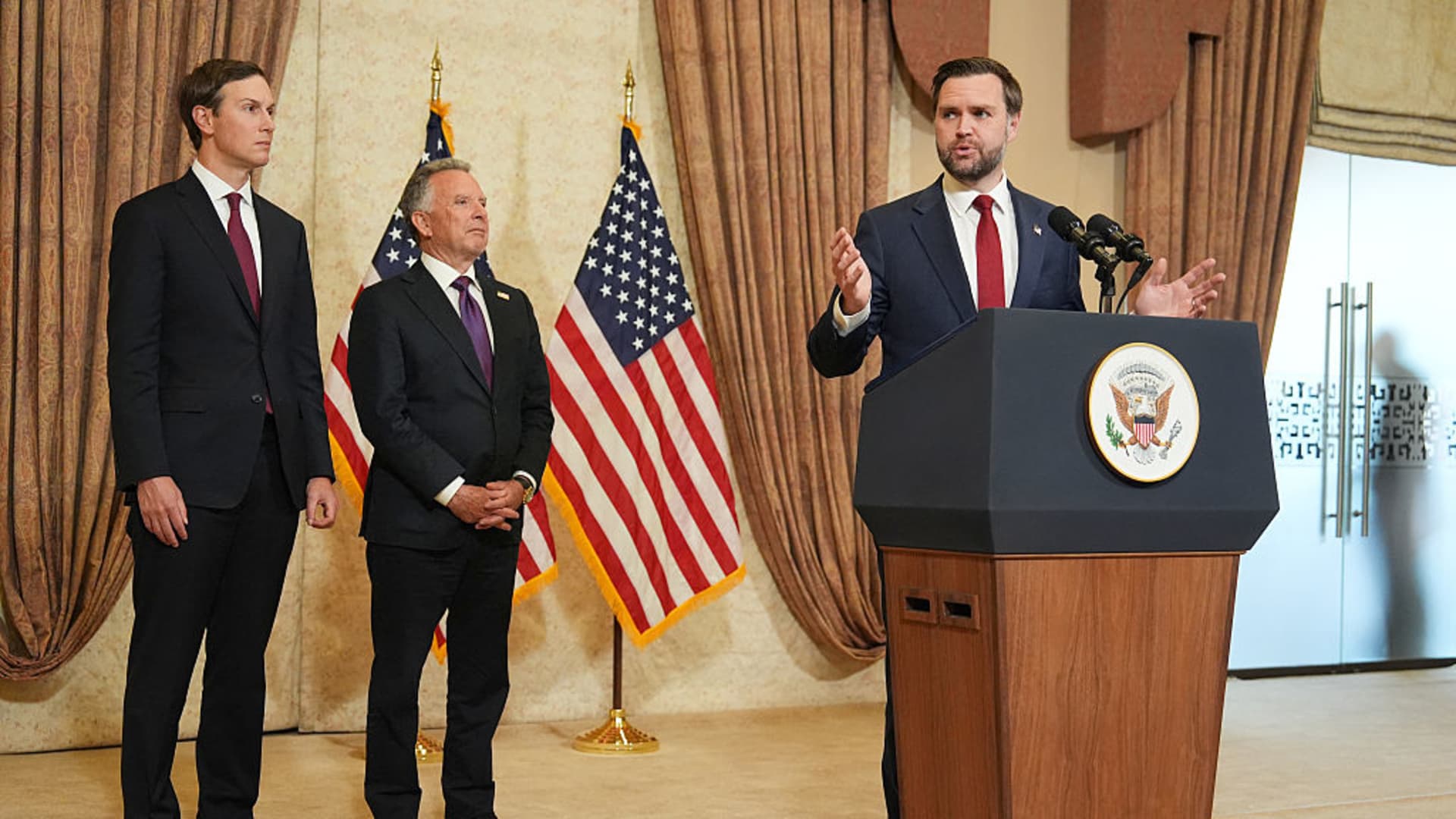

Vice President J.D. Vance said Monday it was up to the Islamic Republic to decide whether to take next steps in peace talks with the United States, after returning from a failed weekend of negotiations with Iran.
“I really think the ball is in Iran’s court whether we have further talks, whether we end up reaching an agreement, because we have a lot of things on the table,” Vance said in an interview on Fox News.
He stressed that if the U.S.’s “red lines” against Iran’s nuclear program are followed, “this could be a very good deal for both countries.”
The remarks came hours after the United States began blocking ships from entering and exiting Iranian ports in the Strait of Hormuz, in what President Donald Trump claims is an attempt to pressure Iranian leaders back to the negotiating table.
The blockade was announced shortly after U.S. negotiators left peace talks in Islamabad without securing an agreement to end the war.
It was also intended to force Iran to reopen the strait. The strait is an important route for oil shipments, which was effectively closed during the war since global energy prices soared.
“We can’t allow one country to blackmail and blackmail the world, because that’s what they’re doing,” President Trump said of Iran on Monday.
“We need to see the Strait of Hormuz fully open, and frankly, this is one of the things that the Iranian side tried to move the goalposts on during the negotiations,” Vance told Fox.
Vance said the uneasy 14-day ceasefire with Iran that began last week was predicated in part on Tehran agreeing to reopen the strait.
“But we haven’t seen a full reopening yet. So our expectation is that Iran will continue to make progress towards opening the Strait of Hormuz. If they don’t, it will fundamentally change the negotiations with Iran,” he said.
He said the blockade would put “further economic pressure” on Iran.
The vice president said all of America’s “red lines” for the peace deal stem from its position that Iran can never acquire nuclear weapons.
Vance said the United States and Iran were unable to reach a final agreement on President Trump’s two non-negotiable challenges: removing Iran’s enriched uranium from the country and implementing verification measures to ensure Iran cannot acquire nuclear weapons.
The vice president said that Vance and the U.S. negotiating team, consisting of special envoys Steve Witkoff and Jared Kushner, made progress in negotiations with Iran during the Islamabad talks.
“They moved in our direction, so I guess you could say there were good signs. But they didn’t move far enough,” he said.
“So what we decided is, given that we don’t think we can get a deal done with the current team and the current schedule, we’re going to send them back to Tehran and we’re going to go back to Washington. And that’s where we are today,” he said.
Asked whether further negotiations were underway, Vance said, “That’s a question best posed to the Iranian side because the ball is really in their court.”
“I think there’s a really big deal here,” he said, “but I think it’s up to Iran to take the next step.”
“The president wants the Iranian people to prosper and succeed, and he has gotten his negotiating team to put serious proposals on the table,” Vance said. The ball is in Iran’s court. Has there been progress? Yes, but we’re going to check with the Iranian side to see if we can make the ultimate breakthrough that will lead to a big deal. ”
