

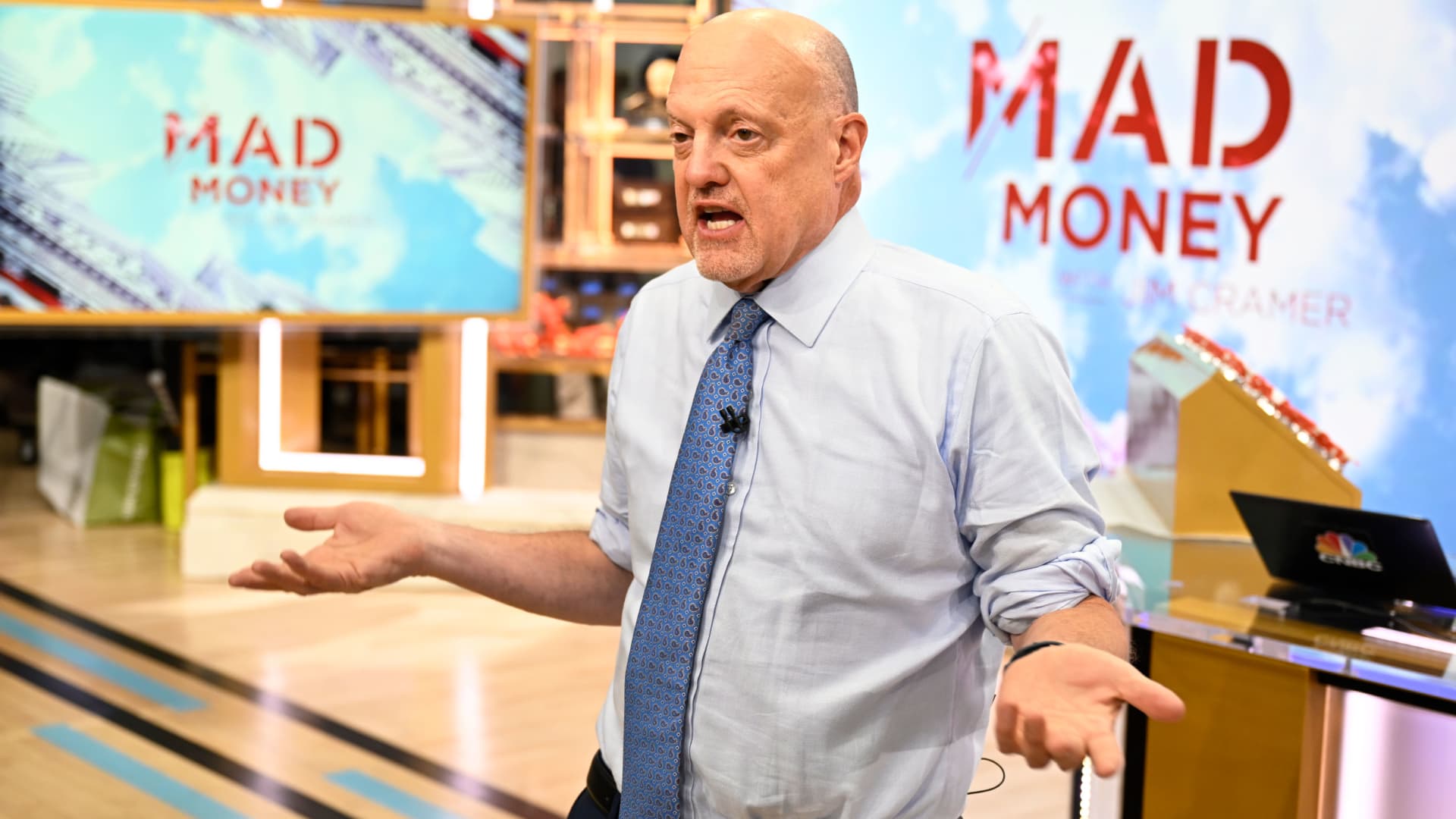

CNBC’s Jim Cramer said investors who fled the market during the recent volatility may be grappling with the common perception that the worst-case scenario that prompted their decisions never materialized.
“What we’re having is a rally that doesn’t seem to be based on anything,” the “Mad Money” host said Tuesday. “But it’s actually based on the fact that most of the things we were worried about didn’t happen.”
After weeks of declines linked to geopolitical tensions, private credit risks and poor performance of many influential members.Magnificent Seven” The stock price has soared since March 30th. The gains continued Tuesday, with the Dow Jones Industrial Average rising 318 points, or 0.66%, the S&P gaining 1.2% and the Nasdaq surging 2%. The S&P 500 is now inches away from its all-time closing high set on January 27th, a strong rebound that might have seemed impossible not too long ago.
Cramer said this pattern is not new, noting that investors are often “scared away from the stock market” by dire predictions that don’t ultimately turn out as expected.
The latest concerns stem from the Iran war, with investors worried that surging oil prices and inflation could send interest rates soaring and derail the rally.
“If bond prices had fallen and interest rates had skyrocketed… there would have been a real turmoil in the market, but that didn’t happen,” Cramer said, stressing that stable interest rates remain “the real driver of the rally.”
Even before the outbreak of war on February 28, Wall Street was growing concerned about private credit stress, particularly related to companies such as: blue owl capital. This concern extended to stocks of major alternative asset managers, including: black stone, Apollo Global Managementand KKR.
But Kramer said those concerns have not yet caused the systemic impact many expected. “The bears were talking about this as if it was going to bring down the entire private credit system and turn the whole group into a car crash,” Kramer said. “What do you think? That’s not happening.”
Investors have also repeatedly written off megacap technology stocks, including companies such as: Nvidia, Amazon and Google’s parent alphabet From competitive threats to slowing growth, we face a steady drumbeat of negative narratives. However, these stocks rebounded sharply as AI chip giant Nvidia became the catalyst for a resurgence.
Nvidia stock has been under pressure for several months, bottoming out around $165 on March 30, but rebounding to $196.51 as of Tuesday, its highest close since November.
The key to Kramer is that markets often go up not because conditions are perfect, but because the widely expected downside doesn’t happen.
Still, he cautioned that the current bull market could be prolonged in the short term. “The low-hanging fruit has already arrived,” he said, noting that his Charitable Trust, a portfolio used by the CNBC Investment Club, cut some positions this week.
But Kramer said the long-term lesson for investors is to remain disciplined and avoid being driven out of the market by fear-based rhetoric.

