


goldman sachs reported first-quarter results Monday that beat expectations, with record results in equity trading and better-than-expected investment banking revenue.
Here’s what the company reported:
Earnings: $17.55 per share vs. LSEG expected $16.49 Earnings: $17.23 billion vs. $16.97 billion expected
The bank said profit rose 19% from a year earlier to $5.63 billion, or $17.55 per share. Sales increased 14% to $17.23 billion.
Wall Street trading desks were busy at the beginning of the year as institutional investors created new positions in response to artificial intelligence-driven market disruption. It was Goldman’s biggest quarter by stock trading and helped the company’s overall quarterly revenue reach its second-highest level.
Equity earnings rose 27% to $5.33 billion, beating street estimates by about $420 million. This was due to increased financing activity for hedge fund clients in our prime brokerage business and increased matching of buyers and sellers of physical equity products.
Investment banking fees rose 48% to $2.84 billion, about $340 million more than expected, due to a surge in advisory income from completed merger transactions. The company also reported increased revenue in its equity and debt underwriting business.
However, the company’s fixed income business did not fare as well. Revenue there fell 10% to $4.01 billion, an unusually large shortfall of $910 million against StreetAccount estimates. Goldman cited “significant declines” in interest rate products, mortgage and credit revenues for the results.
The company’s wealth and asset management division’s revenue rose 10% to $4.08 billion in the quarter. However, this amount was approximately $140 million lower than expected as higher management fees due to increased assets under supervision were partially offset by lower private banking revenue.
Goldman’s allowance for credit losses rose nearly 10% year over year to $315 million, more than double the street account estimate of $150.4 million, due to loan growth and wholesale loan impairments.
Wells Fargo banking analyst Mike Mayo said in a note Monday morning that this is the bank’s largest increase in loan loss reserves since 2020 and raises questions about how Goldman executives view credit market developments.
The bank’s shares fell about 4% in premarket trading.
Jason Goldberg, a banking analyst at Barclays, said in a note that lower-than-expected tax and compensation rates and better-than-expected share buybacks also contributed to the bank’s results.
For Goldman Sachs, which derives most of its revenue from its trading and investment banking franchise, analysts’ main questions revolve around the impact of the Iran war that began on February 28th.
Disruptive events that affect commodity prices, such as the Iran conflict, can force corporate customers to the sidelines and threaten future capital market transactions, such as mergers or bond issuances.
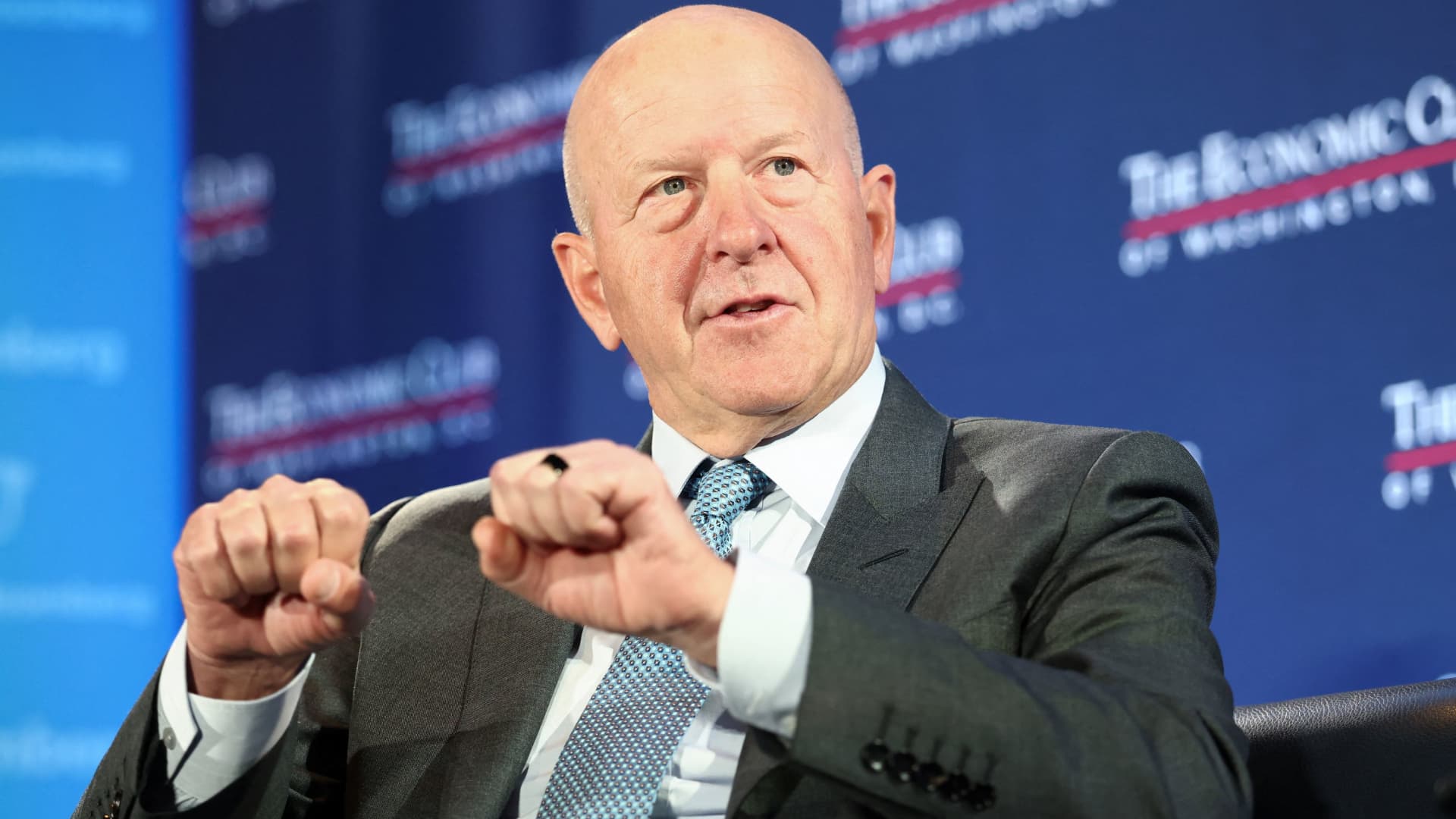
Goldman Chief Executive David Solomon cited increased volatility during this period “amid increased uncertainty.”
“Despite more volatile market conditions, Goldman Sachs delivered very strong results for shareholders this quarter,” Solomon said on the earnings call. “The geopolitical landscape remains very complex, so disciplined risk management must remain at the core of how we operate.”
