

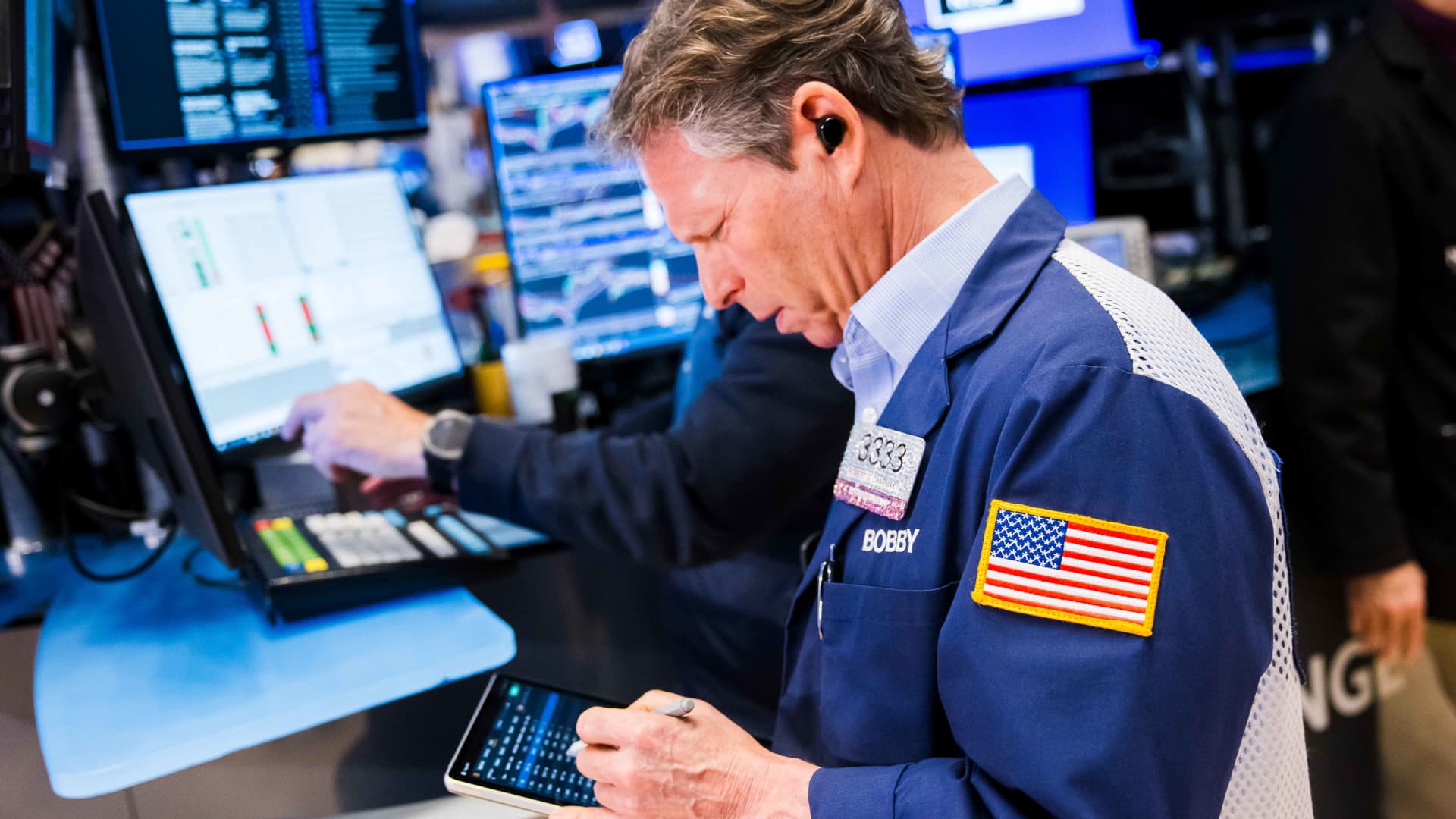
Wall Street’s weekly performance was its best this year. The S&P 500 rose 3.4% in the four-day week that just ended with a shortened holiday, as traders raised hopes that the war between the United States and Iran could soon end. The Dow Jones Industrial Average and Nasdaq Composite Index also showed solid weekly performance. However, many chart analysts do not think the stock market decline is over and advise investors to remain cautious. “We believe it is premature to declare victory for the bulls and expect the rally to continue in the context of an oversold correction until trend work improves,” said J.C. O’Hara, chief market technologist at Roth Capital Partners. O’Hara noted that the S&P 500 index is now within reach of the 200-day moving average (DMA), a key technical level that broke into downside territory in mid-March. The S&P 500 closed Friday’s trading at 6,582.69. The 200-day moving average, which smoothes out daily fluctuations, is $6,647.60, about 1% above Friday’s closing price. BTIG’s Jonathan Krinsky also said that the S&P 500 lacks the “totally oversold conditions that typically accompany a breakout of the 200 DMA,” meaning there is further downside potential going forward. “Over the past 20 years, there have been 13 times in the past 20 years that the SPX has risen more than 4% in two days after falling below 30 (relative strength index), as it did last week. However, only one of those times has started with more than 30% of the constituents above the 200 DMA. It has also once been below the 200 DMA for 10 consecutive days while remaining within 7% of its 52-week high. This combination has never happened before.” 20 years,” Krinsky wrote. The chief market technologist added that the S&P 500 index could fall to around 6,000-6,150 “as long as it stays below $6,800.” Katie Stockton, founder of Fairlead Strategies, also believes the market is not oversold to the point of hitting the bottom. “We don’t have the extremes of opinion that you would want in terms of breadth and emotion,” Stockton said Monday on CNBC’s “Squawk Box.” “If you look at the oil shocks we’ve had, it’s not very good for the market and it’s actually going to take some time. So we want to respect that.”
