

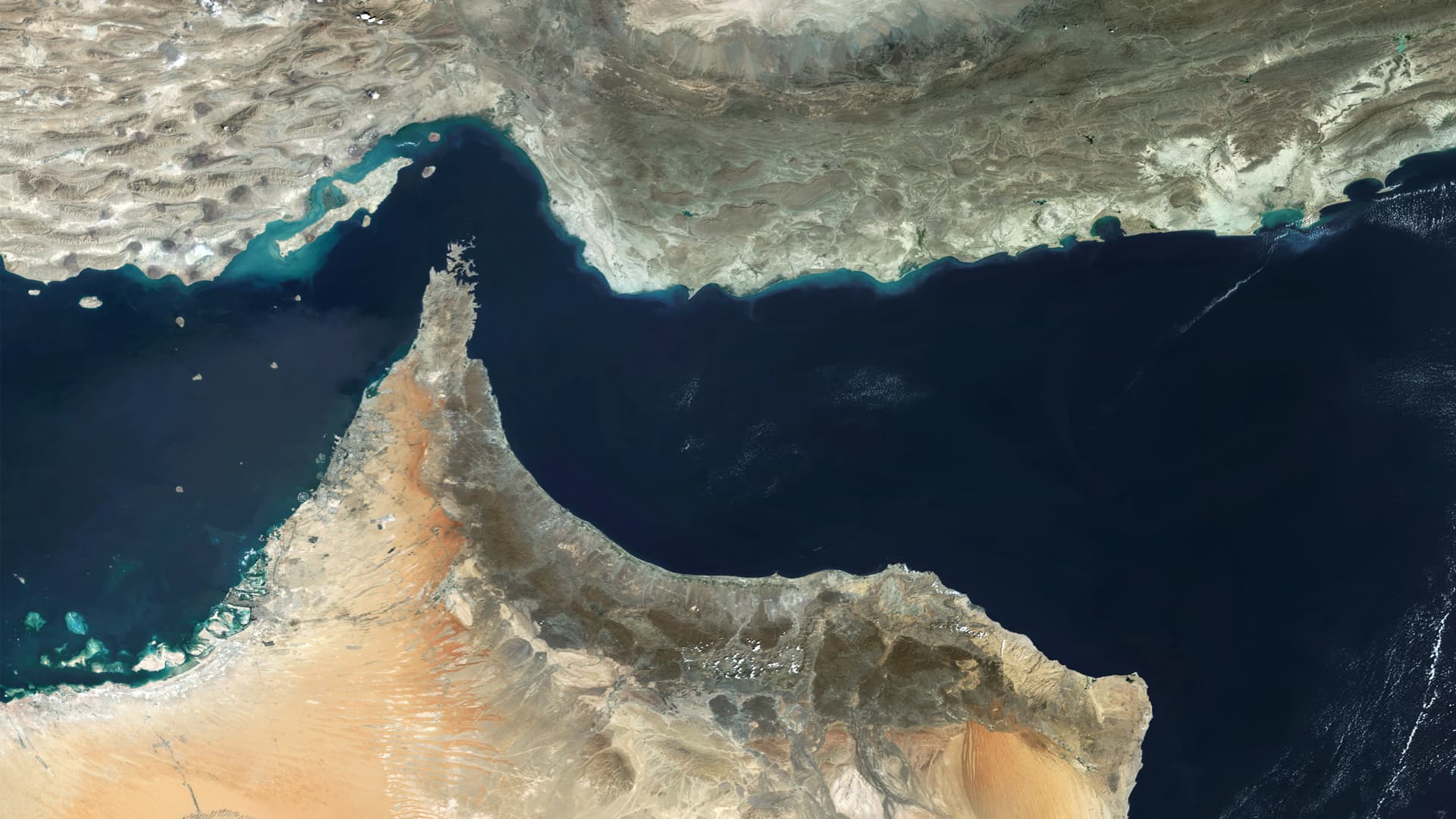
Satellite image of the Strait of Hormuz, a key choke point for global energy supplies that connects the Persian Gulf and the Gulf of Oman.
Gallo Images | Getty Images
Oil prices rose on Sunday, with U.S. crude topping $114 a barrel after President Donald Trump gave Iran until Tuesday to open the Strait of Hormuz or face attacks on Iranian power plants.
usa crude oil By 6:08 p.m. ET, the price was up 2.35% at $114.16 a barrel. international benchmark brent price It rose 1.72% to $110.91 per barrel.
President Trump warned in an expletive-filled social media post on Sunday that Iran would “live in hell” if it didn’t open the strait. The president threatened to bomb power plants and bridges across the country.
President Trump then posted, “Tuesday, 8pm ET!” No further explanation.
Iran has maintained a de facto blockade of the strait through attacks on oil tankers. This route connects the Persian Gulf with world markets. Before the war, about 20% of the world’s goods passed through the strait.
The closure of the strait caused the largest oil supply disruption in history. Since the war began, the prices of crude oil, jet fuel, diesel, and gasoline have soared.
President Trump said in his address to the nation last Wednesday that the war would last two to three weeks.
Nearly 1 billion barrels are expected to be lost by the end of this month, including up to 600 million barrels of crude oil and about 350 million barrels of refined products, according to TD Securities.
“The dispute is expected to last until at least late April, and the barrel calculations will only get tougher,” Ryan McKay, senior commodity strategist at TD Securities, said in a note to clients on Thursday.
Rapidan Energy expects a total net loss of 630 million barrels of oil and products by the end of June, taking into account flow diversions through pipelines, emergency stock releases and destocking.
Eight OPEC+ members agreed on Sunday to increase production by 206,000 barrels a day in May, but it is unclear how oil will reach global markets with the strait still closed.
Kuwait Petroleum Corporation announced on Sunday that several of its operating facilities were attacked by drones and sustained significant damage.
OPEC+ warned that repairing energy infrastructure damaged by Iranian attacks would be “costly and time-consuming, impacting overall supply availability.”
The eight member countries of OPEC+ are Saudi Arabia, Russia, Iraq, UAE, Kuwait, Kazakhstan, Algeria, and Oman.
