

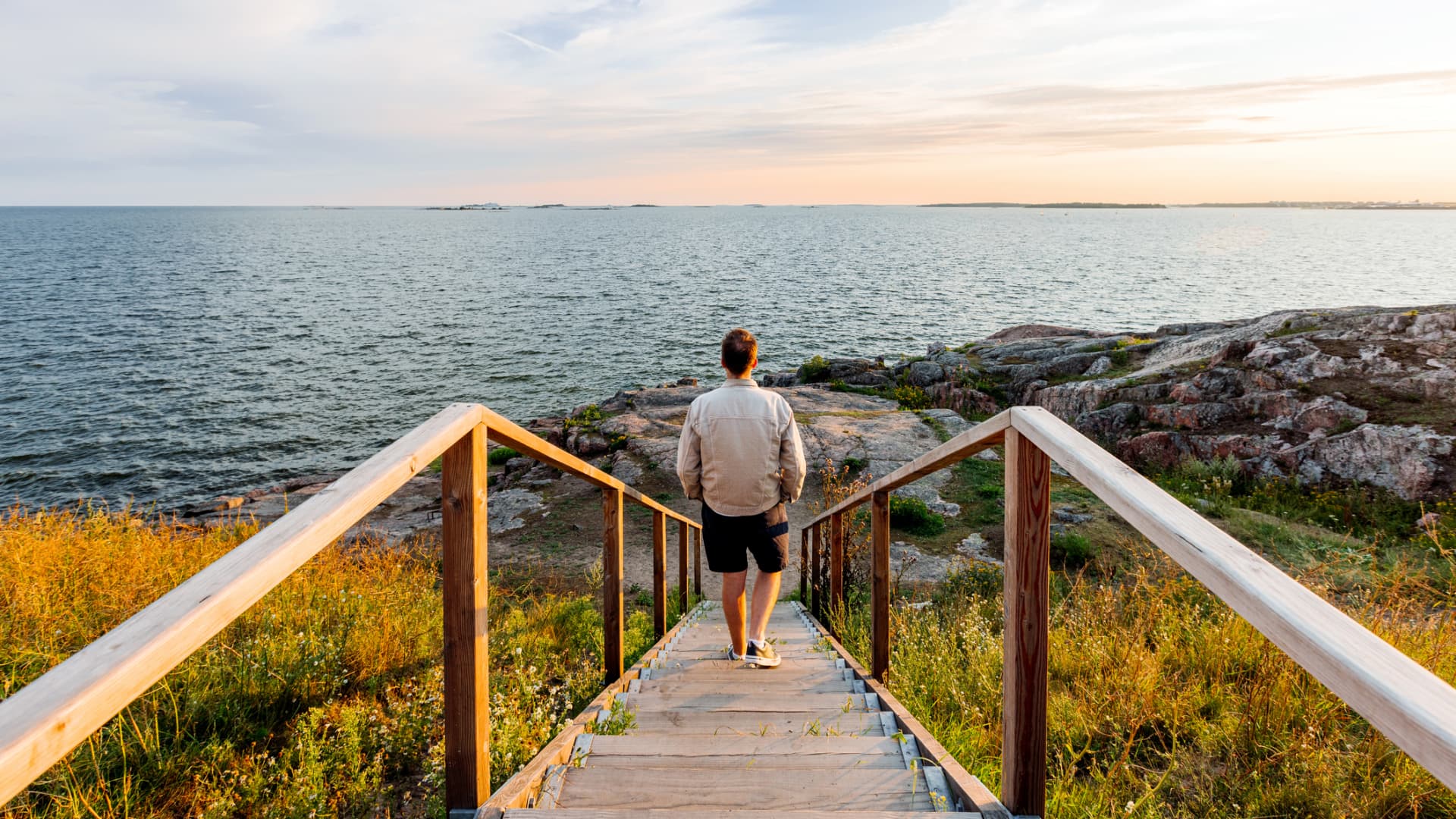
Finland has been ranked the happiest country in the world for the ninth consecutive year in the 2026 World Happiness Report.
The rankings are based on the Gallup World Poll, which asks at least 1,000 people in each of 147 countries to rate their lives on a scale of 0 (worst possible) to 10 (best possible). The United States ranked 23rd with a score of 6.81.
Jean-Emmanuel de Neve, director of the Center for Wellbeing Research at Oxford University, which publishes the World Happiness Report, said the core of the survey was to ask whether people were satisfied with their lives.
The top 10 happiest countries are:
Finland (7.76)Iceland (7.54)Denmark (7.53)Costa Rica (7.43)Sweden (7.25)Norway (7.24)Netherlands (7.22)Israel (7.18)Luxembourg (7.06)Switzerland (7.01)
“Finland is doing a lot of things right.”
To explain the differences in scores, researchers identified six key factors: GDP per capita, social support, healthy life expectancy, freedom of life choices, generosity, and perceptions of corruption.
“Finland is doing a lot of things right,” De Neve says. “They have high wealth and they redistribute it. They have good social support. They trust each other, they trust the system. They have long healthy life expectancies and a good public health system.”
In Finland, parents are entitled to at least five months of paid parental leave, and expectant parents are entitled to an additional 40 days of paid leave. The government also provides housing assistance and universal health insurance.
Many of the other countries in the top 10 also offer paid parental leave and universal health insurance.
One of the overlooked factors behind happiness is age
Some aspects of happiness are difficult to measure statistically, but still contribute to overall happiness.
In Finland, “I think what separates them from Icelanders, Danes and Norwegians is probably a stronger connection to nature. They love saunas,” Denev says. Most saunas are outdoors.
Gallup World Poll data is weighted by national averages, so age can skew results. Populations in Finland, Denmark and other Nordic countries are aging, said Tara Thiagarajan, founder and chief scientist at the research nonprofit Sapien Lab.
According to the CIA World Factbook, the average age in Finland is nearly 43 years, compared to 38.4 years in the United States. Thiagarajan said older people tend to report higher levels of happiness.
Sapien Labs recently released its Global Mind Health report, which examines where and why people around the world can thrive.
The results showed that “older people had better family relationships and had closer family relationships,” she says. “They were more spiritual. They didn’t grow up with smartphones. They didn’t eat, and they still don’t eat ultra-processed foods.”
Want to lead with confidence and bring out the best in your team? Take CNBC’s new online course, How to Become an Exceptional Leader. Expert instructors share practical strategies to help you build trust, communicate clearly, and motivate others to do their best work. Sign up now and use coupon code EARLYBIRD to receive an initial discount of 25% off the regular course price of $127 (plus tax). Offer valid from March 16th to March 30th, 2026. Terms and conditions apply.

