

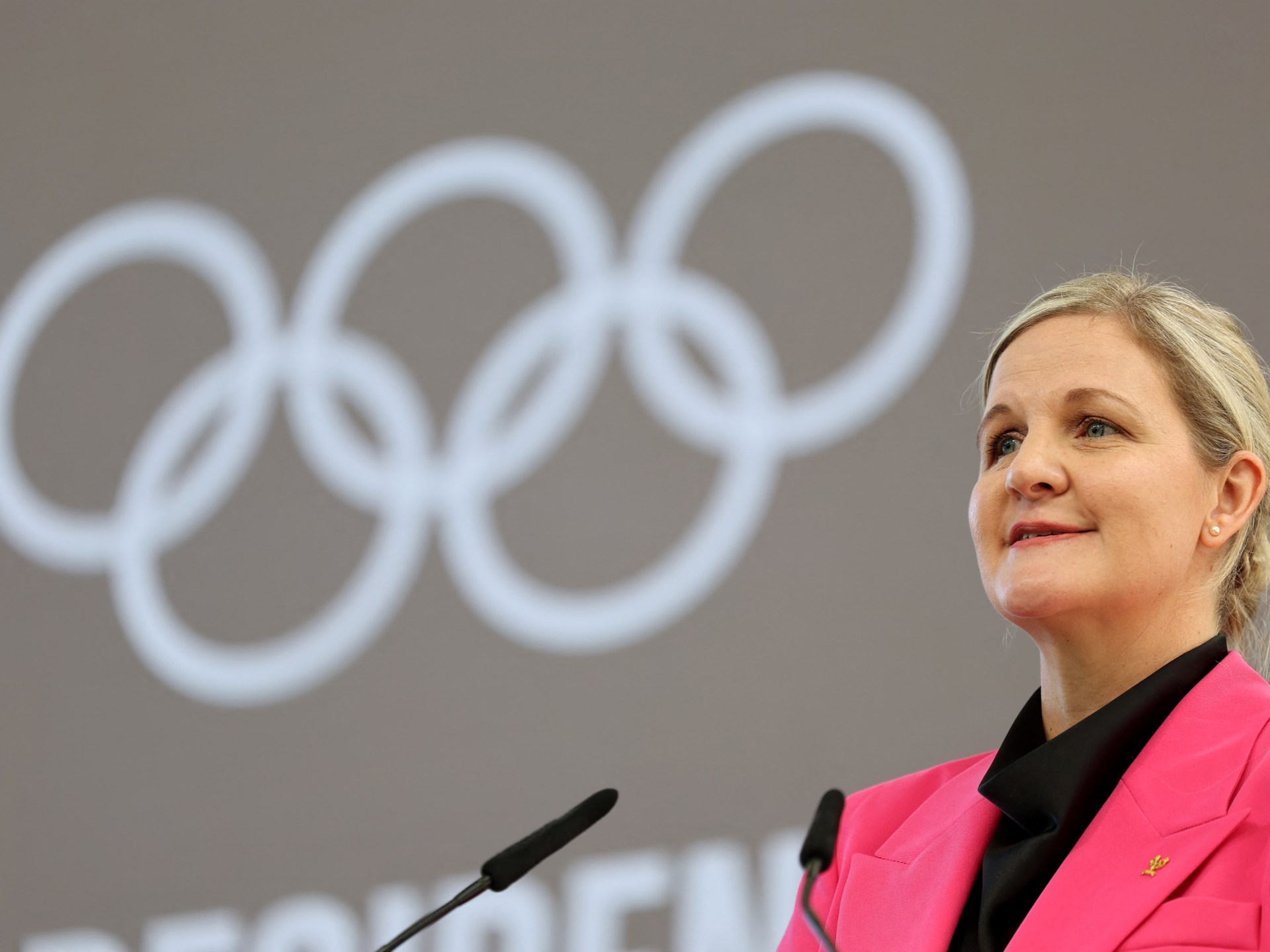
In February, world sports leaders reached an agreement on new eligibility criteria for transgender athletes.
Published March 18, 2026
More than 80 human rights and sports advocacy organizations have called on the International Olympic Committee to abandon reported plans to introduce universal genetic gender testing for female athletes and impose a blanket ban on transgender and intersex athletes.
A joint statement by the Sport & Rights Alliance (SRA), ILGA World, Humans of Sport and dozens of other organizations warned that the measures reportedly recommended by the IOC’s Working Group for the Protection of Women’s Categories would set back gender equality in sport.
Recommended stories
list of 3 itemsend of list
“According to multiple sources, the organization has recommended that the IOC require all female and girl athletes to undergo genetic gender verification and ban transgender and intersex athletes from competing in women’s events. The IOC has not officially confirmed this recommendation,” the statement said.
The IOC said in a statement to Reuters on Wednesday that no decision had been made yet.
“The Working Group for the Protection of Women’s Categories continues to discuss this topic, but no decisions have been taken yet,” an IOC spokesperson said. “Detailed information will be provided later.”
The IOC discontinued universal testing for men and women after the 1996 Atlanta Olympics.
The federation has long rejected universal rules regarding transgender Olympic participation, and in 2021 directed international federations to develop their own guidelines.
Since then, several major federations, including track and field, swimming and rugby union, have banned athletes who have passed male puberty from competing in women’s classes.
SRA executive director Andrea Florence said sex testing and blanket ban policies “devastatingly undermine women’s rights and safety”.
“Gender restrictions and exclusion harm all women and girls and undermine the very dignity and equity that the IOC claims to protect,” she added.
John Pike, a British scholar in the philosophy of sport who advocates for the protection of the female category, said the letter was “laughable, hopeless and ridiculous”.
“[The working group]is not proposing a ban at all. It is proposing the exclusion of men from the women’s category,” Pike wrote on social media platform X.
“This (letter) was predictable and, in a way, encouraging. It doesn’t solve anything, but the pessimism of this group makes me optimistic.”
International organizations such as the Office of the United Nations High Commissioner for Human Rights, UN Women and the World Medical Association have condemned sex testing and related interventions as discriminatory and harmful.
This “violates the privacy of women and girls” and puts child athletes at safety risks, said Payoshni Mitra, executive director of Humans of Sport.
Advocates also argued that banning transgender and intersex athletes would ignore the barriers athletes face, such as harassment, limited access to sports, and other structural disadvantages.
“Sport should be a place of belonging,” said ILGA World Executive Director Julia Ehrt.
The groups said the reported proposals were inconsistent with the IOC’s own Framework on Fairness, Inclusion and Non-Discrimination, a guidance document that placed the responsibility on federations to amend their own rules.
“We should hope that the proposals are inconsistent with the 2021 Framework Document, because this is one of the most confusing policy statements I have ever read,” Professor Pike added.
“As you may recall, the organization claimed that there is ‘no presumptive advantage’ for men over women[in sports].”
World Athletics is among the sports organizations that have already introduced sex testing, introducing a one-time SRY (sex determination, region Y) genetic test for all female athletes using a cheek swab ahead of last year’s world championships in Tokyo.
