

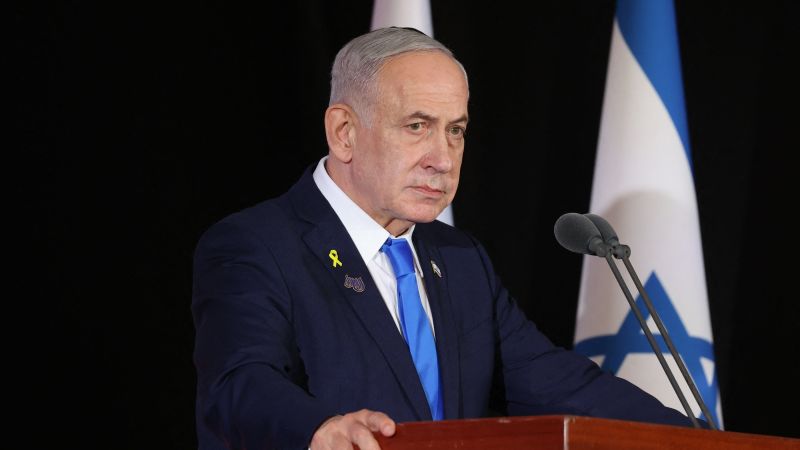
Israeli Prime Minister Benjamin Netanyahu has formally requested a pardon in the long-running corruption trial, arguing that it is in the “public interest”.
In a letter to President Isaac Herzog, Prime Minister Benjamin Netanyahu said his trial had become a “focus of intense controversy” and that Netanyahu had a “greater responsibility to the broader public in understanding the full impact of these events.”
Prime Minister Netanyahu said it was his “personal interest” to prove his innocence in the ongoing trial, but “the public interest dictates otherwise.” The letter was filed on Thursday and made public on Sunday.
As Israel’s head of state, Herzog has the sole authority to grant pardons. Mr. Herzog’s office received the request, and Mr. Herzog confirmed that it would “consider it with the utmost care and responsibility.”
In his one-page letter, Netanyahu did not admit guilt or make any promises about his political future. He has repeatedly maintained his innocence on charges of bribery, fraud and breach of trust.
The formal pardon request is a reversal for the longtime Israeli leader, who had said the prosecution would fail and he would prove his innocence in court.
“Despite the current security challenges and diplomatic opportunities surrounding the State of Israel, I am determined to do everything in my power to mend the rifts, achieve national unity, and restore public trust in the institutions of the state,” Netanyahu said. “I look forward to all branches of government doing the same.”
Rebels were quick to criticize Netanyahu’s request. Prime Minister Netanyahu faces accusations, particularly against the Arab public and the left, of not only prolonging the war in Gaza for his own political gain, but also of stoking rifts in Israeli society.
Israeli opposition leader Yair Lapid called on Herzog to reject the pardon request, at least in its current form. “We cannot grant amnesty to Prime Minister Netanyahu unless he admits his guilt, expresses remorse and immediately withdraws from political life,” Lapid said in a video statement.
Yair Golan, leader of the left-wing Democratic Party, told X: “Only those who have committed a crime ask for a pardon. Prime Minister Netanyahu is asking for a pardon now that the case against him has not been concluded after eight years of court.”
However, Prime Minister Benjamin Netanyahu’s political allies supported the amnesty. Far-right National Security Minister Itamar Ben Gvir supported the request, calling it “of critical national security importance for national security” in a statement.
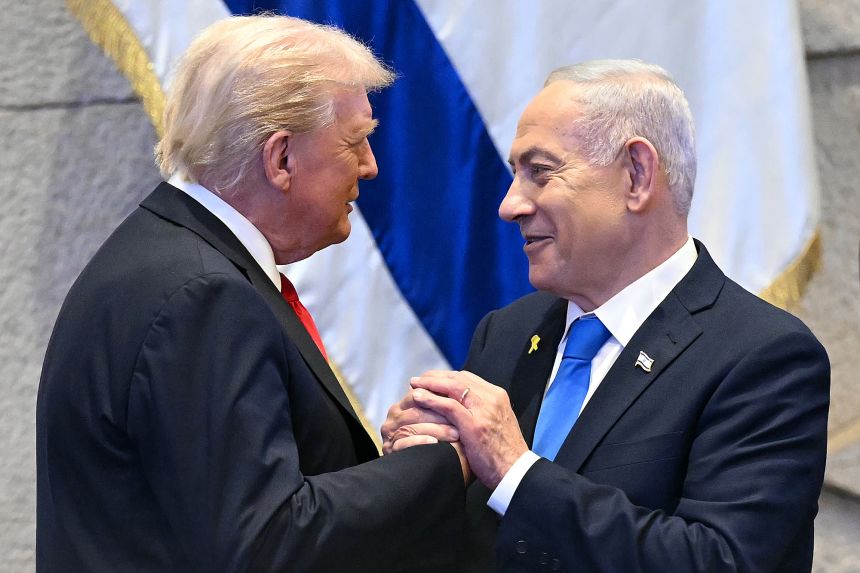
Earlier this month, US President Donald Trump again addressed the incident in a letter to the Israeli president, asking for a pardon for perhaps the most vocal international cheer leader.
“I ask you all to fully pardon Benjamin Netanyahu, a formidable and decisive wartime prime minister who is now leading Israel into an era of peace,” Trump said in a letter distributed by Israel’s presidential spokesperson.
A Channel 12 poll conducted in mid-November following President Trump’s letter to Herzog suggested that 48% of Israelis oppose an unconditional pardon, while 44% support it. The remaining 8% answered “I don’t know.”
According to the Israel Democracy Institute, the president’s pardon power in Israel is subject to broad discretion. However, pardons are generally only issued after an individual has already been convicted.
“The possibility of a president pardoning someone before or during a trial risks turning him into an authority figure who bypasses law enforcement and the judicial system,” wrote Dana Brander, a researcher at the institute. “The rule is that the president acts as a ‘benevolent authority’ only after all other authorities have spoken.”
Prime Minister Netanyahu is the first sitting prime minister in Israel’s history to face criminal prosecution while in office. His trial began in May 2020 in three separate cases.
In the most serious case, he was charged with bribery, fraud and breach of trust for allegedly advancing regulatory favors valued at more than $250 million at the time to his friend Shor Elovitch, who was a controlling shareholder in the telecommunications company Bezeq. In return, prosecutors allege, Elovitch guaranteed favorable coverage of the prime minister on his online news site Wala!. news. Mr. Elovitch denies the charges.
Netanyahu’s own testimony began in December 2024, but has been repeatedly postponed and canceled, most at his request. Given the remaining stages of the trial, including testimony, sentencing, and possible appeals, the proceedings are expected to continue for several more years.
There is no deadline for Herzog to make a decision on the pardon.
