

Beijing
—
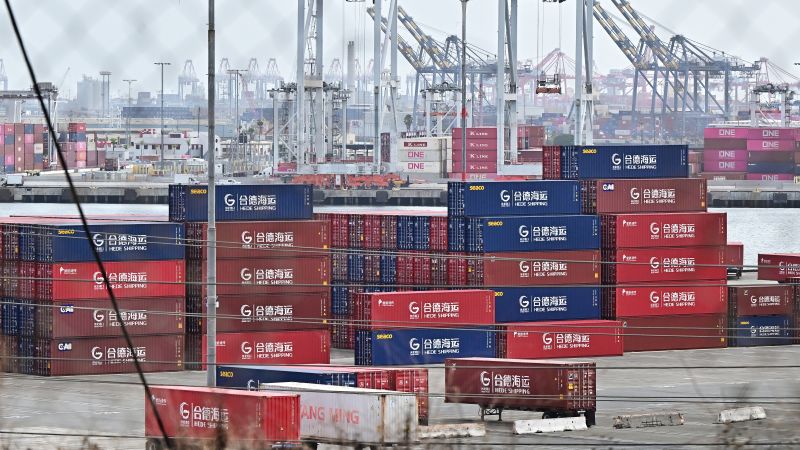
As the U.S. imposed increasingly higher tariffs on Chinese imports earlier this year, Derek Wang braced for major disruption.
With orders from the U.S. halted, Wang, 36, who sells intelligent cookware in southern China’s Guangdong province, looked elsewhere to fill the gap. After finding new buyers in Brazil, Japan, Malaysia and Cambodia, he learned an important lesson: “Nothing is more important than a market close to us.”
Stories like Mr. Wang’s are playing out across China’s vast economy, where companies large and small are scrambling to fill the void after temporary triple-digit tariffs and the threat of their return disrupted China’s exports to the world’s richest markets.
The result was a coup for trading giant China.
Rather than watch exports slump as the world’s largest manufacturers lose U.S. business, they have expanded deeper into other U.S. markets, building on the U.S. global economic footprint and the hedges companies made during President Trump’s first trade war.
That resiliency gave Beijing confidence in months of negotiations with the United States, which culminated in October when Donald Trump and Xi Jinping met and agreed to a truce that lowered new tariffs on Chinese goods to 20%.
But with this push, China is on track to exceed last year’s nearly $1 trillion global trade surplus. The surplus is frustrating governments around the world and is what sparked President Trump’s trade war in the first place.
Questions were already being raised about the sustainability of China’s export surge even before figures released last week showed exports unexpectedly fell by more than 1% in October compared to the same month last year, the first decline since February.
Whether China can maintain its global export levels and expand again into the U.S. market after the recent ceasefire has become an inevitable question for the world’s second-largest economy. This is because China is focusing on manufacturing as the foundation of its economy, even as it continues to suffer from weak consumer demand.
The shift in China’s export flows so far this year has been significant, sending a clear message to China that the United States is not irreplaceable.
In the first 10 months of this year, exports to the United States fell by nearly 18% compared with the same period in 2024, but rose by more than 7% to the European Union, 14% to Association of Southeast Asian Nations countries and more than 26% to Africa, according to Chinese customs data released last week. Overall, exports increased by 5.3%.
In Southeast Asia, exports of machine tools, automobile parts, and computer parts increased rapidly, and trade became active. Analysts say construction equipment and green technology are major exports in Africa, while parts of Latin America are seeing strong growth in sectors such as electric vehicles, fertilizers and electronics.
This trade engine was active even before the trade war began.
Already the world’s manufacturing powerhouse, China’s rapid rise to dominance in green technologies such as electric vehicles, lithium-ion batteries and solar panels has fueled demand from countries looking for a cheaper switch to renewable energy, as well as concerns from countries that accuse China of unfair competition with subsidized products.
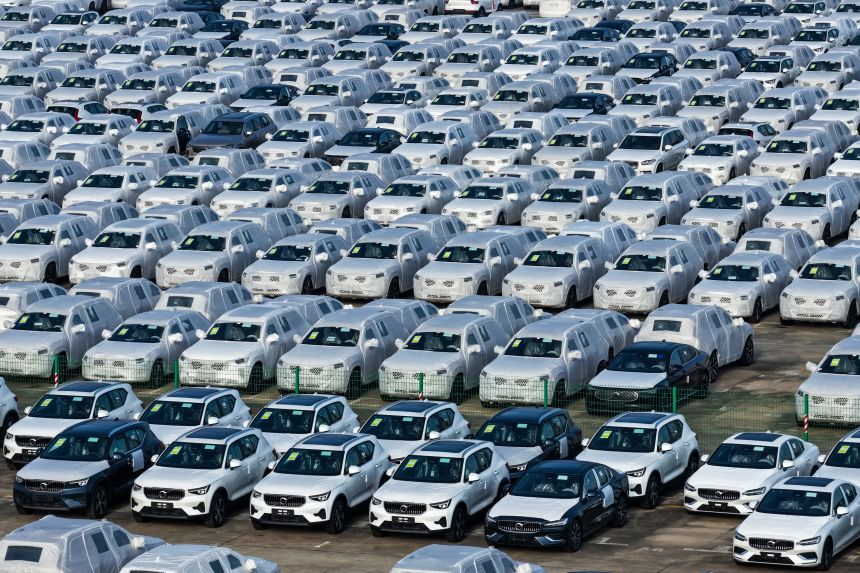
Some of these goods, such as electric vehicles and solar panels, are already effectively locked out of the U.S. market by high tariffs introduced in recent years, and Chinese exporters are expanding trade across developing markets.
“(China) has prepared well for this,” said Jacob Gunther, head of the economy and industry program at the Berlin think tank MERICS.
“It wasn’t a miracle of foresight that the United States predicted that the trade and technology dispute with China would intensify over time, but China was[expanding its market]even before the trade and technology war began, and that trend has really accelerated since the war began,” he said.
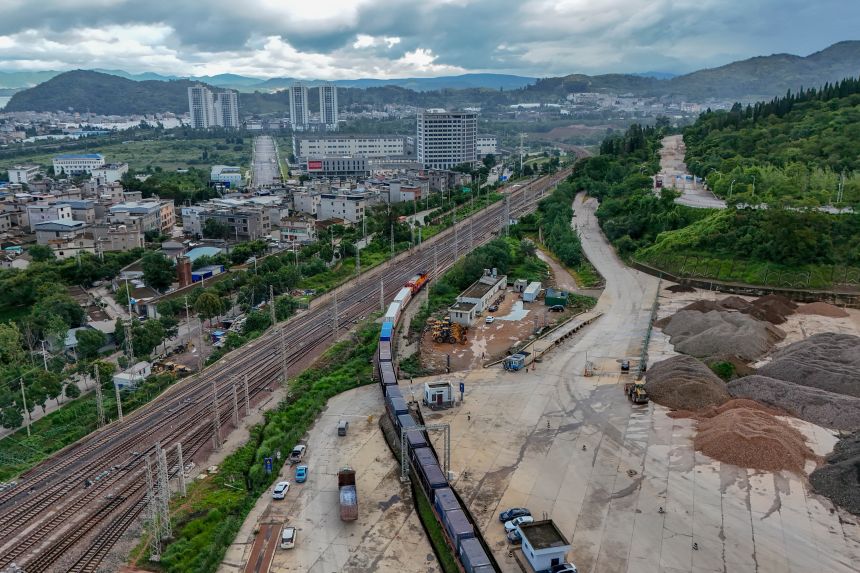
Even though many companies have had to scramble in recent months to pivot their operations away from the U.S. market, experts say the foundation for that pivot has been laid by Beijing’s decades-long efforts to build a global economic footprint, expanding trade while funding ports, terminals and highways under Xi’s Belt and Road Initiative.
It also relies on previous moves by Chinese companies to move supply chains and production out of China to regions from Southeast Asia to Mexico, where goods are shipped from China for manufacturing and completion.
“This is the key to the so-called resilience of China’s exports,” said Yao Yang, director of the Dishuihu Institute of Advanced Finance at Shanghai University of Finance and Economics, noting that these investments began during President Trump’s first term.
“Without this kind of foreign investment, I don’t think China will be able to cope with the shock.”
But Beijing’s trade resilience has also raised concerns that domestic industries could be decimated by the influx of Chinese goods into other markets.
Countries are fighting back with investigations against Chinese products, with the United States and India, as well as Mexico and Brazil, filing 79 anti-dumping and countervailing investigations against Chinese products in the first half of this year, a significant increase from recent years through 2024, according to World Trade Organization data.
There are also calls for exports and factory relocation, alongside greater levels of local investment, knowledge transfer and more balanced trade.
For some Latin American countries, “deindustrialization is a big problem when Chinese companies start investing, because they’re only bringing in assembly, not transferring technology or knowledge,” said Diego Rodríguez, logistics and industrial practice leader at research firm Americas Market Intelligence in Miami, noting that countries like Brazil are pushing back.
According to Rebecca Sta Maria, former executive director of the Asia-Pacific Economic Cooperation Secretariat, there are concerns about the increased flow of goods in Southeast Asia.
“We feel like we’re being swept into a quagmire. I remember one business community saying, ‘There’s a tsunami of Chinese goods coming into ASEAN.'” Of course, that’s a concern for us,” said Suta Maria, now director of the Institute for Democratic Economics in Kuala Lumpur. But it wasn’t all negative, she added. This is because small and medium-sized enterprises use high-end components made in China to increase the competitiveness of their products.
“I know the Chinese government has acknowledged (concerns) to some degree, but now it’s a matter of how we deal with this,” he said.
The Chinese government denies accusations that its products are flooding the market. Instead, its officials are seizing President Trump’s global trade reforms as an opportunity to promote China as a reliable trading partner while pledging to widen its vast market to exporters and investors around the world.
Observers say some countries may be reluctant to erect barriers against China now that they face increased tariffs on their products to the United States, especially when there is real demand in many countries.
“It’s a two-way street” in Africa, said David Omojomoro, an emerging markets analyst at Capital Economics.
“These countries[in Africa]want to industrialize… There is a huge power disparity across the continent. Solar panels are cheap and China has excess capacity… They need to send it somewhere, so of course Africa will benefit.”
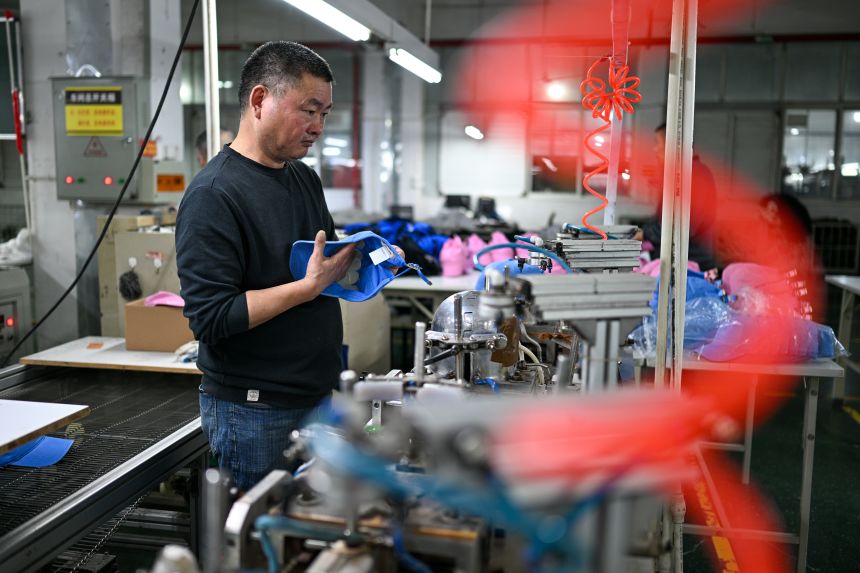
Still, manufacturers across China are struggling to fill the void left by declining U.S. exports.
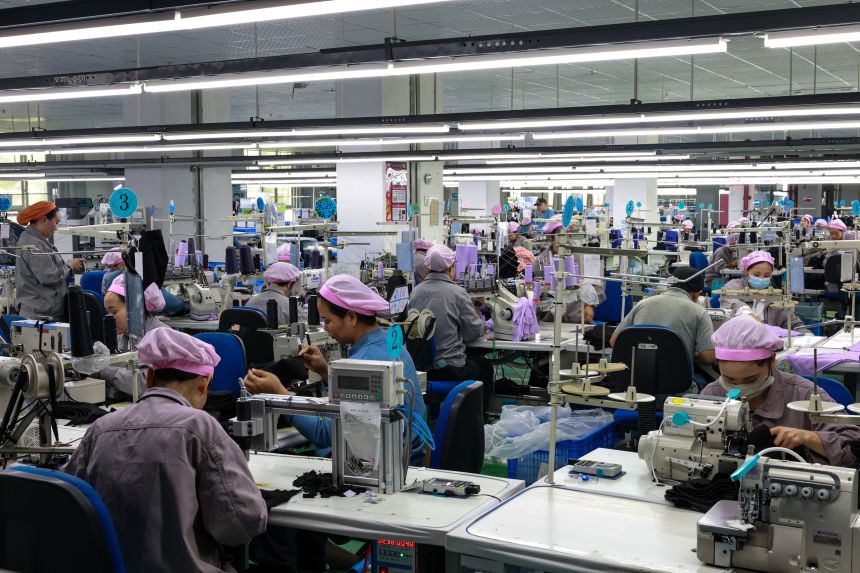
Factory workers told CNN in recent months that their shifts had been canceled, they were furloughed and they lost their jobs as their employers decided to move them out of China.
Zhang Peipei, a clothing manufacturer from Jiangxi province, told CNN that a small source of income from outside the United States has kept her business afloat for 20 years. But she said the United States’ unpredictable tariff policy was already causing “serious and irreversible long-term consequences” with no clear alternatives.
Zhang said it now depends on being able to strike a deal with a buyer in Mexico, and although some of the U.S. business could come back, “I’m not very confident.” “The whole world is currently in turmoil because the United States is shaking up the foreign trade scene.”
And there are questions about whether China’s strong trade figures this year indicate real demand or a short-term move to stockpile goods or ship them to the U.S. through third countries with lower tariffs.
Gerald DiPippo, a senior fellow at the Rand China Research Center, said an analysis of U.S.-China trade data from April to July, including high trade uncertainty, suggests that less than a quarter of China’s trade diverted from the U.S. is still likely to end up in the U.S., with the remaining goods looking for alternative markets.
“Still, I’m not very confident that the final demand for all (other) exports to the Global South will actually remain in those countries,” he said, noting that exporters may be building up overseas inventories while waiting to see how countries’ trade negotiations with the United States pan out.
“The big caveat is that Chinese exporters’ margins are almost certainly under pressure… They maintain high volumes in real terms, but they do so by cutting prices,” he added.
The recent truce between Mr. Xi and Mr. Trump has kept tariffs on Chinese goods at an average of about 47%, but could bring more U.S. business back.
However, with uncertainty remaining across the global economy, the primary focus of Chinese factory and government officials will likely be on increasing the amount of domestically produced goods purchased by Chinese consumers.
The same goes for Mr. Wang, a cookware maker in Guangdong province. Despite finding new customers outside the U.S., he said, the company is also making a new pivot, directing more of its business to China’s domestic market and investing less abroad.
