

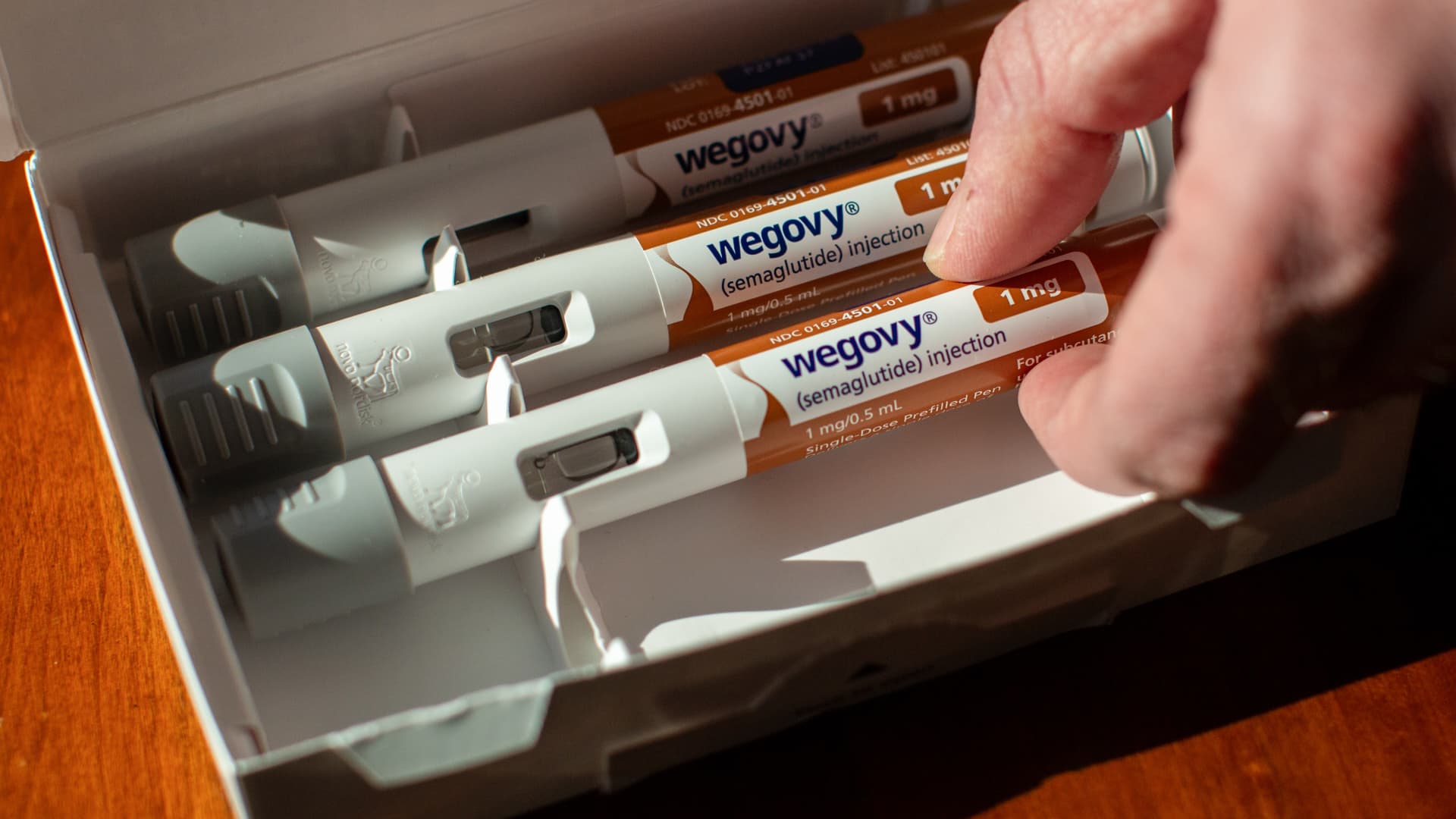
A Wegovy injection pen located in Waterbury, Vermont, USA on Monday, April 28, 2025.
Shelby Knowles | Bloomberg | Getty Images
President Donald Trump signed a landmark agreement Thursday. Eli Lilly and novo nordisk This is to reduce the price of a blockbuster weight loss drug.
Under the agreement, monthly out-of-pocket costs for the popular shot and future pills could range from $50 to $350 starting next year, depending on a patient’s dose and insurance coverage, Trump administration officials said.
Existing GLP-1 drugs, such as Eli Lilly’s Zepbound injectable for obesity and Novo Nordisk’s competing product Wigoby, cost more than $1,000 per month, making it difficult for many patients to take them. The companies have introduced a low-cost option for people to pay with cash and buy medicines directly from their websites.
But the deal with President Trump, part of his “most-favored-nation” policy, seeks to further expand access. Based on the details shared so far, we will show you how much weight loss drugs will cost patients under the new agreement.
medicare
Medicare covers GLP-1 drugs for diabetes and other medical conditions. For example, Wegovy to reduce cardiovascular risk. But under the new agreement, Medicare will begin covering obesity drugs for the first time starting in mid-2026, potentially making more seniors eligible for coverage and allowing more private insurers to offer coverage.
Some Medicare patients will pay a $50 monthly copayment for all approved GLP-1 drugs, including treatments for diabetes and obesity.
However, the Trump administration has placed some restrictions on whether Medicare beneficiaries are eligible to receive GLP-1 as part of their obesity, cardiovascular disease, and metabolic benefits.
Patients are eligible if they fall into three cohorts:
The first group includes people who are overweight with a BMI greater than 27 or who have prediabetes or cardiovascular disease. The second group is people who are obese with a BMI of more than 30 and have uncontrolled high blood pressure, kidney disease, or heart failure. The third group is severely obese patients, or those with a BMI greater than 35.
Eli Lilly and Novo Nordisk have voluntarily agreed to reduce the price the government pays for existing GLP-1 drugs already approved for diabetes and other uses to $245 per month for all non-starting doses. The savings resulting from these price reductions will allow Medicare to begin paying the same price for GLP-1 for patients who are obese and at increased metabolic and cardiovascular risk.
consumer direct sales
The agreement will allow patients to obtain GLP-1 on a direct-to-consumer platform at a greater discount than they would receive on the drug company’s existing site.
On TrumpRx, the government’s direct-to-consumer platform for purchasing prescription drugs for cash, set to launch next year, the average monthly cost for Wegoby, Zepbound and other injectable GLP-1 products will start at $350 and fall to $250 within the next two years, according to government officials.
Initial doses of Eli Lilly and Novo Nordisk’s upcoming obesity drug, pending approval, will cost $149 per month with TrumpRx, Medicare, and Medicaid. Under the deal announced Thursday, Eli Lilly will receive an expedited review of its upcoming tablets.
Eli Lilly announced Thursday that it is cutting prices on its direct-to-consumer platform LillyDirect by $50. LillyDirect already offers drugs such as Zepbound at discounted prices to patients who pay cash. Zepbound’s multi-dose pen can be purchased for $299 per month for the lowest dose, with additional doses priced up to $449 per month.
If approved, Eli Lilly’s pills will be available starting at $149 per month for the lowest dose.
medicaid
State Medicaid coverage of GLP-1 drugs for obesity is spotty.
But Novo Nordisk and Eli Lilly have agreed to extend lower government pricing for their GLP-1 drugs ($245 per month for all doses other than other starting doses) to all 50 Medicaid programs for all eligible uses.
States must choose these prices, so some states may not choose them. Check with your state government for coverage.
