

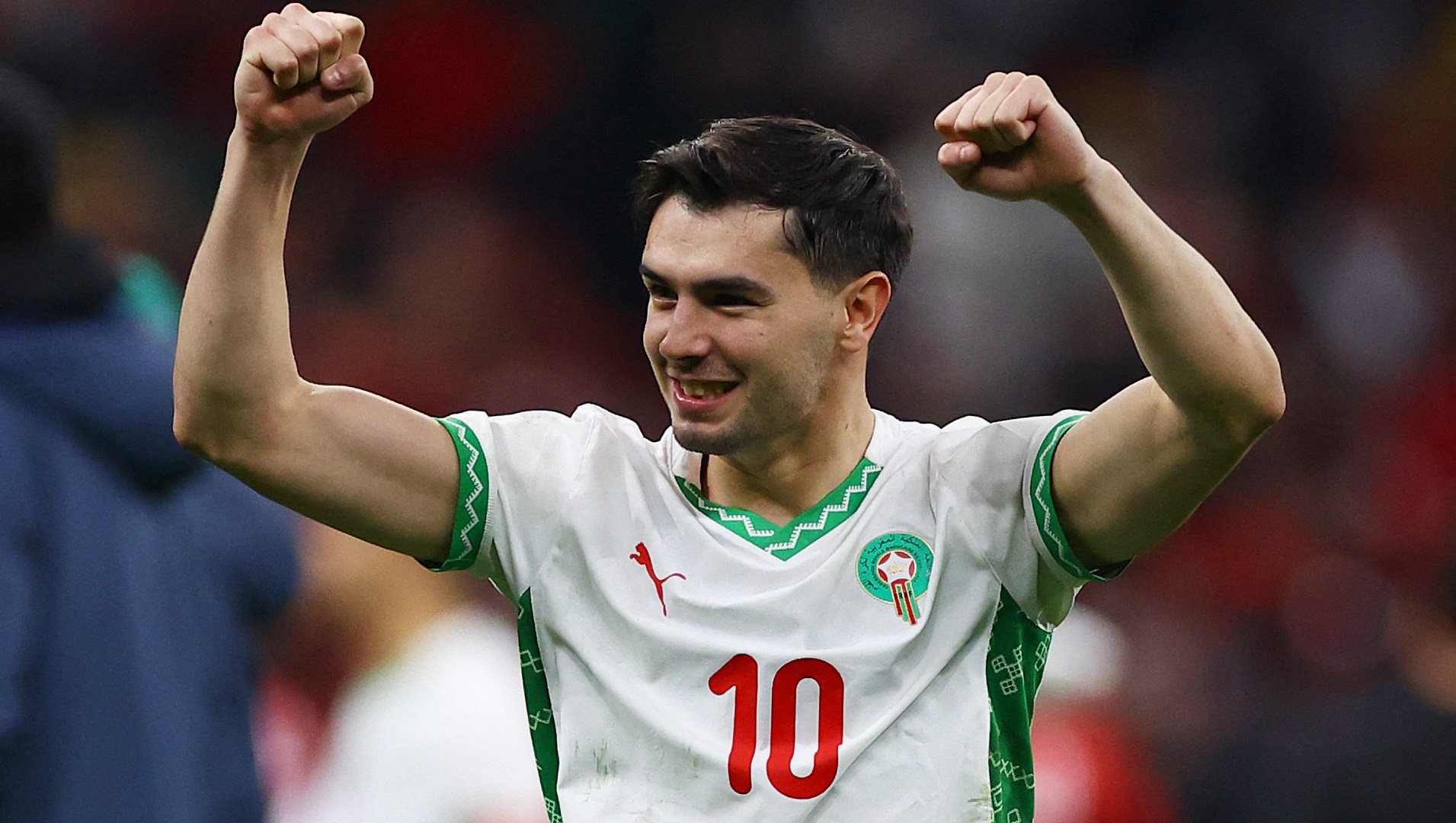
Over the decades, Morocco have gone from regularly being eliminated in the group stages of the African Cup of Nations (AFCON) and missing out on several consecutive World Cups to climbing into the top 10 of the FIFA men’s rankings, reaching the semi-finals of the 2022 World Cup in Qatar and being seen as reliable contenders for the sport’s biggest tournament this summer.
What’s even more impressive is that the Atlas Lions’ success is not limited to the senior men’s national team, but extends across all age groups and categories.
Recommended stories
list of 4 itemsend of list
Morocco are currently the 2025 AFCON champions, albeit after Senegal was stripped of the title. They were also 2025 Women’s African Cup of Nations (WAFCON) Finalists, 2025 FIFA Arab Cup Champions, 2025 African Nations Championship (CHAN) Champions, 2025 U-20 FIFA World Cup Champions, 2025 U-17 AFCON Champions, 2024 Olympic Men’s Bronze Medalists, and 2024 Futsal AFCON Champions.
There is no magic formula behind success. A source close to the Royal Moroccan Football Federation, who spoke on condition of anonymity as he is not authorized to speak to the media, explained that the country’s success rests on three pillars: good governance, financial investment and talented human resources.
“King Mohammed VI laid out this strategy at the 2008 Schirat Sports Conference, which marked the beginning of a long-term national project for the development of football,” he said.
“The first pillar was governance reform, which included the creation of a national department for financial management that would help organize and professionalize the financial structure of Moroccan football.
“This was followed by major investments in infrastructure at all levels of the game. For example, through our collaboration with the Royal Moroccan Football Federation and the Moroccan government, we have built thousands of local football pitches, known as ‘proximity fields’, which are open and accessible to all, contributing to mass participation across the country.”
In addition to its public infrastructure, Morocco built the Mohammed VI complex and academy in Marmoura, outside Rabat. With immaculately maintained pitches, state-of-the-art physiotherapy equipment and an on-site hotel, the complex has been compared to some of the finest technical centers in world football, including France’s Clairefontaine.
The academy produces top-class talent, including several stars of the senior men’s national team, including Olympique de Marseille’s Nayef Agerud, Girona’s Azzedine Unahi and Al Ittihad’s Youssef En-Nesyri.
Another big piece of the puzzle in building a North African powerhouse was the African Confederation’s push for FIFA to reform its national qualification rules, opening the door to players from the European diaspora. Thanks to these rule changes, Morocco secured the services of players like Hakim Ziyech, Nordin Amrabat and Brahim Dias.
The newest addition to the Atlas Lions is Ayyoub Bouadi. The 18-year-old Lille midfielder is one of France’s best young players and even Zinedine Zidane, who is widely expected to take over the French national team following the resignation of coach Didier Deschamps after the World Cup, has contacted Bouadi’s inner circle to inquire about keeping him at Les Bleus, French media reported.
Still, Bouadi stuck to his plans to represent Morocco.
Tom Youssef Drissi, an ardent Atlas Lions supporter, told Al Jazeera: “I don’t think there has ever been a player so young and with so much promise declared for Morocco.”
“It feels different. … It’s more shocking, it’s unprecedented. We’ve had good young European-born players come into the team in the past, but France are currently one of the strongest players in world football, and their midfield is aging.
“[Bouadi]probably had a clear path to that team. He was captain of the Under-21 team just two months ago. Along with Samir El Mhrabeh, Neel El Ainaoui and Bilal El Kanous, I think we are very well prepared for the next 10 years.”
AFCON fallout
Moroccan football’s trajectory is firmly on the upswing, and it appears that the only thing that could derail Morocco at the World Cup is the instability caused by the 2025 AFCON final. Referee Jean-Jacques N’Dala awarded a questionable penalty in Morocco’s favor in stoppage time, with the match tied 0-0 and going into extra time.
What happened next shocked the entire soccer world. While the Senegalese team left the pitch and returned to their locker rooms, Senegalese fans clashed with the stewards in the stands behind the Morocco goal.
Inexplicably, the match was not called off. After a delay of around 15 minutes, the Senegalese team returned to the pitch and Brahim Diaz came forward to take the penalty and attempt a panenka. Edouard Mendy remained unperturbed from his line and calmly fired a shot as Senegal won in extra time.
At the post-match press conference in Rabat, the first question asked to coach Walid Reglagui, who led Morocco to the 2022 World Cup semi-finals, was: “Are you going to resign tonight or tomorrow morning?”
Mr. Regulagi ignored it, but resigned a few weeks later. It was widely known throughout the tournament that if Morocco did not lift the trophy, Reglagui was likely to be replaced by Tariq Sektioui or Mohamed Ouabi. The Royal Moroccan Football Federation opted for the latter after his attack-oriented approach led Morocco’s youth team to victory at the Under-20 FIFA World Cup in October.
“There is an interesting parallel with Walid Reglagui in 2022. … He also took charge of the national team a few months before the World Cup,” Abadi, a Moroccan journalist and author of A History of African Football, told Al Jazeera.
“Wabi’s first match was a friendly in March and showed that he has already started to implement his ideas and style of play. However, it can also be felt that many things have not yet been fully resolved. Wabi will still be looking for the right balance between experienced players from the Regulagi era and the new generation. A major overhaul is not possible within this period.”
While many speak highly of Wabi, there are legitimate questions about whether Legulagui’s pragmatic style would have been better suited to the demands of the World Cup.
In Qatar, Morocco were unbeaten in games where they had less than 50 percent possession, with their only loss coming against France, where they had the most possession. It remains to be seen whether Wabi’s more adventurous approach can deliver the same resilience in the knockout rounds.
While the world may rightly maintain high hopes for Morocco at the 2026 World Cup, those who follow the team most closely understand that this tournament is just one milestone on a long road that will lead to their country hosting the World Cup four years later.
“Even the 2030 World Cup is not the final goal,” said a Moroccan federation official.
“This is a milestone that will help accelerate the country’s broad-based development in all key aspects: infrastructure, human capital, transport, mobility and international attractiveness.”
