

Latest information on Spanish
In Venezuela’s coastal state of La Guaira, which was hardest hit by Wednesday’s twin powerful earthquakes, residents said they had stayed awake all night and reported that several people remained trapped in rubble after dozens of apartment buildings were badly damaged.
“We felt the shaking, so to speak, like the beginning of an earthquake. And it was very strong… We gathered here and saw all the damage,” local resident Jose Terraza, 68, told journalists working on the ground on behalf of CNN.
The building across the street from his home in Playa Grande collapsed, but his apartment still stands. Fearing possible aftershocks, residents spent a long night outdoors with whatever belongings they had managed to grab.
The cries of families calling for their missing loved ones echo.
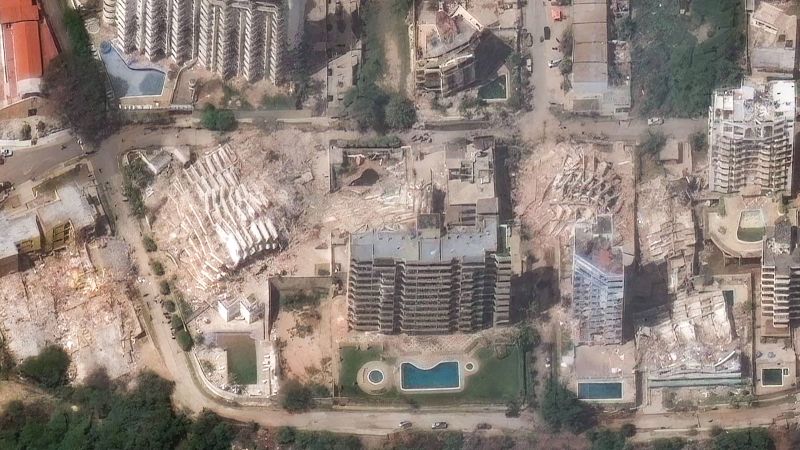
Video from Venezuelan state television showed the building’s facade chipped and leaning on its foundations. The remains of other buildings were buried under piles of rubble. Other videos showed people climbing huge piles of rubble and exploring their surroundings. Other buildings were also seen completely collapsed to the ground.
Broken windows, broken pipes and pieces of concrete lay among stuffed animals, clothes and shoes. Some satellite images even show evidence of fire damage, which is consistent with reports from firefighters assisting in the emergency response.
Residents said there was not enough aid to meet people’s needs and that first responders were struggling to cope with scores of injured and missing people under the rubble.
“The situation in La Guaira is a true tragedy,” Venezuela’s acting president Delcy Rodríguez said late Wednesday night, declaring the state a disaster area.
MSF said people gathered in public places and took everything they could salvage and take home. Some decided to stay outside, fearing their buildings would be next.

Schools and stadiums became temporary shelters for people who lost their homes. Aid groups have stressed the urgent need for essential supplies, clean water and sanitation, and other public buildings have also become collection centers for emergency supplies.
The Venezuelan Red Cross said residents were reeling from the tragedy and needed emergency medical care, including trauma treatment and psychological support.
La Guaira is one of Venezuela’s 23 states, located along the country’s northern coast, and has faced untold tragedy in the past.
“Gateway to the sea and sky”
The USGS said La Guaira was the hardest hit, but the epicenter was not in the nearby state of Yaraqui.
However, La Guaira is home to one of Venezuela’s largest ports and the country’s most important airport, Simón Bolívar International Airport, serving the capital, Caracas.
This is why the state is known as the “sea and air gateway” to Venezuela.
“This state, with its densely populated population concentrated in the metropolitan area, is Venezuela’s economic engine,” the government said.


La Guaira borders the Caribbean Sea, the Capital Region, and the states of Aragua and Miranda.
According to the Venezuelan government, “economic development is above the national average. Venezuela’s strategic location as a sea and air gateway increases its geopolitical and economic relevance.”
Venezuela is one of the most populous states in the country, with an estimated population of about 300,000 people, according to the Lisandro Alvarado Centroccidental University, Venezuela’s public educational institution.
The epicenter of the magnitude 7.5 earthquake was approximately 22 kilometers southeast of the town of Umale, Yaraqui state.
La Guaira was known as Vargas until June 2019, when the name change was officially announced.
The province, then still called Vargas, experienced one of its most tragic moments in December 1999. Landslides caused by heavy rains have left thousands dead and missing. Houses and cars were buried under thick waves of mud.


At the time, the Red Cross said 500,000 people were affected. Floods that lasted more than 10 days hit the capital and nine provinces. The Red Cross said in a report a year later that the river had overflowed its banks and parts of the central coast were buried in mud.
Researchers from the Central University of Venezuela said in a paper that the 1999 tragedy left about 15,000 people missing or dead, caused losses of about US$3.5 billion, destroyed more than 15,000 homes, and left about 75,000 people homeless.
However, the Venezuelan government did not release an official death toll.
In the aftermath of the infamous landslide, water and disinfection became top priorities, and the Red Cross worked with the state water company and the Venezuelan military to provide safe drinking water to people. Most of Vargas’ water and sewage systems were destroyed, and the country required assistance for months after the tragedy, with aid agencies called in to address health and rehabilitation needs.
As with the tragedy more than 20 years ago, the full extent of the damage caused by the earthquake may not be known for days or weeks as La Guaira residents reel from another disaster in the state’s history.
