

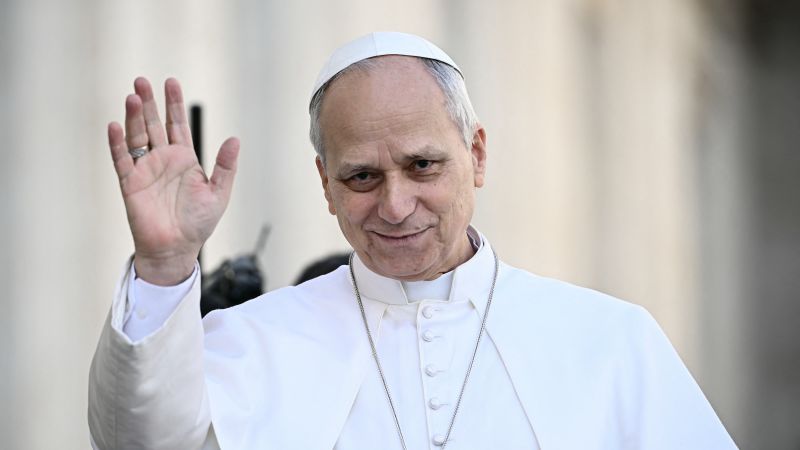
Pope Leo
The board, which Trump will chair indefinitely, was originally created to oversee Gaza’s reconstruction. However, its purpose has since expanded to make the Council a global peacekeeping institution.
Pope Leo was invited to join the board last month.
Cardinal Pietro Parolin, the Holy See’s secretary of state, told reporters he would not accept the invitation, saying he was “perplexed” by some aspects of the plan and that “serious issues” needed to be resolved.
The cardinal said one of the Vatican’s concerns is that “at the international level, it should be above all the United Nations that manages these critical situations. This is one of the points we have been making.”
Parolin’s comments came after he attended an event with the Italian government to commemorate the anniversary of the Lateran Treaty, which created Vatican City as a sovereign state nearly a century ago.
Italy and the European Union have said they will attend the council as observers, but the cardinal said the Vatican “will not participate in the Peace Council because of its special nature, which clearly does not belong to other countries.”
The Vatican was not alone in refusing the invitation. Britain, France and Norway are not participating. Diplomats, officials and world leaders have expressed concerns about the Council’s expanded powers, President Trump’s indefinite presidency, and the potential damage it could cause to UN operations.
Pope Leo XIV, the first American-born pope, has made peacebuilding a central part of his papacy, warning in a major diplomatic address last month that “war is back in fashion.” Mr. Leo stressed that the United Nations “must play a key role” in responding to conflicts, while underscoring the importance of humanitarian law.
Since his election, the Pope has repeatedly advocated for Gaza, calling for a two-state solution and the right for Palestinians to live in peace on “their own land.” During the Israel-Hamas war, he advocated for the release of hostages on October 7, maintained dialogue with Israeli leaders, and deplored the rise of anti-Semitism.
Leo has criticized President Trump’s immigration policies, but the pope’s insistence on international humanitarian law stands in contrast to the president, who rejected international law and the post-World War II order but told the New York Times in January that he felt bound only by “his own morality.”
The board is scheduled to hold its first meeting in Washington on Thursday.
