

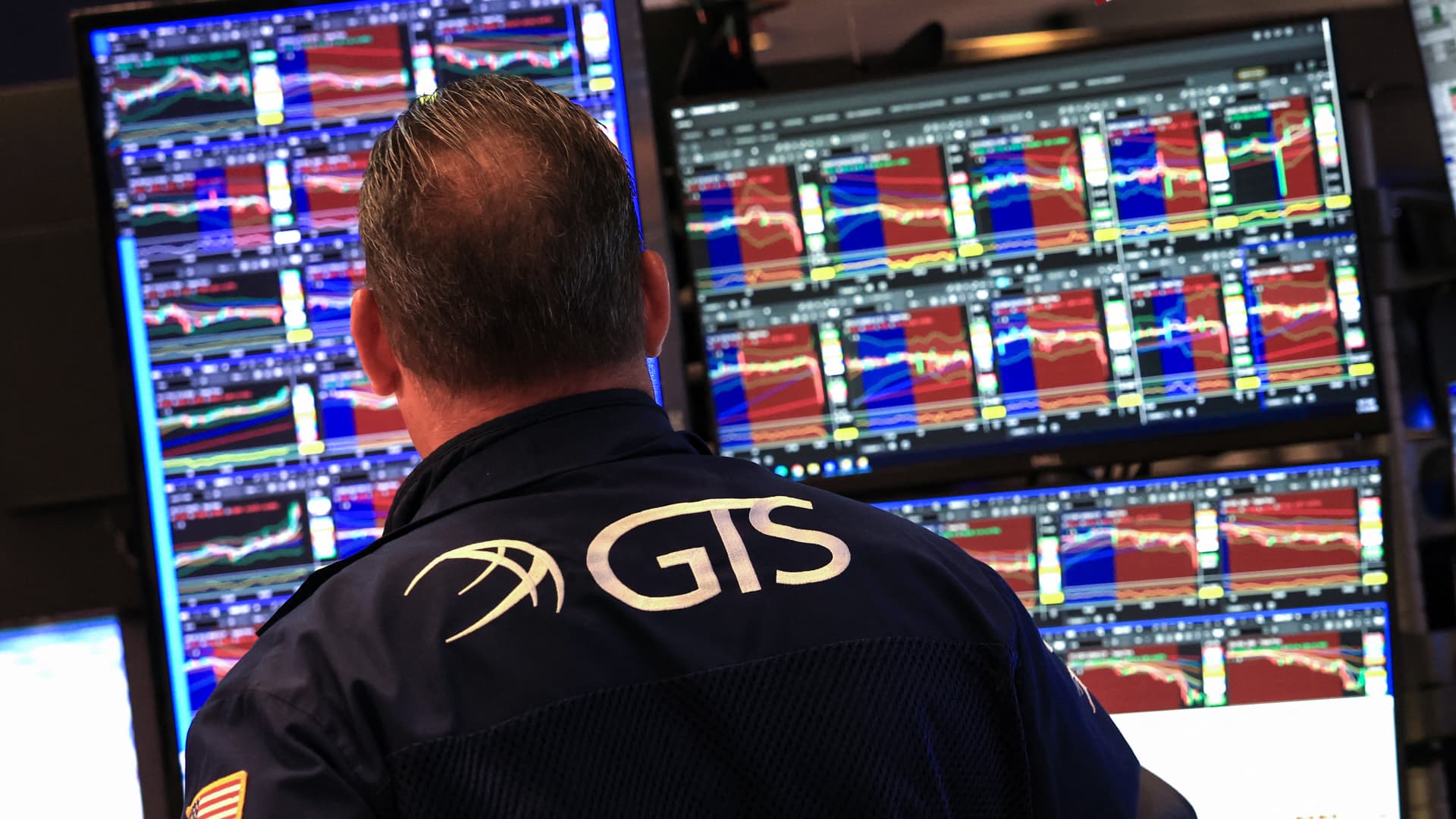
A trader works at a desk on the floor of the New York Stock Exchange (NYSE) on May 19, 2026 in New York.
Timothy A. Clary | AFP | Getty Images
HSBC said U.S. Treasuries had entered “danger waters” as a spike in long-term yields raised concerns that persistent inflation and hawkish interest rate expectations could begin to spill over into stocks and broader risk assets.
The sell-off in Treasuries intensified on Tuesday, pushing the 30-year U.S. Treasury yield above 5.19%, the highest level since 2007. Meanwhile, the benchmark 10-year bond yield rose towards 4.69%.
As of 9:10 p.m., the 30-year Treasury yield was up less than 1 basis point to 5.184%. ET, the 10-year yield is 4.667%.
“U.S. Treasuries are now firmly in the danger zone at the level of the 10-year UST, which tends to put pressure on almost all asset classes,” HSBC strategists wrote in a note late Tuesday, warning that further increases in final rate expectations could push yields “further into the danger zone and likely cause a temporary decline in risk assets.”
The bank said the market has remained relatively resilient so far as corporate earnings growth has been strong, valuations have already partially corrected before the recent Iran tensions, and investors still widely believe that the Middle East conflict will only primarily impact oil.
The movement in yields is psychologically important, especially after the 30-year bond auction exceeded 5% for the first time since 2007, said Steve Sosnick, chief strategist at Interactive Brokers.

Current market conditions are a “yellow alert” rather than a “red alert,” Sosnick said, adding that a move toward 10-year yields of 4.65% and 30-year yields of 5.5% could cause more severe market stress.
Ian Lingen, a strategist at BMO Capital Markets, said further moves could start to affect the stock price.
If the 30-year Treasury yield rises toward 5.25% in the coming weeks, the decline in stock prices could become more sustained, he said.
