

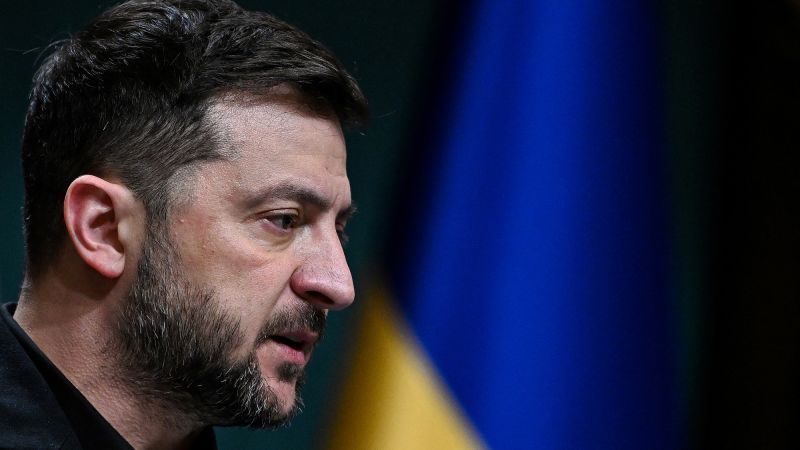
Talks between U.S. and Ukrainian negotiators on a proposed peace deal with Russia concluded this weekend in Miami, with few new developments and questions over security and territorial issues remaining, Ukrainian officials said.
At the end of the meeting, the Kremlin welcomed U.S. President Donald Trump’s new security strategy, saying it had reversed language used by previous U.S. administrations to describe Russia as a threat.
Marathon talks in Miami began Thursday between U.S. envoy Steve Witkoff, President Trump’s son-in-law Jared Kushner, and Ukrainian officials Rustem Umerov and Andriy Natov.
“Difficult issues remain,” Ukrainian Ambassador to the United States Olga Stefanishina said on Saturday after three days of talks, “but both sides continue to work to form a realistic and acceptable solution.”
“The main challenges at this stage are related to territorial and guarantee issues, and we are actively seeking the optimal format to address these,” Stefanisina said. “We will provide further details once we have all the information.”
Guarantees of territory and security are long-standing concerns in any potential transaction. Ukraine maintains that a just end to the war includes reliable security and does not force Russia to surrender more territory.
As talks began earlier this week, Russian President Vladimir Putin told reporters in India that his country intends to occupy Ukraine’s eastern Donbas region by any means necessary.

Prior to the Miami meeting, Kushner and Witkoff visited Moscow. President Trump said Wednesday that the U.S. delegation had a “very good meeting” with Putin and believed the Russian president “wants the war to end,” but the talks did not lead to a breakthrough.
Ukrainian President Volodymyr Zelenskiy said in a social media post Saturday that he had a “long” and “constructive” telephone conversation with Mr. Witkov and Mr. Kushner, as well as the Ukrainian delegation in Miami.
“We covered many aspects and considered important points that could ensure the end of bloodshed and eliminate the threat of a new full-scale invasion by Russia,” Zelenskiy said. “We have agreed on the next steps and format of talks with the United States.”
The call also discussed “the risk that Russia will not honor its commitments, as has happened repeatedly in the past,” he said.
Mr Zelensky said Mr Khnatov and Mr Umerov would give a “detailed first-hand report” on the negotiations.
“Not everything can be discussed over the phone,” Zelenskiy said. “So you have to work closely with your team on ideas and suggestions.”
Peace and its terms will also be the topic of talks between Zelensky and the leaders of France, Britain and Germany in London on Monday. French President Emmanuel Macron said on Saturday that discussions would address “the situation and the ongoing negotiations within the framework of US mediation.”
Separately, the Kremlin welcomed the Trump administration’s new U.S. national security strategy announced on Friday, which marks a realignment of U.S. foreign policy and takes an unprecedented confrontational stance toward Europe.
Spokesman Dmitry Peskov said language in the Trump administration document describing Russia as a threat had been removed, state news agency TASS reported.
“We considered this a positive step,” Peskov told the news agency.
“Overall, these messages certainly contrast with the previous administration’s approach.”
The strategy document states that European countries view Russia as an “existential threat” but depicts the United States as playing a key role in diplomacy to re-establish “conditions for internal European stability and strategic stability with Russia.”
The Biden administration’s 2022 National Security Strategy said Russia “recklessly disregards the fundamental laws of today’s international order and poses an imminent threat to the free and open international system, as demonstrated by its brutal war of aggression against Ukraine.”
The Trump administration’s new document also reiterates its claim to “end the perception of NATO as a permanently expanding alliance and prevent the reality.”
This article has been updated with additional information.
