

Jerusalem —
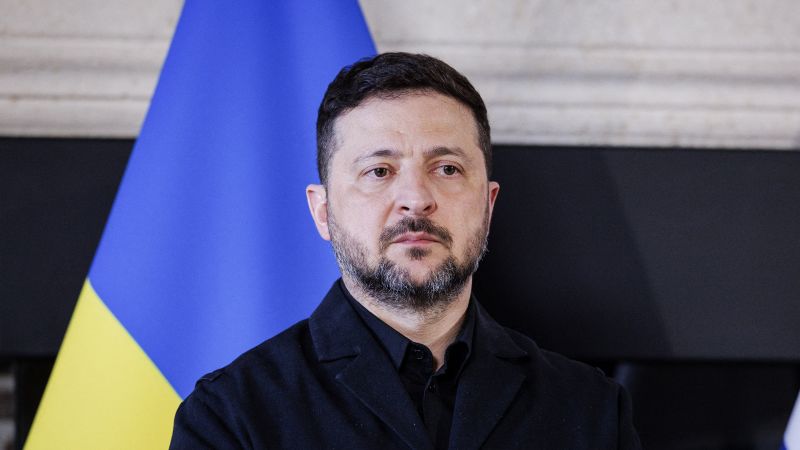
Ukrainian President Volodymyr Zelenskiy has accused Israel of intentionally allowing Russian-stolen grain to be unloaded at Israeli ports and threatened to impose sanctions on those involved in the shipment, a move Kiev says is continuing despite multiple appeals to Israeli officials.
President Zelenskiy’s warning on Tuesday reflects a deepening rift between the two countries following the arrival in Israeli waters of the Panormitis, which entered Haifa Bay last week and is now believed to be anchored offshore waiting to be berthed. Ukraine said the ship was carrying wheat stolen from occupied territory in Ukraine and was the second cargo of its kind to arrive in Haifa this month.
“In a normal country, purchasing stolen goods is an act that carries legal liability. This is especially true for grains stolen by Russia,” Zelenskyy wrote to X. “This is not and cannot be a legitimate business. There is no way the Israeli authorities would not know which ships arrive at the country’s ports and what cargo they carry.”
In a series of forceful backlashes, Israeli Foreign Minister Gideon Saar said Ukraine had not provided evidence alleging the grain was stolen and accused it of engaging in “Twitter diplomacy.” He also stressed that the Panormitis in question has not yet docked in Haifa, adding that the Israeli tax authorities are currently investigating the matter.
Since Russia’s full-scale invasion of Ukraine more than four years ago, Kiev has consistently accused Moscow of the systematic plunder of agricultural resources, although Kiev maintains that the true origins of the stolen grain are hidden when it is sold on global markets.
According to an investigative report in the Israeli newspaper Haaretz, illegal grain has entered Israel’s ports at least four times this year. The report added that such deliveries have been going on since 2023 and the number has reached more than 30 in total.
Following the Haaretz report and Panormitis’s arrival, Ukraine’s Foreign Minister Andriy Sibikha summoned the Israeli ambassador in Kiev on Tuesday to protest “the lack of an appropriate Israeli response,” adding that it had “damaged bilateral relations.”
An Israeli official told CNN on condition of anonymity that Israel cannot seize the cargo without due process, noting that there is a “well-established mutual legal assistance protocol” that would require Ukraine’s attorney general to file a request for legal assistance, provide evidence and coordinate with Israeli police to stop the vessel.
A Ukrainian Foreign Ministry spokesperson denied the claims, telling CNN at a press conference in Kiev on Tuesday that Ukraine had “exhausted all closed channels and official diplomatic requests.”
The spokesperson added that Israel is not the only country importing illegal grain, and said Ukraine has seen evidence of “systematic practices” that indicate “deliberate promotion of illicit economic activities” related to Russia’s occupation of some regions of Ukraine.
The European Union got involved as well, requesting additional information on the matter from Israeli authorities and warning that it could also impose sanctions on those involved.
“We condemn any action that helps Russia finance its illegal war effort or evade EU sanctions, and we remain ready to target such actions by listing individuals and entities in third countries, if necessary,” an EU spokesperson told CNN.
Relations between Israel and Ukraine have remained tense since Russia’s full-scale invasion in 2022. Israeli leaders have sought to maintain conduits with both Kiev and Russia, limiting military aid to Ukraine to primarily non-lethal humanitarian assistance and rejecting pressure to transfer Israeli-made weapons systems and weapons to Kiev.
More recently, after Israel and the United States launched a war against Iran, Ukraine has positioned itself as a regional security provider in the Middle East, offering partnerships and expertise, especially in drone defense.
Zelensky himself visited Saudi Arabia, the UAE, Qatar and Jordan last month, but did not stop in Israel.
Victora Butenko and Kosta Gak contributed reporting from Kiev
