

santiago, chile —
The classic postcard image of Chile’s capital Santiago surrounded by the snow-capped Andes mountains in winter now seems like a photograph from the past.
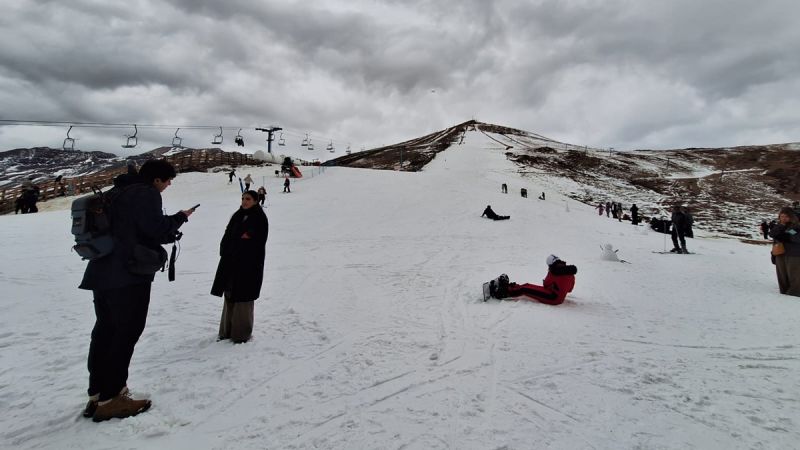
The drought that has plagued the country for years has caused a severe lack of snow, forcing major ski resorts in the capital region to close up to 90% of their slopes, according to the Chilean Ski Resort Association (ACESKI).
And with climate change believed to be at least partly to blame, officials have warned that in the long term the region may need to find other ways to get tourists to spend their money.
This southern hemisphere country, whose winter runs from June to August, has long been popular with tourists from the United States looking for a North American summer skiing destination. And it has proven profitable. According to ACESKI, ski resorts in the region will welcome more than 1.24 million skiers in 2025, with a direct economic impact of US$283 million, of which US$228 million will come from foreign tourists.
But with a lack of snow, that reputation is in danger of being undermined.
“This is not normal. We are far behind,” Arnaldo Zuniga, a meteorologist and spokesperson for Chile’s Meteorological Department (DMC), told CNN. The last snowfall on June 21 brought only 24 centimeters of snow, nearly 60% short of “normal years in the mountains,” Zuniga said.

“Unfortunately, the trends characterizing climate change indicate that we are actually moving toward less precipitation. And with less rain comes less snow,” he warned.
If it’s a good year, the slopes will be covered by now. Instead, some slopes are resorting to making snow artificially, while hotels and restaurants are doing their best to remain optimistic.
“Over the past 15 years, we have invested in snow-making systems and technology,” said Michael Leatherby, president of ACESKI. “You can take ski lessons, ride the panoramic chairlift, or hit up a restaurant halfway up the mountain. You can do a little bit of everything that winter usually offers today.”
Chilean authorities are now aiming for, in the words of Tourism Undersecretary Maria Paz Lagos, “four-season tourism with activities in the mountains throughout the year.” Such activities include nature tours, hiking, wellness-related activities, culinary events, etc., none of which are dependent on snow.
“We create around 18,000 jobs during the ski season alone, and we hope that our contribution to the development of the region will continue to grow,” she said.
There are several reasons to be hopeful about the nearer future. The Bureau of Meteorology says a front moving in from the south this weekend could bring snow to at least some of these mountains.
“This front will start on Sunday and it will be very cold. I think we can expect some rain at first, but then a chance of snow in the higher elevations above 2,500 meters,” Zuniga said.
